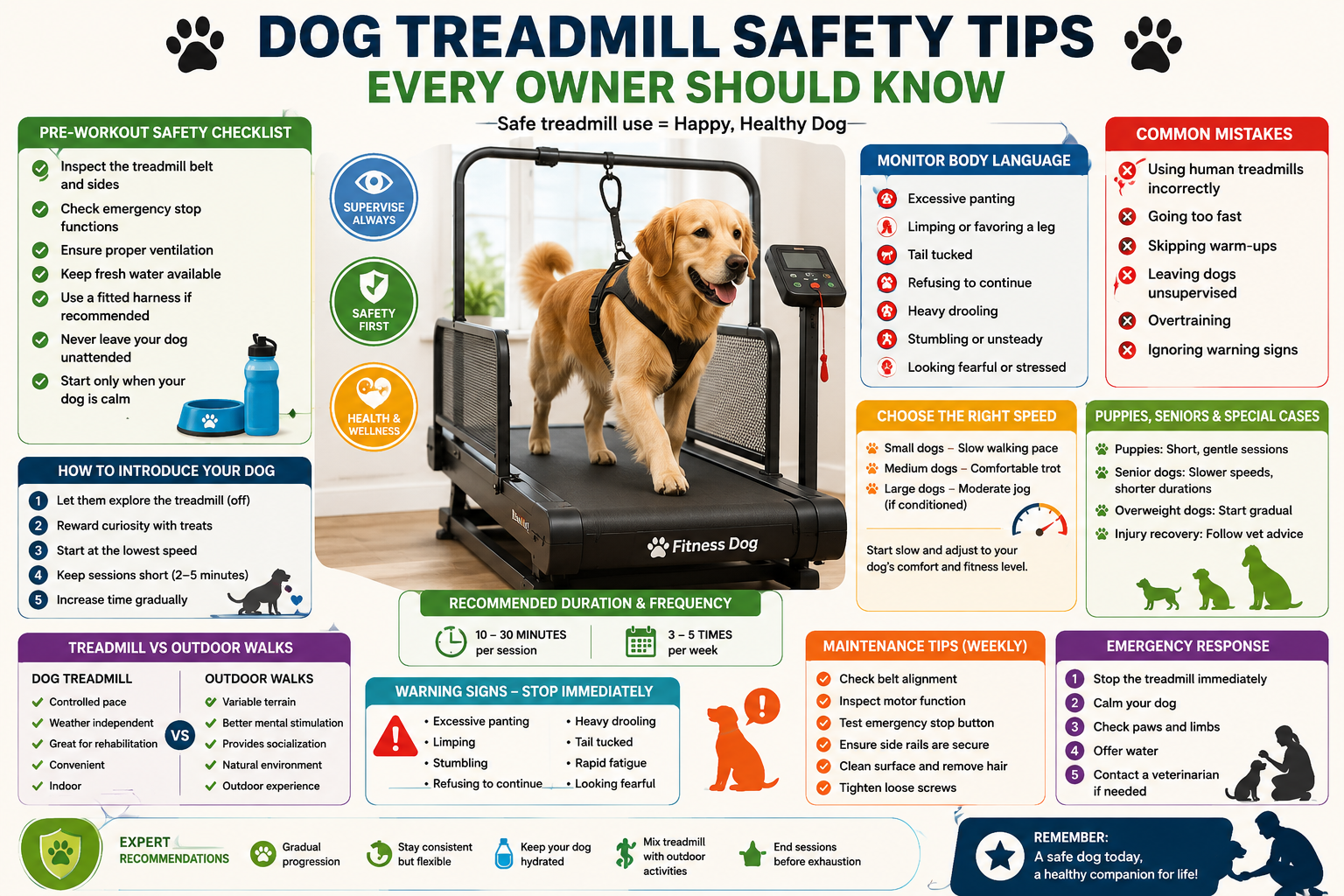
Introduction
Keeping your dog active is essential for physical health, mental stimulation, and long-term well-being. While outdoor walks remain important, many owners now rely on treadmills during bad weather, busy schedules, or rehabilitation periods. However, using one incorrectly can lead to injuries, anxiety, or overexertion.
Following the right Dog Treadmill Safety Tips Every Owner Should Know ensures your pet exercises safely while gaining all the benefits of controlled indoor workouts.
What You’ll Learn
- How to introduce your dog to a treadmill
- Essential safety rules before every session
- Proper speed and duration recommendations
- Warning signs of overexertion
- Common mistakes to avoid
- Puppy and senior dog considerations
- Equipment maintenance tips
- Emergency procedures
- Expert recommendations
What Is a Dog Treadmill?
A dog treadmill is a specially designed exercise machine that allows dogs to walk or run indoors under controlled conditions. It provides consistent exercise while owners monitor speed, duration, and safety.
This controlled environment is especially useful during extreme weather or rehabilitation programs.
Why Safety Matters
Even though treadmills improve fitness, improper use can cause:
- Muscle strain
- Joint injuries
- Paw abrasions
- Anxiety
- Heat exhaustion
- Falls
- Overtraining
A safe approach protects both physical and mental health.
Pre-Workout Safety Checklist
Before every session:
- Inspect the treadmill belt
- Check emergency stop functions
- Remove nearby obstacles
- Ensure proper ventilation
- Keep fresh water available
- Use a fitted harness if recommended
- Never leave your dog unattended
- Start only when your dog is calm
Quick Safety Table
| Safety Check | Why It Matters |
|---|---|
| Belt inspection | Prevent slipping |
| Water nearby | Avoid dehydration |
| Supervision | Immediate intervention |
| Proper speed | Reduces injury risk |
| Warm-up | Prevents muscle strain |
How to Introduce Your Dog to a Treadmill
Step 1: Let Them Explore
Allow your dog to sniff and inspect the machine while turned off.
Step 2: Reward Curiosity
Offer treats and praise.
Step 3: Start Slowly
Use the lowest possible speed.
Step 4: Keep Sessions Short
Begin with 2–5 minutes.
Step 5: Increase Gradually
Only extend duration when your dog appears relaxed.
Choose the Right Speed
Every dog differs by breed, age, and fitness level.
General recommendations:
- Small dogs: slow walking pace
- Medium dogs: comfortable trot
- Large dogs: moderate jog if conditioned
Never force your dog to match human speeds.
Monitor Body Language
Stop immediately if you notice:
- Excessive panting
- Limping
- Tail tucked
- Refusing to continue
- Heavy drooling
- Stumbling
- Looking fearful
- Rapid fatigue
These may indicate stress or overexertion.
Common Mistakes Owners Make
Using Human Treadmills Incorrectly
Some human treadmills have narrow belts unsuitable for dogs.
Going Too Fast
Rapid acceleration can frighten pets.
Skipping Warm-Ups
Cold muscles are more injury-prone.
Leaving Dogs Unsupervised
Never walk away during operation.
Overtraining
More exercise isn’t always better.
Dog Treadmill vs Outdoor Walks
| Dog Treadmill | Outdoor Walk |
| Controlled pace | Variable terrain |
| Weather independent | Weather dependent |
| Great for rehabilitation | Better mental stimulation |
| Convenient | Provides socialization |
| Indoor | Natural environment |
The best routine often combines both.
Puppies, Senior Dogs, and Special Cases
Puppies
Avoid long sessions because growing joints remain delicate.
Senior Dogs
Use slower speeds and shorter durations.
Overweight Dogs
Begin gradually to reduce joint stress.
Dogs Recovering from Injury
Always follow veterinary guidance before treadmill exercise.
Maintenance Tips
Check weekly:
- Belt alignment
- Motor function
- Side rails
- Emergency stop button
- Surface cleanliness
- Loose screws
Proper maintenance improves safety and extends equipment life.
Emergency Response
If your dog falls:
- Stop the treadmill immediately.
- Calm your dog.
- Check paws and limbs.
- Offer water.
- Contact a veterinarian if limping or distress continues.
Never force another session immediately afterward.
Expert Recommendations
Experienced trainers recommend:
- Positive reinforcement only
- Gradual progression
- Consistent scheduling
- Monitoring hydration
- Mixing treadmill work with outdoor enrichment
- Ending sessions before exhaustion
Building confidence matters more than increasing speed.
Conclusion
Following these Dog Treadmill Safety Tips Every Owner Should Know helps create safe, effective, and enjoyable indoor workouts. By introducing the equipment slowly, supervising every session, choosing appropriate speeds, and recognizing warning signs early, owners can reduce risks while supporting their dog’s long-term fitness and well-being.
Frequently Asked Questions (FAQs)
1. Are dog treadmills safe for all dogs?
Dog treadmills are generally safe when used correctly, but puppies, senior dogs, and dogs with health conditions should only use them with veterinary guidance.
2. How long should a dog stay on a treadmill?
Most dogs benefit from 10–30 minutes per session, depending on their age, breed, fitness level, and health.
3. Can a dog treadmill replace daily walks?
No. A treadmill provides exercise but cannot fully replace outdoor walks, which offer mental stimulation and socialization.
4. Should I supervise my dog while using a treadmill?
Yes. Never leave your dog unattended on a running treadmill to prevent accidents or injuries.
5. Can puppies use a dog treadmill?
Puppies should only use a treadmill for very short, gentle sessions and only if recommended by a veterinarian.
6. What speed is best for a dog treadmill?
Start at the lowest speed and gradually increase it to match your dog’s natural walking or jogging pace.
7. How do I know if my dog is overexerted?
Signs include excessive panting, limping, heavy drooling, stumbling, slowing down, or refusing to continue.
8. Can dogs use human treadmills?
Some can, but dog-specific treadmills are usually safer because they offer a longer running surface and better stability.
9. How often should my dog use a treadmill?
Most healthy dogs can use a treadmill 3–5 times a week, depending on their exercise needs and overall activity level.
10. What should I do if my dog is scared of the treadmill?
Introduce it slowly with treats and positive reinforcement. Let your dog become comfortable before turning it on.
11. Do dogs need a warm-up before treadmill exercise?
Yes. A few minutes of slow walking helps prepare muscles and reduces the risk of injury.
12. Can overweight dogs benefit from a treadmill?
Yes. Controlled treadmill exercise can support weight loss when combined with a balanced diet and veterinary advice.
13. Should my dog wear a leash on the treadmill?
A loose leash or properly fitted harness may help during training, but it should never restrict movement or create a choking hazard.
14. What are the biggest dog treadmill safety mistakes?
Common mistakes include using excessive speed, skipping supervision, forcing nervous dogs, and increasing workout time too quickly.
15. How can I keep my dog safe on a treadmill?
Start slowly, supervise every session, use the correct speed, provide water, monitor body language, and stop immediately if your dog shows signs of discomfort.