Teaching your dog to sit is one of the first and most important commands every pet owner should master. The “sit” command helps improve your dog’s behavior, strengthens your bond, and creates a foundation for advanced obedience training. Professional organizations like the American Kennel Club (AKC) and PetMD recommend using positive reinforcement, short training sessions, and consistency for the best results.
In this guide, you’ll learn exactly how to teach your dog to sit using simple, reward-based techniques that work for puppies and adult dogs alike.
Why Teaching Your Dog to Sit Is Important
The “sit” command is more than just a trick. It helps your dog develop self-control and good manners.
Benefits include:
- Prevents jumping on guests
- Makes grooming easier
- Improves focus during training
- Builds impulse control
- Creates the foundation for commands like Stay, Down, and Come
- Makes walks and vet visits less stressful
Dogs that master the sit command are generally easier to manage in everyday situations.
What You’ll Need
Before training, gather these essentials:
- Small, soft treats
- Clicker (optional)
- Quiet room with few distractions
- 5–10 minutes of free time
- Lots of patience
High-value treats such as chicken, cheese, or commercial training treats usually work best.
How to Teach Your Dog to Sit (Step-by-Step)
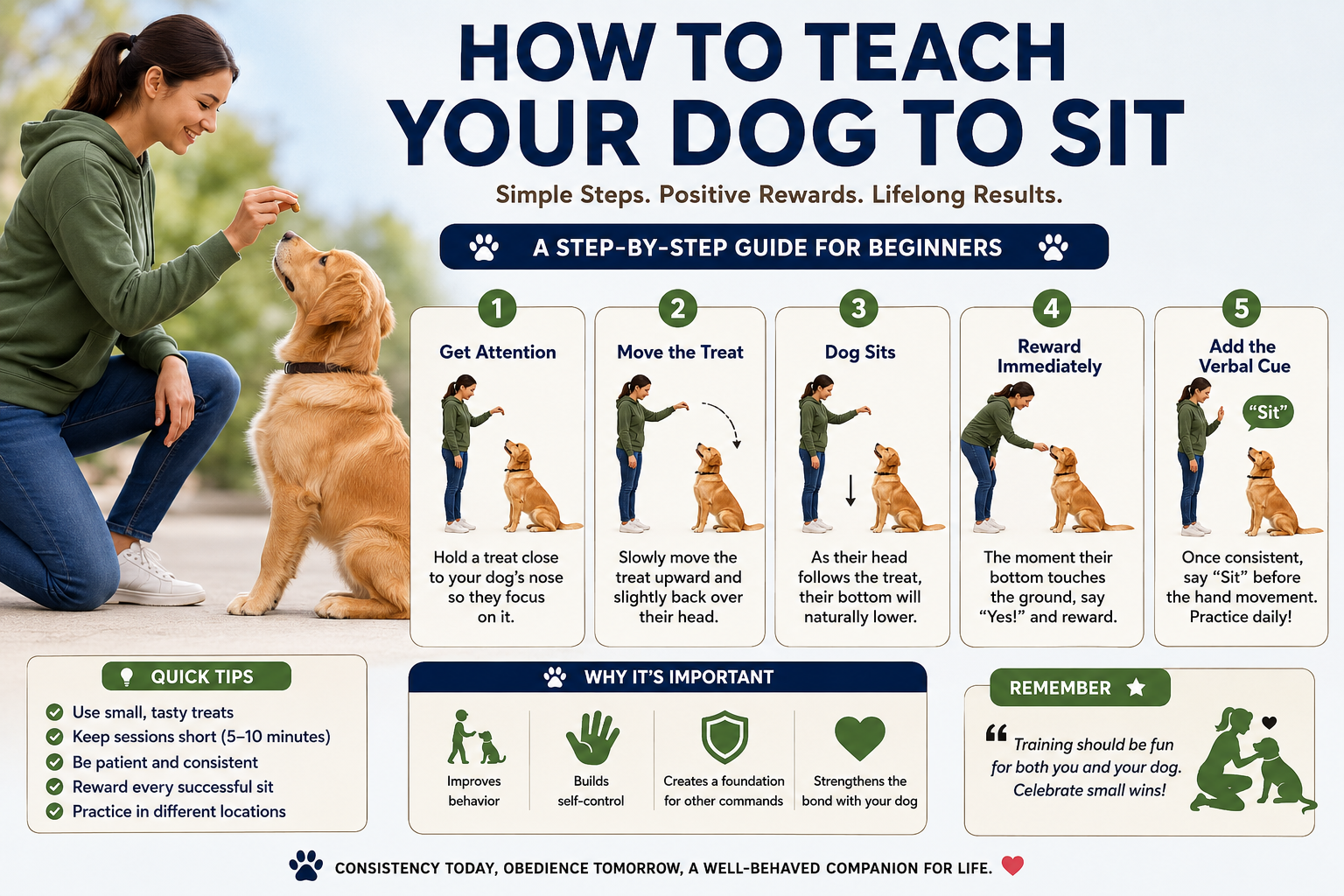
Step 1: Get Your Dog’s Attention
Stand directly in front of your dog while they are standing.
Hold a treat close to their nose so they focus on it.
Step 2: Move the Treat Slowly
Slowly raise the treat upward and slightly backward over your dog’s head.
As your dog follows the treat with their nose, their back naturally lowers toward the floor.
Avoid moving the treat too quickly.
Step 3: Reward Immediately
The moment your dog’s bottom touches the ground:
- Say “Yes!” or click the clicker.
- Give the treat immediately.
- Praise your dog enthusiastically.
Step 4: Repeat Several Times
Practice 5–10 repetitions.
Keep each session between five and ten minutes.
Dogs learn faster through several short sessions than one long training session.
Step 5: Add the Verbal Cue
Once your dog consistently follows the hand movement:
Say
“Sit”
just before moving your hand.
After enough repetition, your dog will associate the word with the action.
Eventually, you can remove the hand signal altogether.
Best Training Tips
To speed up learning:
- Train before mealtime when your dog is motivated.
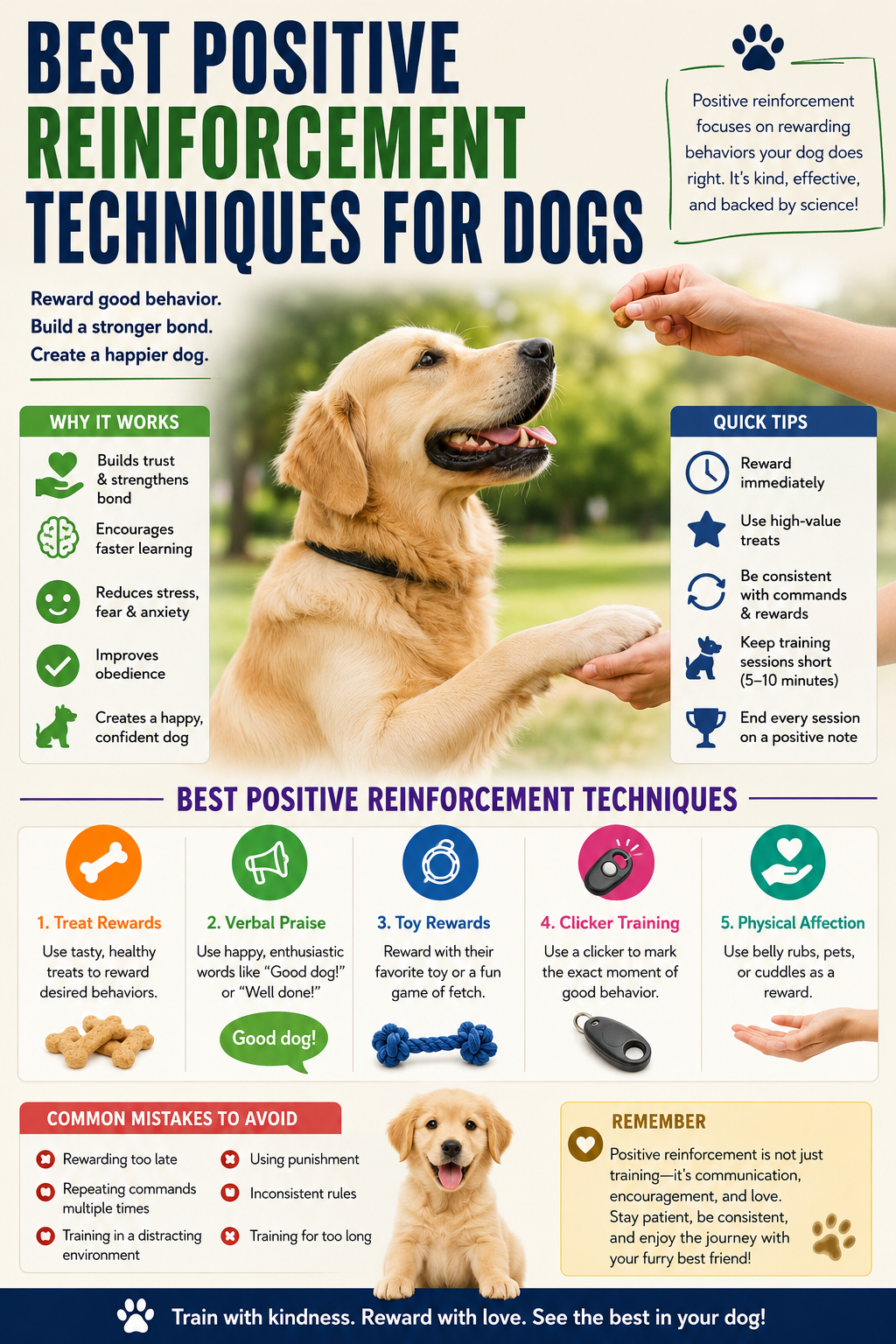
- Use positive reinforcement only.
- Keep sessions fun.
- End training on a successful attempt.
- Practice every day.
Consistency is far more important than long practice sessions.
Common Mistakes to Avoid
Many owners accidentally slow their dog’s progress.
Avoid these mistakes:
Pushing Your Dog’s Back Down
Never force your dog into position.
This creates confusion and may make them uncomfortable.
Repeating “Sit” Over and Over
Say the command only once.
If your dog doesn’t respond, guide them with the treat instead.
Rewarding Too Late
Late rewards confuse dogs.
Always reward immediately after they sit.
Training in Busy Places
Start inside your home.
Add distractions only after your dog understands the command.
How Long Does It Take to Teach a Dog to Sit?
Every dog learns differently.
Generally:
| Dog Type | Average Learning Time |
|---|---|
| Young puppies | 2–5 days |
| Adult dogs | 3–10 days |
| Rescue dogs | 1–3 weeks |
Consistency matters much more than age.
Can Older Dogs Learn to Sit?
Absolutely.
The saying “You can’t teach an old dog new tricks” isn’t true.
Adult dogs often learn quickly because they have better attention spans than puppies.
Use patience and plenty of rewards.
What If Your Dog Won’t Sit?
Some dogs struggle initially.
Possible reasons include:
- Fear
- Anxiety
- Joint pain
- Poor motivation
- Too many distractions
- Treat isn’t valuable enough
How Often Should You Practice?
Aim for:
- 2–4 sessions daily
- 5–10 minutes each
- Around 20–30 successful repetitions per day
Regular practice produces faster and longer-lasting results.
When Should You Use the Sit Command?
Use “Sit” during everyday life.
Examples include:
- Before feeding
- Before opening doors
- Greeting visitors
- Before crossing streets
- At the veterinarian
- Before throwing a toy
- Before putting on a leash
Real-life practice strengthens the behavior.
Advanced Training After Sit
Once your dog reliably sits, teach:
- Stay
- Down
- Come
- Leave It
- Heel
- Place
- Wait
These commands build excellent obedience and improve safety.
Expert Tips
Professional trainers recommend:
- Reward every successful sit at first.
- Slowly reduce treats once the behavior becomes reliable.
- Continue praising even after treats are reduced.
- Practice in different locations.
- Increase distractions gradually.
- Keep training enjoyable.
Dogs learn best when training feels like a game rather than work.
FAQs:
What age should I start teaching my dog to sit?
Most puppies can begin learning at around 8 weeks old, though older dogs can learn just as well.
Can I teach an adult rescue dog to sit?
Yes. Adult rescue dogs respond well to reward-based training with patience and consistency.
Should I use a clicker?
A clicker is optional but helpful because it marks the exact moment your dog performs the correct behavior.
How many treats should I use?
Use small treats during training to avoid overfeeding while keeping your dog motivated.
What if my dog jumps instead of sitting?
Move the treat more slowly and closer to your dog’s nose. If jumping continues, lower the lure and reward only when your dog’s bottom touches the floor.
Conclusion
Learning how to teach your dog to sit is one of the most valuable skills you can give your pet. With patience, consistency, and positive reinforcement, most dogs learn this command quickly. Keep training sessions short, reward every success, and practice in different environments to build reliability. Once your dog masters “sit,” you’ll have a strong foundation for teaching more advanced commands and encouraging better everyday behavior.