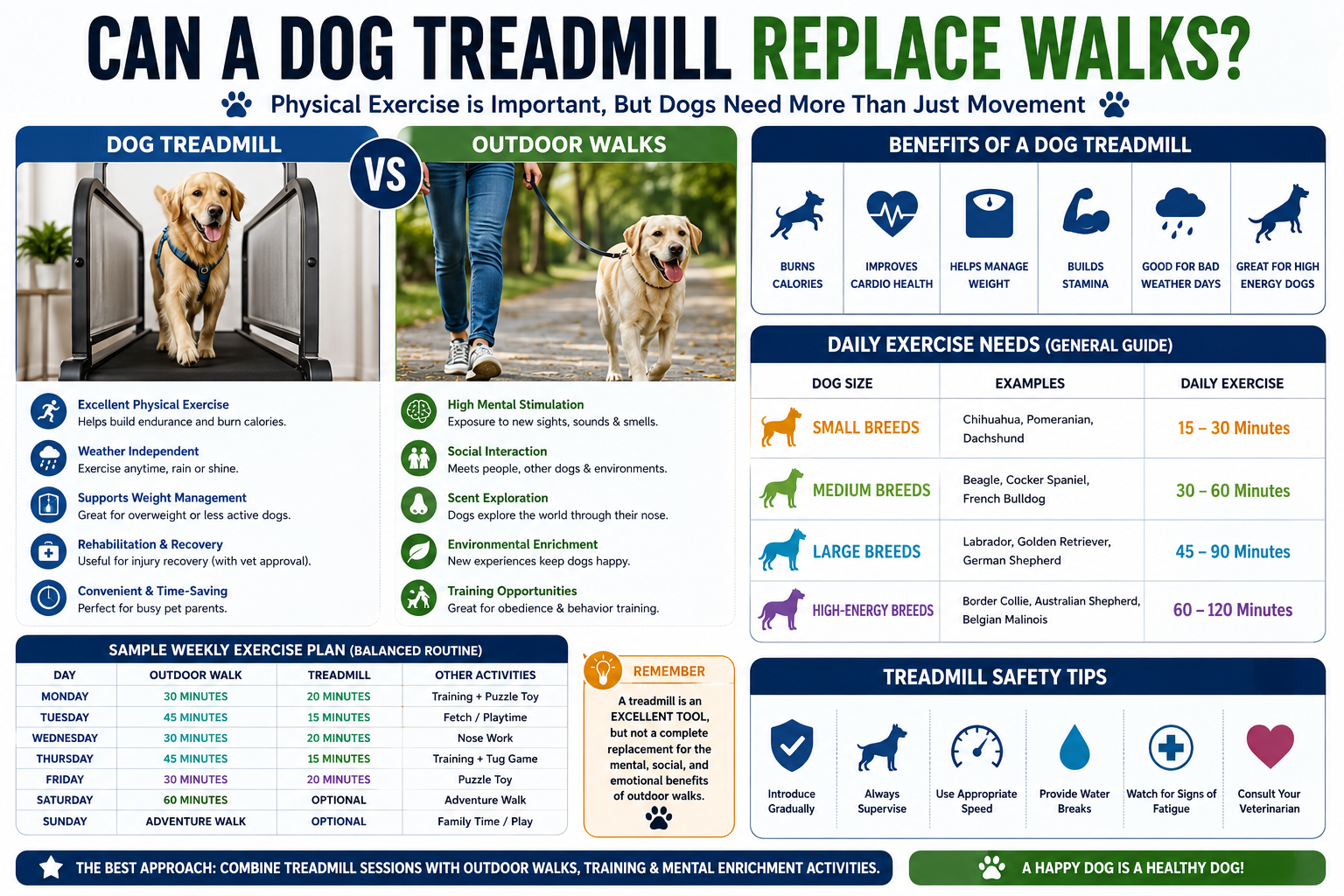
Many dog owners wonder whether a dog treadmill can completely replace daily walks. With busy lifestyles, extreme weather, and limited outdoor space becoming more common, dog treadmills have gained popularity as a convenient exercise solution.
The short answer is: A dog treadmill can supplement walks and provide excellent physical exercise, but it should not completely replace outdoor walks for most dogs.
Dogs need more than physical activity. They also need mental stimulation, social interaction, environmental enrichment, and opportunities to explore the world through their senses.
This guide explains everything dog owners need to know about dog treadmills, outdoor walks, and how to create the healthiest exercise routine for their pets.
What You’ll Learn
- Whether a dog treadmill can replace walks
- Benefits of dog treadmills
- Advantages of outdoor walks
- Physical exercise vs mental stimulation
- When a treadmill is a good alternative
- Safety tips for treadmill training
- Recommended exercise schedules
- Expert recommendations from canine fitness professionals
What Is a Dog Treadmill?
A dog treadmill is a specialized exercise machine designed for dogs. It allows pets to walk, jog, or run indoors while owners control speed and duration.
Key Features
- Adjustable speeds
- Safety side rails
- Quiet motors
- Remote controls
- Exercise tracking displays
Dog treadmills are commonly used for:
- Weight management
- Indoor exercise
- Rehabilitation programs
- Athletic conditioning
- High-energy breeds
Quick Answer
A dog treadmill provides structured physical exercise but does not provide the same mental and social benefits as outdoor walks.
Dog Treadmill vs Walking: What’s the Difference?
| Factor | Dog Treadmill | Outdoor Walk |
|---|---|---|
| Physical Exercise | Excellent | Excellent |
| Mental Stimulation | Limited | High |
| Social Interaction | Low | High |
| Scent Exploration | None | Excellent |
| Weather Dependence | None | High |
| Owner Convenience | High | Moderate |
| Environmental Enrichment | Low | High |
| Training Opportunities | Moderate | Excellent |
Expert Insight
Veterinary behaviorists often emphasize that dogs experience the world primarily through scent. Outdoor walks provide opportunities for sniffing and exploration that treadmills cannot replicate.
Benefits of a Dog Treadmill
1. Consistent Exercise Regardless of Weather
Rain, snow, heat waves, and poor air quality can limit outdoor activities.
A treadmill allows dogs to maintain their exercise routine year-round.
2. Supports Weight Management
According to veterinary obesity studies, excess weight affects a significant percentage of pet dogs worldwide.
Regular treadmill sessions can help:
- Burn calories
- Improve endurance
- Reduce obesity risks
- Support healthy joints
3. Ideal for High-Energy Dogs
Breeds such as:
- Border Collies
- Labrador Retrievers
- German Shepherds
- Belgian Malinois
- Australian Shepherds
often require substantial daily exercise.
Treadmills help release excess energy efficiently.
4. Useful During Recovery
Veterinarians may recommend controlled treadmill sessions for dogs recovering from:
- Orthopedic surgery
- Joint issues
- Muscle injuries
Always follow veterinary guidance before beginning rehabilitation exercise.
Why Outdoor Walks Still Matter
Mental Stimulation
Dogs gather information through smell.
During walks they:
- Explore new scents
- Encounter new environments
- Solve sensory challenges
This mental activity can tire a dog as effectively as physical exercise.
Social Development
Outdoor walks expose dogs to:
- People
- Other dogs
- Sounds
- Vehicles
- New situations
This helps build confidence and reduce anxiety.
Behavioral Benefits
Regular walks can reduce:
- Excessive barking
- Destructive chewing
- Digging
- Hyperactivity
- Separation-related behaviors
Real-World Example
A Labrador may run on a treadmill for 30 minutes and still feel mentally under-stimulated. However, a 30-minute walk involving sniffing, training, and exploration often results in greater overall satisfaction.
Can a Dog Treadmill Replace Daily Walks?
Featured Snippet Answer
For most dogs, a treadmill should not completely replace daily walks. While a treadmill provides excellent physical exercise, outdoor walks offer mental stimulation, social interaction, environmental enrichment, and scent exploration that treadmills cannot provide.
When a Treadmill Can Temporarily Replace Walks
A treadmill may serve as a temporary substitute when:
- Weather conditions are dangerous.
- Owners have mobility limitations.
- Dogs are recovering from injury.
- Air quality is poor.
- Outdoor exercise is temporarily unavailable.
Even in these situations, owners should provide mental enrichment activities.
How Much Treadmill Exercise Does a Dog Need?
Exercise requirements vary based on:
- Breed
- Age
- Weight
- Health status
- Energy level
General Guidelines
| Dog Type | Daily Exercise |
|---|---|
| Small Breeds | 15–30 Minutes |
| Medium Breeds | 30–60 Minutes |
| Large Breeds | 45–90 Minutes |
| High-Energy Breeds | 60–120 Minutes |
Sample Treadmill Schedule
Beginner Dogs
Week 1
- 5–10 minutes
- Slow pace
- Positive reinforcement
Intermediate Dogs
Week 2–4
- 15–20 minutes
- Moderate speed
Advanced Dogs
After Week 4
- 30–45 minutes
- Mixed speeds
- Endurance training
Common Mistakes Dog Owners Make
Starting Too Fast
Dogs need gradual adaptation.
Leaving Dogs Unsupervised
Always monitor treadmill sessions.
Ignoring Fatigue Signs
Watch for:
- Heavy panting
- Slowing pace
- Limping
- Stress signals
Replacing All Outdoor Activities
The biggest mistake is assuming physical exercise alone is enough.
Dogs need complete enrichment.
Best Indoor Activities to Combine with a Dog Treadmill
To compensate for reduced outdoor exposure:
Mental Stimulation Games
- Puzzle feeders
- Treat-dispensing toys
- Nose work activities
Training Sessions
Practice:
- Sit
- Stay
- Recall
- Heel
- Trick training
Interactive Play
- Tug games
- Fetch
- Hide and seek
Combining these activities creates a more balanced exercise routine.
Veterinary and Canine Fitness Recommendations
Most veterinarians and canine fitness experts agree on one principle:
A treadmill is an excellent exercise tool but not a complete replacement for outdoor walks.
The healthiest routine usually combines:
- Daily walks
- Structured treadmill sessions
- Mental enrichment
- Training exercises
- Interactive play
This approach supports both physical and emotional well-being.
Sample Weekly Exercise Plan
| Day | Outdoor Walk | Treadmill |
|---|---|---|
| Monday | 30 Minutes | 20 Minutes |
| Tuesday | 45 Minutes | 15 Minutes |
| Wednesday | 30 Minutes | 20 Minutes |
| Thursday | 45 Minutes | 15 Minutes |
| Friday | 30 Minutes | 20 Minutes |
| Saturday | 60 Minutes | Optional |
| Sunday | Adventure Walk | Optional |
This combination provides balanced exercise and enrichment.
Conclusion
So, can a dog treadmill replace walks?
For most dogs, the answer is no—not completely.
A dog treadmill is an excellent tool for maintaining fitness, managing weight, and providing exercise during bad weather or busy schedules. However, outdoor walks offer irreplaceable benefits such as mental stimulation, scent exploration, socialization, and environmental enrichment.
The best approach is to use a dog treadmill as part of a complete exercise program rather than as a total replacement for daily walks. By combining treadmill sessions with outdoor adventures, training, and enrichment activities, you can help your dog stay healthy, happy, and mentally fulfilled.
FAQ Section
1. Can dogs get enough exercise on a treadmill?
Yes, treadmills provide excellent physical exercise, but they do not fully replace mental stimulation and social interaction from outdoor walks.
2. Is a dog treadmill safe?
Yes, when used correctly, supervised, and introduced gradually.
3. How long should a dog walk on a treadmill?
Most dogs benefit from 15–45 minute sessions depending on breed, age, and fitness level.
4. Can puppies use treadmills?
Generally, puppies should focus on natural play and controlled walks. Consult a veterinarian first.
5. Can senior dogs use treadmills?
Many senior dogs benefit from low-impact treadmill exercise when approved by a veterinarian.
6. Do dogs still need outdoor walks if they use a treadmill?
Yes. Outdoor walks provide enrichment and socialization that treadmills cannot.
7. What dog breeds benefit most from treadmills?
High-energy breeds such as Labrador Retrievers, Border Collies, and German Shepherds often benefit significantly.
8. Can a treadmill help overweight dogs?
Yes. Combined with proper nutrition, treadmill exercise can support healthy weight loss.
9. How often should dogs use a treadmill?
Most dogs can use a treadmill several times per week as part of a balanced exercise routine.
10. Are human treadmills safe for dogs?
Some are, but dog-specific treadmills usually offer safer dimensions and features.
11. Can treadmill exercise reduce destructive behavior?
Yes, increased exercise can reduce boredom-related behaviors.
12. What are the disadvantages of dog treadmills?
Limited mental stimulation, lack of socialization, and inability to provide scent exploration.
13. Can dogs use treadmills every day?
Many healthy dogs can, but routines should be tailored to their individual needs.
14. Is treadmill running better than walking outside?
No. Both serve different purposes and