Keeping an energetic dog indoors can feel challenging, but the right activities can provide both physical exercise and mental stimulation. Whether it’s raining outside, temperatures are extreme, or you live in an apartment, there are plenty of ways to keep your dog healthy and entertained.
The Best Indoor Exercises for Active Dogs combine movement, problem-solving, obedience, and play to create a balanced routine that supports long-term physical and mental well-being.
What You’ll Learn
- Why indoor exercise matters
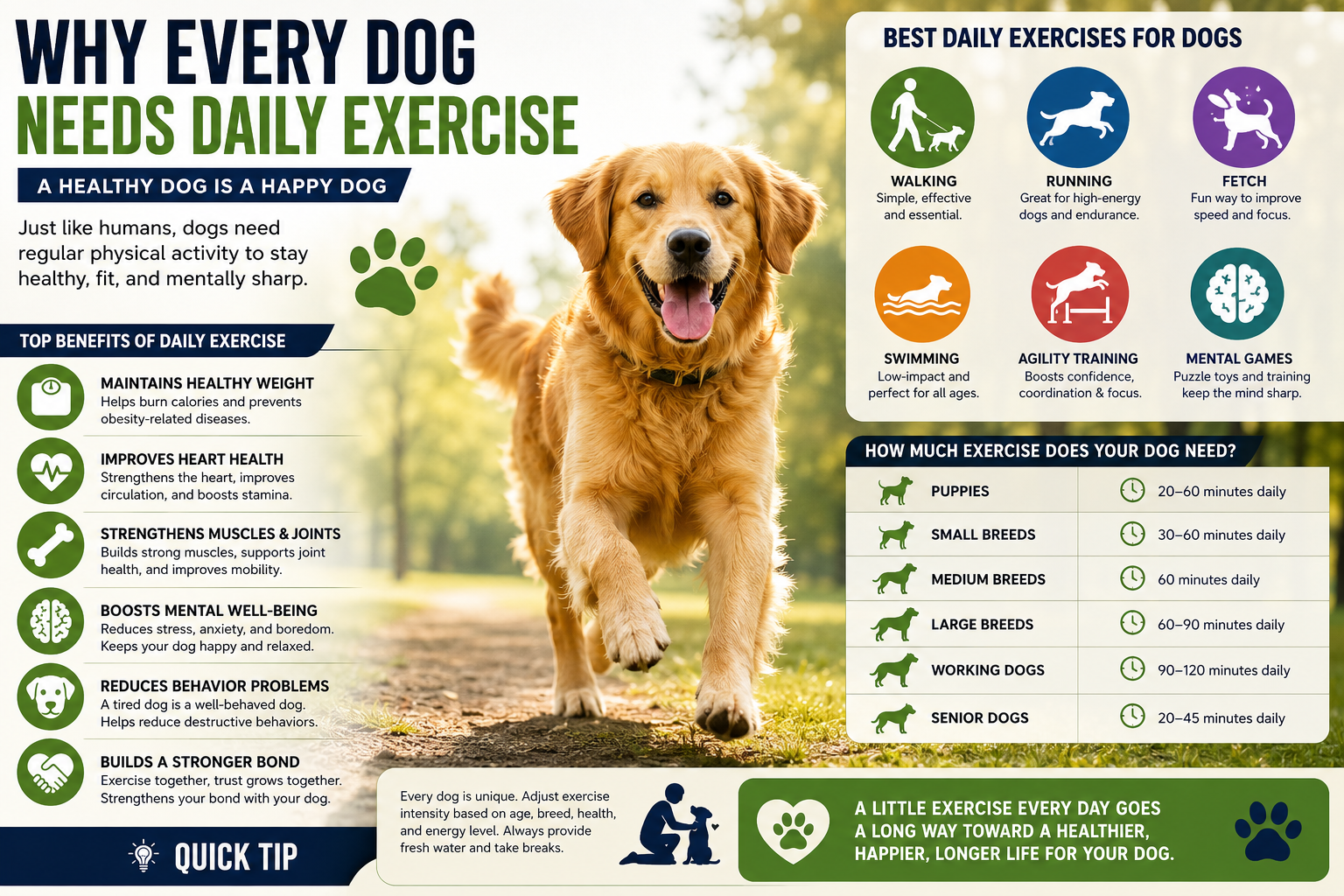
- How much exercise active dogs need
- The best physical activities at home
- Mental enrichment games
- DIY obstacle courses
- Apartment-friendly workouts
- Weekly exercise schedule
- Safety tips
- Common mistakes to avoid
Why Indoor Exercise Is Important
Indoor exercise isn’t simply a substitute for outdoor walks—it provides unique opportunities for training, bonding, and mental development.
Benefits include:
- Burns excess energy
- Prevents obesity
- Reduces anxiety
- Minimizes destructive behavior
- Improves obedience
- Strengthens muscles
- Builds confidence
- Enhances the owner-dog relationship
Dogs that receive consistent mental and physical stimulation are generally calmer and easier to train.
Best Indoor Games for Dogs
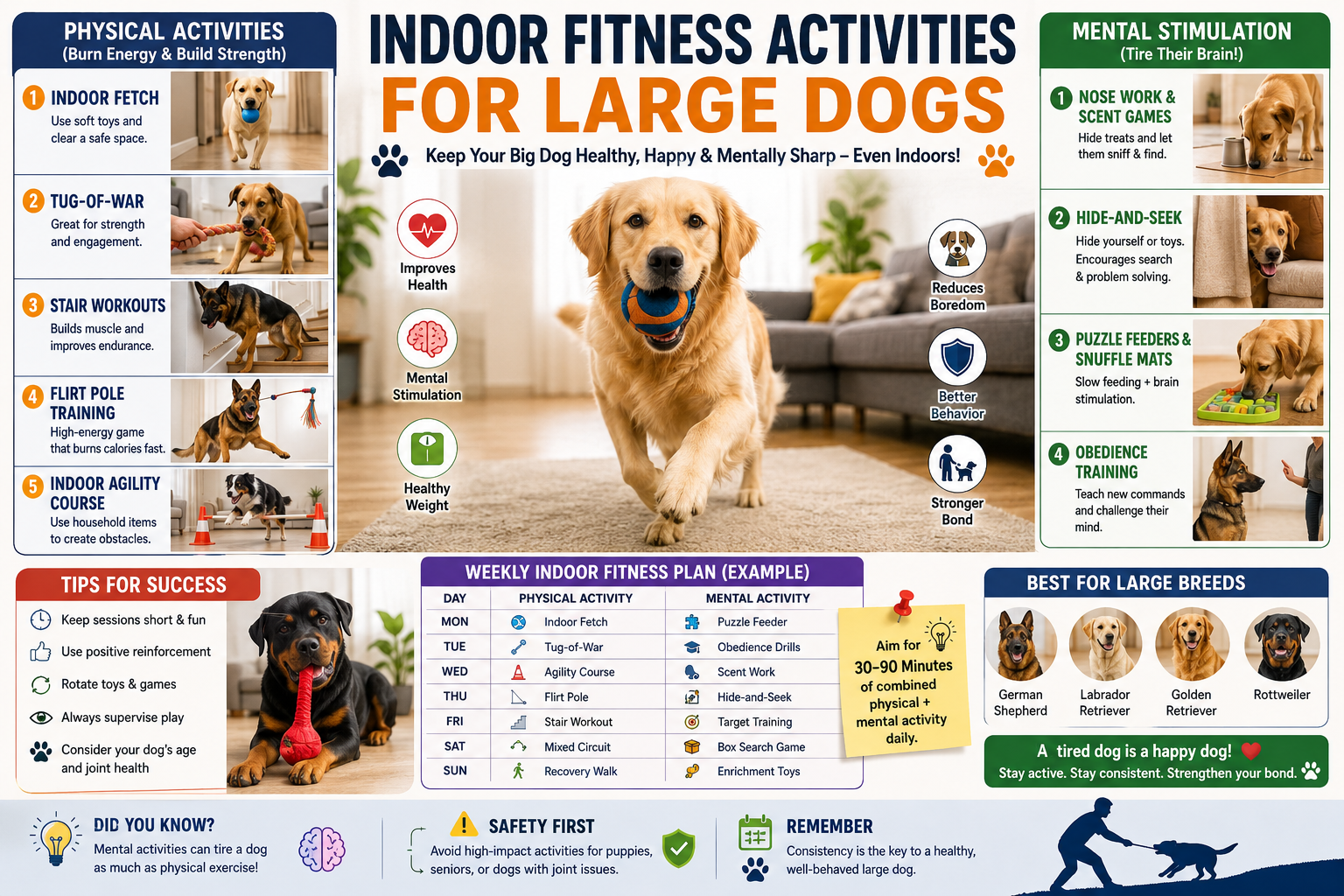
1. Hallway Fetch
A long hallway becomes an excellent running track.
How to do it
- Use a soft ball.
- Clear obstacles.
- Throw short distances.
- Reward retrieval.
Best for:
- Labrador Retrievers
- Border Collies
- Australian Shepherds
2. Tug-of-War
Contrary to myths, tug is safe when rules are followed.
Benefits:
- Builds jaw strength
- Improves impulse control
- Strengthens bond
- Burns energy quickly
Rules:
- Teach “Drop it.”
- Stop if excitement becomes excessive.
- Use designated tug toys only.
3. Hide and Seek
One of the easiest enrichment games.
Hide behind furniture or doors and call your dog.
This develops:
- Recall
- Scent tracking
- Confidence
- Problem-solving
4. Treat Scavenger Hunt
Hide treats around the house.
Start easy and gradually increase difficulty.
Mental exercise often tires dogs faster than running.
5. Indoor Obstacle Course
Create obstacles using:
- Chairs
- Pillows
- Broomsticks
- Boxes
- Laundry baskets
Teach your dog to:
- Jump
- Crawl
- Weave
- Balance
This improves coordination and confidence.
Mental Stimulation Exercises
Physical exercise alone isn’t enough.
Puzzle Toys
Interactive feeders encourage problem-solving.
Benefits:
- Slows eating
- Prevents boredom
- Reduces anxiety
Nose Work
Hide scented objects around the house.
Dogs naturally enjoy using their noses, making scent games highly rewarding.
Trick Training
Teach:
- Spin
- Roll over
- High five
- Bow
- Weave
- Back up
Five minutes of focused learning can be surprisingly tiring.
Apartment-Friendly Indoor Exercises
Limited space doesn’t mean limited activity.
Excellent apartment workouts include:
| Exercise | Space Needed | Energy Burn |
|---|---|---|
| Tug-of-war | Small | High |
| Puzzle toys | Small | Medium |
| Hide and seek | Small | Medium |
| Nose work | Small | High |
| Trick training | Small | Medium |
| Hallway fetch | Medium | High |
| Stair climbing | Medium | High |
Weekly Indoor Exercise Plan
| Day | Activity |
| Monday | Fetch + Puzzle Toy |
| Tuesday | Obedience Training + Tug |
| Wednesday | Nose Work + Hide & Seek |
| Thursday | DIY Agility Course |
| Friday | Trick Training + Fetch |
| Saturday | Stair Workout + Scavenger Hunt |
| Sunday | Mixed Games & Relaxed Enrichment |
Aim for 30–90 minutes daily depending on breed, age, and health.
Common Mistakes
Avoid these errors:
- Exercising immediately after meals
- Using slippery floors
- Overworking puppies
- Ignoring signs of fatigue
- Using unsafe household objects
- Repeating the same game every day
Variety keeps dogs engaged.
Safety Tips
Always:
- Warm up with light movement
- Provide fresh water
- Use non-slip surfaces
- Supervise jumping
- Adapt intensity for seniors
- Consult your veterinarian for dogs with medical conditions
Expert Recommendations
The best indoor routine combines:
- 40% physical movement
- 30% mental enrichment
- 20% obedience training
- 10% social interaction and bonding
This balanced approach often produces better behavior than exercise alone.
Conclusion
The Best Indoor Exercises for Active Dogs go beyond simply burning calories. By mixing physical games, scent work, training sessions, and enrichment activities, you can keep your dog healthy, mentally stimulated, and happy regardless of weather or living space. A varied routine prevents boredom, strengthens your bond, and helps your dog thrive every day.
FAQs:
1. What are the best indoor exercises for active dogs?
Fetch, tug-of-war, hide-and-seek, obstacle courses, scent games, and puzzle toys are some of the best indoor exercises for keeping active dogs fit and entertained.
2. How can I tire my dog out indoors?
Combine physical activities like fetch or stair climbing with mental stimulation such as puzzle toys, obedience training, or nose work to effectively burn your dog’s energy.
3. Can indoor exercise replace daily walks?
Indoor exercise can supplement walks, but most dogs still benefit from outdoor walks for socialization, new experiences, and environmental enrichment.
4. How much indoor exercise does an active dog need?
Most active dogs need 30 to 90 minutes of exercise each day, depending on their breed, age, size, and energy level.
5. What games can I play with my dog inside the house?
Popular indoor games include tug-of-war, hide-and-seek, treat scavenger hunts, hallway fetch, and DIY agility courses.
6. Are puzzle toys good for active dogs?
Yes, puzzle toys provide mental stimulation, reduce boredom, slow eating, and help satisfy your dog’s natural problem-solving instincts.
7. Is tug-of-war safe for dogs?
Yes, tug-of-war is safe when played with proper rules, such as teaching commands like “drop it” and using appropriate tug toys.
8. What are the best indoor exercises for apartment dogs?
Trick training, nose work, puzzle games, hallway fetch, and tug-of-war are excellent space-saving activities for apartment living.
9. Can puppies do indoor exercises?
Yes, puppies can enjoy gentle indoor games and short training sessions, but avoid high-impact activities that may stress developing joints.
10. How do I keep my dog entertained on rainy days?
Create a mix of interactive games, scent-based activities, obstacle courses, and training sessions to keep your dog mentally and physically engaged.
11. Do indoor exercises help reduce destructive behavior?
Yes, regular exercise and mental enrichment can reduce chewing, digging, barking, and other boredom-related behaviors.
12. Are dog treadmills good for indoor exercise?
Dog treadmills can be a useful option for high-energy dogs when introduced gradually and used under supervision as part of a balanced exercise routine.
13. What is the best mental exercise for dogs indoors?
Scent work, puzzle feeders, treat hunts, and learning new tricks are among the most effective mental exercises for dogs.
14. How often should I rotate indoor activities for my dog?
Rotating games every few days helps prevent boredom and keeps your dog interested, motivated, and mentally stimulated.
15. Which dog breeds benefit most from indoor exercise routines?
High-energy breeds like Border Collies, Labrador Retrievers, Australian Shepherds, Belgian Malinois, and Jack Russell Terriers benefit greatly from structured indoor exercise and enrichment.