Introduction
If your dog is carrying extra weight, you’re not alone. Many pet owners struggle to keep their dogs active due to busy schedules, aging pets, or limited outdoor space. The good news is that regular exercise, combined with a healthy diet, can help your furry friend reach a healthier weight and enjoy a longer, happier life. Choosing the best exercises for overweight dogs is essential because overweight dogs need gentle, low-impact activities that improve fitness without putting too much strain on their joints
In this guide, you’ll learn the safest exercises for overweight dogs, how to build a fitness routine, common mistakes to avoid, and helpful tips to keep your dog motivated.
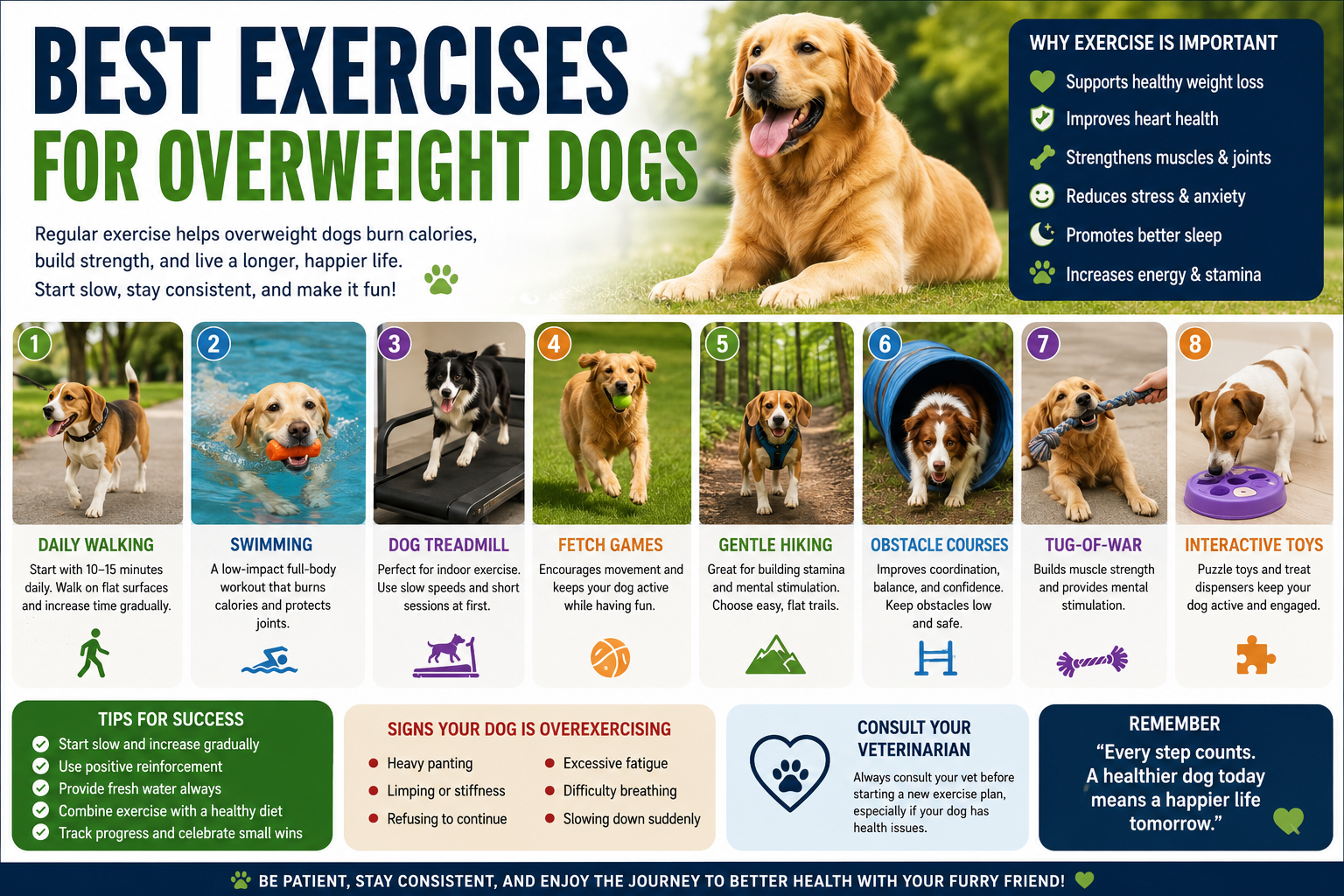
Why Exercise Is Important for Overweight Dogs
Extra body weight can lead to serious health problems in dogs, including joint pain, heart disease, diabetes, breathing difficulties, and reduced mobility. Regular exercise helps dogs burn calories while improving muscle strength, heart health, and overall well-being.
Benefits of exercise include:
- Supports healthy weight loss
- Improves cardiovascular health
- Strengthens muscles and joints
- Reduces stress and anxiety
- Increases energy levels
- Improves flexibility and balance
- Promotes better sleep
Before starting any new exercise routine, consult your veterinarian, especially if your dog is severely overweight or has existing medical conditions.
1. Daily Walking
Walking is one of the safest and most effective exercises for overweight dogs. It is gentle on the joints while helping your dog burn calories consistently.
Tips for Walking
- Start with 10–15 minutes per day.
- Walk on soft surfaces like grass whenever possible.
- Increase the duration gradually each week.
- Keep a comfortable pace.
- Bring fresh water during longer walks.
Consistency matters more than speed.
2. Swimming
Swimming is an excellent low-impact workout because the water supports your dog’s body weight while providing full-body resistance.
Benefits of Swimming
- Burns a high number of calories
- Reduces pressure on joints
- Builds muscle strength
- Improves endurance
- Keeps dogs cool during hot weather
Always supervise your dog while swimming and use a dog life jacket if needed.
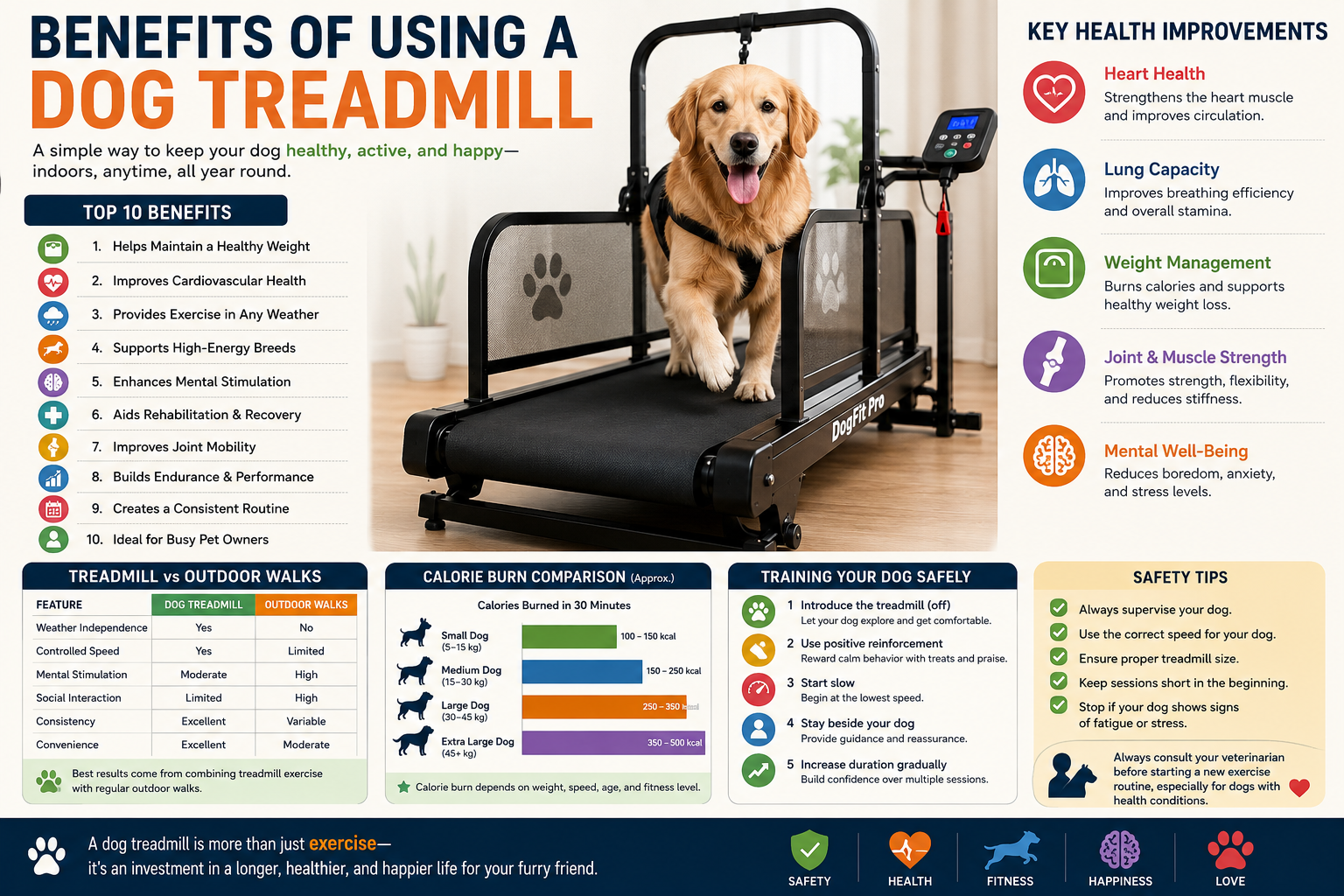
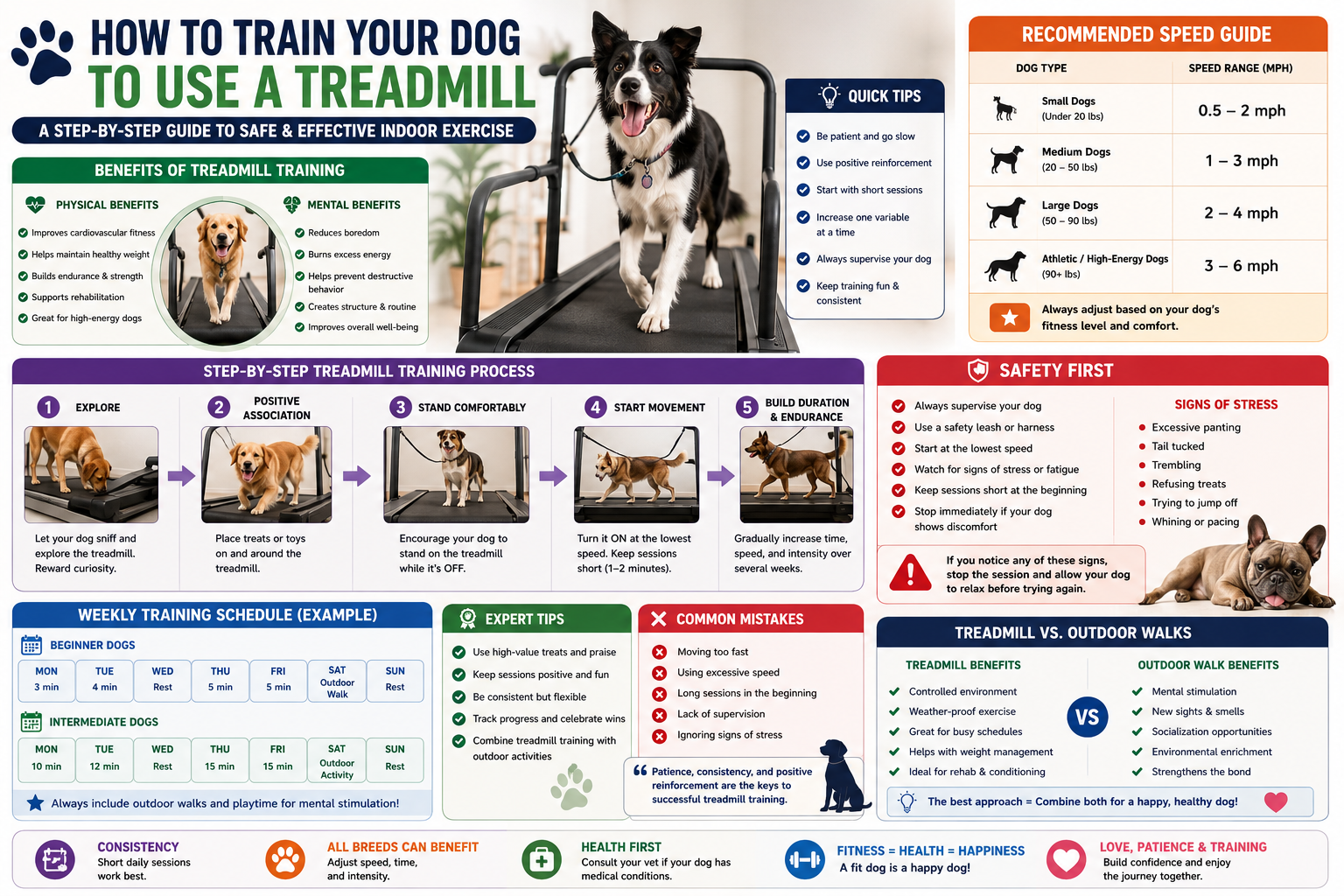
3. Dog Treadmill Exercise
A dog treadmill is ideal for pet owners who cannot walk outdoors every day due to bad weather or busy schedules. Indoor treadmill workouts provide consistent exercise in a controlled environment.
Advantages of a Dog Treadmill
- Exercise regardless of weather
- Adjustable speed settings
- Safe indoor workouts
- Controlled exercise sessions
- Suitable for gradual weight loss
Start with slow speeds and short sessions until your dog becomes comfortable.
4. Fetch Games
Playing fetch encourages natural movement and makes exercise feel like fun instead of work.
Keep the throws short at first and gradually increase the distance as your dog’s fitness improves.
Use lightweight balls or soft toys that are easy to carry.
5. Gentle Hiking
Once your dog builds endurance, gentle hiking on easy trails offers both mental and physical stimulation.
Choose flat trails with minimal obstacles and allow frequent rest breaks.
Avoid steep hills if your dog is overweight.
6. Obstacle Courses
Simple backyard obstacle courses encourage movement while improving coordination.
You can include:
- Cones
- Small tunnels
- Poles to walk around
- Low stepping platforms
Keep obstacles low to prevent unnecessary joint stress.
7. Tug-of-War
A controlled game of tug can help strengthen muscles while providing mental stimulation.
Avoid excessive pulling, especially for senior dogs or dogs with neck problems.
Keep sessions short and enjoyable.
8. Interactive Toys and Puzzle Games
Exercise isn’t only physical. Mental stimulation also helps overweight dogs stay active.
Interactive toys encourage movement while rewarding problem-solving skills.
Examples include:
- Treat-dispensing toys
- Puzzle feeders
- Interactive balls
- Snuffle mats
These activities reduce boredom and encourage gentle movement throughout the day.
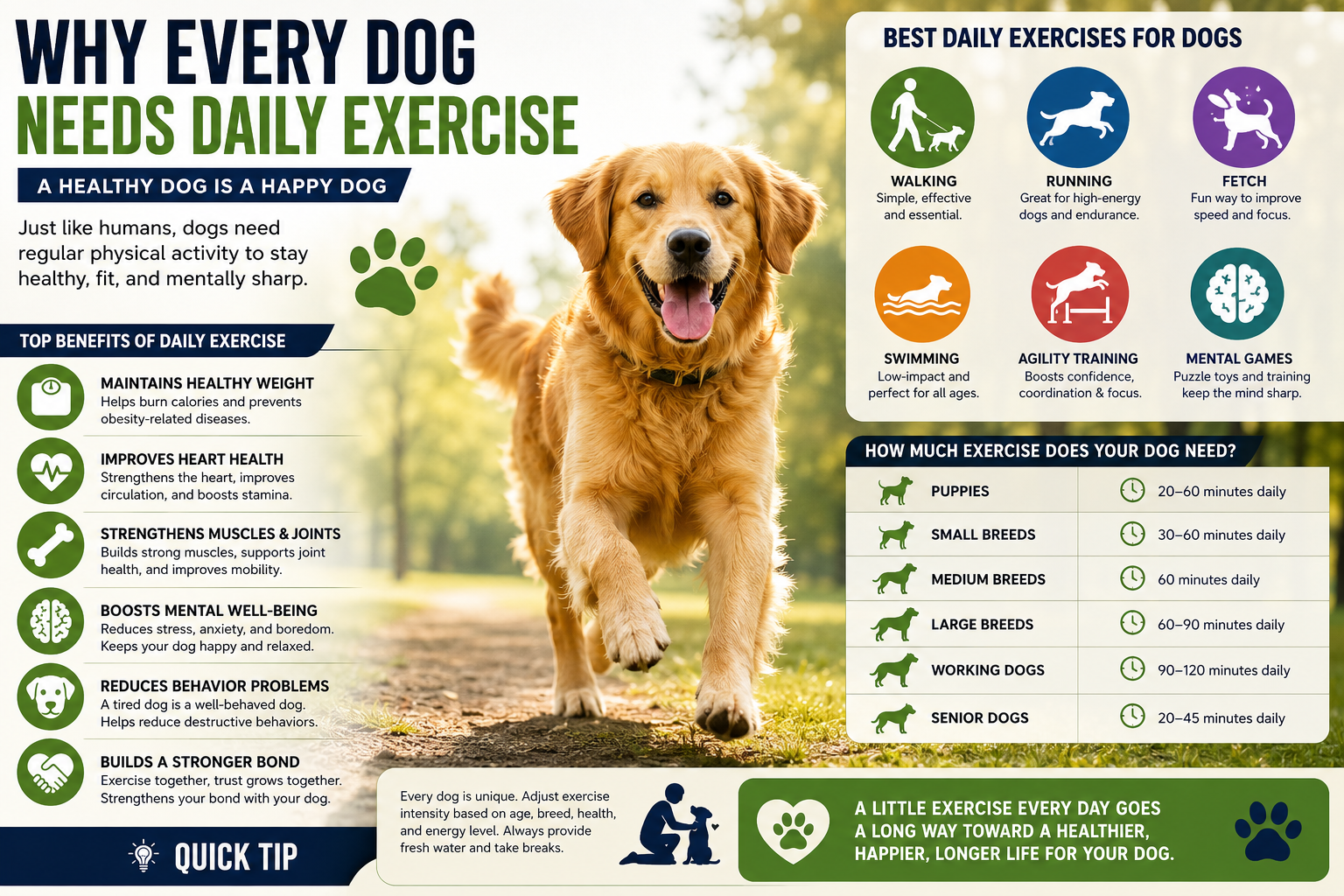
How Often Should an Overweight Dog Exercise?
Every dog is different, but most overweight dogs benefit from gradual daily activity.
| Dog Fitness Level | Daily Exercise |
|---|---|
| Beginner | 10–15 minutes |
| Moderate | 20–30 minutes |
| Advanced | 30–60 minutes |
Increase activity slowly to avoid injury.
Signs Your Dog Is Exercising Too Much
Watch for warning signs during exercise:
- Heavy panting
- Limping
- Slowing down suddenly
- Refusing to continue
- Excessive fatigue
- Difficulty breathing
If you notice these symptoms, stop exercising immediately and allow your dog to rest.
Weight Loss Tips Beyond Exercise
Exercise works best when combined with healthy eating habits.
Feed a Balanced Diet
Choose high-quality dog food with appropriate calorie levels.
Measure Portions
Avoid overfeeding by measuring every meal instead of estimating.
Reduce Treats
Replace high-calorie treats with healthy options such as carrots or green beans.
Stay Consistent
Daily routines help dogs adapt and maintain healthy habits.
Track Progress
Weigh your dog every few weeks and monitor changes in body condition.
Common Mistakes to Avoid
Many owners accidentally slow their dog’s progress by making simple mistakes.
Avoid these common errors:
- Starting with intense workouts
- Skipping warm-up walks
- Overfeeding after exercise
- Exercising during extreme heat
- Ignoring joint pain
- Being inconsistent
- Expecting rapid weight loss
Healthy weight loss is gradual and sustainable.
Creating a Weekly Exercise Plan
Here’s a simple beginner-friendly schedule.
| Day | Activity |
|---|---|
| Monday | 15-minute walk |
| Tuesday | Fetch for 20 minutes |
| Wednesday | Dog treadmill session |
| Thursday | Swimming |
| Friday | Puzzle games and short walk |
| Saturday | Easy hiking |
| Sunday | Light walk and stretching |
Adjust the routine based on your dog’s age, breed, and fitness level.
When to Visit the Veterinarian
Consult your veterinarian if your dog:
- Has difficulty walking
- Shows signs of pain
- Gains weight despite exercise
- Has breathing problems
- Becomes unusually tired
A professional health assessment helps create the safest weight-loss plan.
Conclusion
Finding the best exercises for overweight dogs doesn’t have to be complicated. Gentle walks, swimming, dog treadmill workouts, fetch, hiking, and interactive games can all help your dog burn calories safely while improving overall health. Pair regular exercise with a balanced diet, consistent routine, and regular veterinary checkups for the best results. With patience and commitment, your dog can achieve a healthier weight, enjoy greater mobility, and live a happier, more active life.
FAQs
What is the best exercise for overweight dogs?
Walking is generally the safest and most effective exercise because it is gentle on the joints and easy to adjust based on your dog’s fitness level.
Can overweight dogs use a treadmill?
Yes. A dog treadmill provides controlled indoor exercise when introduced gradually and used under supervision.
How long should an overweight dog exercise daily?
Most overweight dogs benefit from 20–30 minutes of daily exercise, starting with shorter sessions if they are inactive.
Is swimming good for overweight dogs?
Yes. Swimming offers a full-body workout while reducing stress on the joints, making it ideal for overweight or senior dogs.
How fast should my dog lose weight?
Healthy weight loss is gradual. Most veterinarians recommend a slow, steady reduction rather than rapid weight loss.