Introduction
Keeping a dog active is one of the most important responsibilities of pet ownership. Regular exercise supports physical health, mental well-being, and overall quality of life. However, busy schedules, extreme weather conditions, and limited outdoor space can make daily exercise challenging.
This is where a dog treadmill becomes a valuable solution.
Thebenefits of using a dog treadmill extend far beyond simple exercise. From weight management and cardiovascular health to mental stimulation and rehabilitation support, a dog treadmill can help dogs stay fit and healthy throughout every stage of life.
What You’ll Learn
- What a dog treadmill is
- Top health benefits of using a dog treadmill
- How treadmills support weight loss
- Benefits for senior dogs
- Mental health advantages
- Safety tips and training methods
- Dog treadmill vs outdoor walks
- Expert recommendations
What Is a Dog Treadmill?
A dog treadmill is a specialized exercise machine designed specifically for canine use. Unlike human treadmills, dog treadmills often feature longer running surfaces, safety rails, quieter motors, and speed settings tailored to dogs.
They provide controlled indoor exercise regardless of weather conditions.
Quick Definition
A dog treadmill is a canine fitness device that allows dogs to walk, jog, or run indoors in a safe and controlled environment to improve physical and mental health.
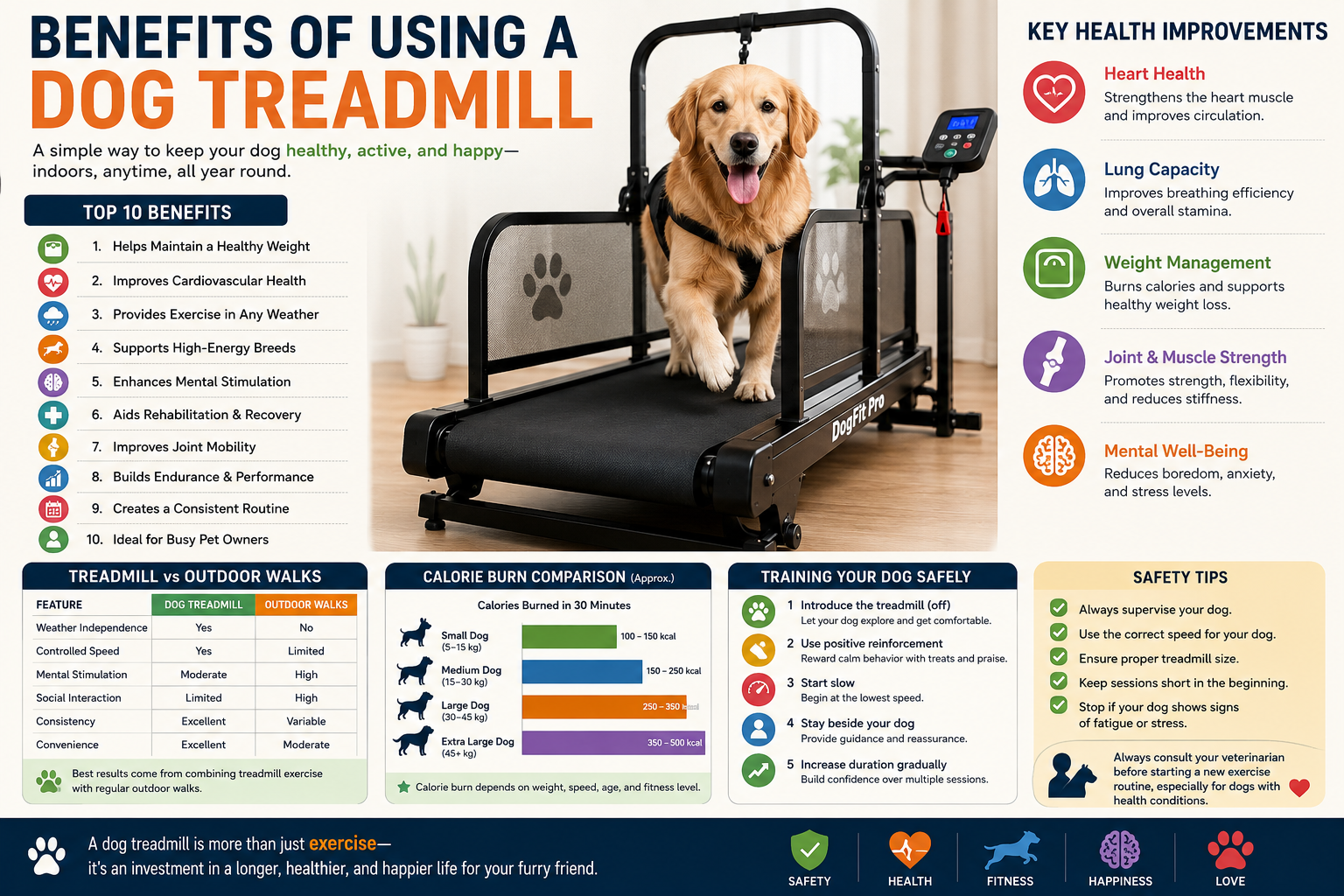
Top Benefits of Using a Dog Treadmill
1. Helps Maintain a Healthy Weight
Pet obesity has become a growing concern worldwide.
According to veterinary health organizations, overweight dogs face higher risks of:
- Diabetes
- Heart disease
- Arthritis
- Joint problems
- Reduced lifespan
A dog treadmill provides consistent calorie-burning exercise that supports healthy weight management.
Example
A Labrador that receives only occasional outdoor walks may gain excess weight. A daily treadmill routine can help maintain an ideal body condition.
2. Improves Cardiovascular Health
Regular aerobic exercise strengthens the heart and lungs.
Benefits include:
- Improved circulation
- Better oxygen delivery
- Increased stamina
- Reduced risk of cardiovascular issues
Just 20–30 minutes of moderate treadmill activity can contribute significantly to cardiovascular fitness.
3. Provides Exercise During Bad Weather
Extreme temperatures can make outdoor walks difficult.
Common Weather Challenges
- Heavy rain
- Snow
- Heat waves
- Air pollution
- Storms
A treadmill ensures your dog never misses important exercise sessions.
4. Supports High-Energy Breeds
Some breeds require significantly more activity than others.
Examples include:
- Border Collies
- German Shepherds
- Belgian Malinois
- Labrador Retrievers
- Siberian Huskies
Without sufficient exercise, these breeds may develop destructive behaviors.
A treadmill helps release excess energy safely.
5. Enhances Mental Stimulation
Physical activity directly influences mental well-being.
Benefits include:
- Reduced boredom
- Lower stress levels
- Better mood
- Improved focus
Dogs that receive regular exercise often display calmer behavior at home.
6. Aids Rehabilitation and Recovery
Veterinarians and canine rehabilitation specialists often use controlled exercise during recovery programs.
Benefits may include:
- Muscle rebuilding
- Improved mobility
- Controlled movement
- Joint strengthening
Always consult a veterinarian before beginning rehabilitation exercise.
7. Improves Joint Mobility
Moderate exercise keeps joints moving properly.
This is especially beneficial for:
- Senior dogs
- Large breeds
- Dogs recovering from inactivity
Consistent movement may help reduce stiffness and improve flexibility.
8. Builds Endurance and Athletic Performance
Working dogs and sporting dogs often require advanced conditioning.
A treadmill can help improve:
- Endurance
- Speed
- Muscle tone
- Overall athletic performance
Many professional trainers incorporate treadmills into conditioning programs.
9. Creates a Consistent Exercise Routine
Consistency is often the biggest challenge for dog owners.
Benefits include:
- Scheduled workouts
- Predictable exercise
- Easier habit formation
- Better fitness tracking
Consistency leads to better long-term health outcomes.
10. Helps Busy Pet Owners
Modern lifestyles can make long walks difficult.
A treadmill allows owners to:
- Exercise dogs before work
- Supplement outdoor walks
- Maintain routines year-round
It provides convenience without sacrificing canine health.
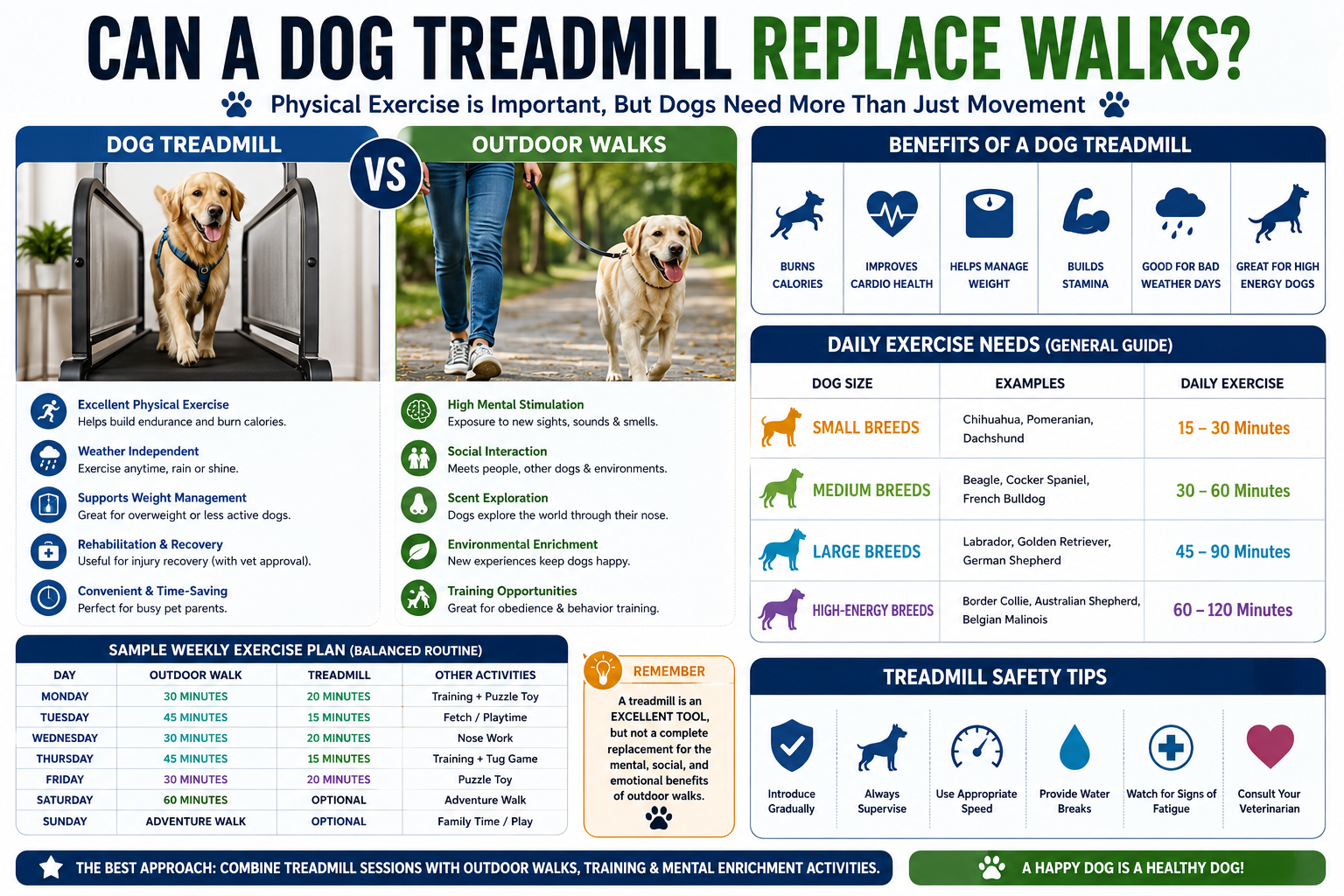
Dog Treadmill vs Outdoor Walks
| Feature | Dog Treadmill | Outdoor Walks |
|---|---|---|
| Weather Independence | Yes | No |
| Controlled Speed | Yes | Limited |
| Mental Stimulation | Moderate | High |
| Social Interaction | Limited | High |
| Consistency | Excellent | Variable |
| Convenience | Excellent | Moderate |
Expert Recommendation
Dog treadmills should complement—not completely replace—outdoor walks whenever possible.
How to Train a Dog to Use a Treadmill Safely
Step 1: Introduce the Equipment
Allow your dog to explore the treadmill while it is turned off.
Step 2: Use Positive Reinforcement
Reward calm behavior with treats and praise.
Step 3: Start Slowly
Begin at the lowest speed.
Step 4: Stay Beside Your Dog
Provide guidance and reassurance.
Step 5: Increase Duration Gradually
Build confidence over multiple sessions.
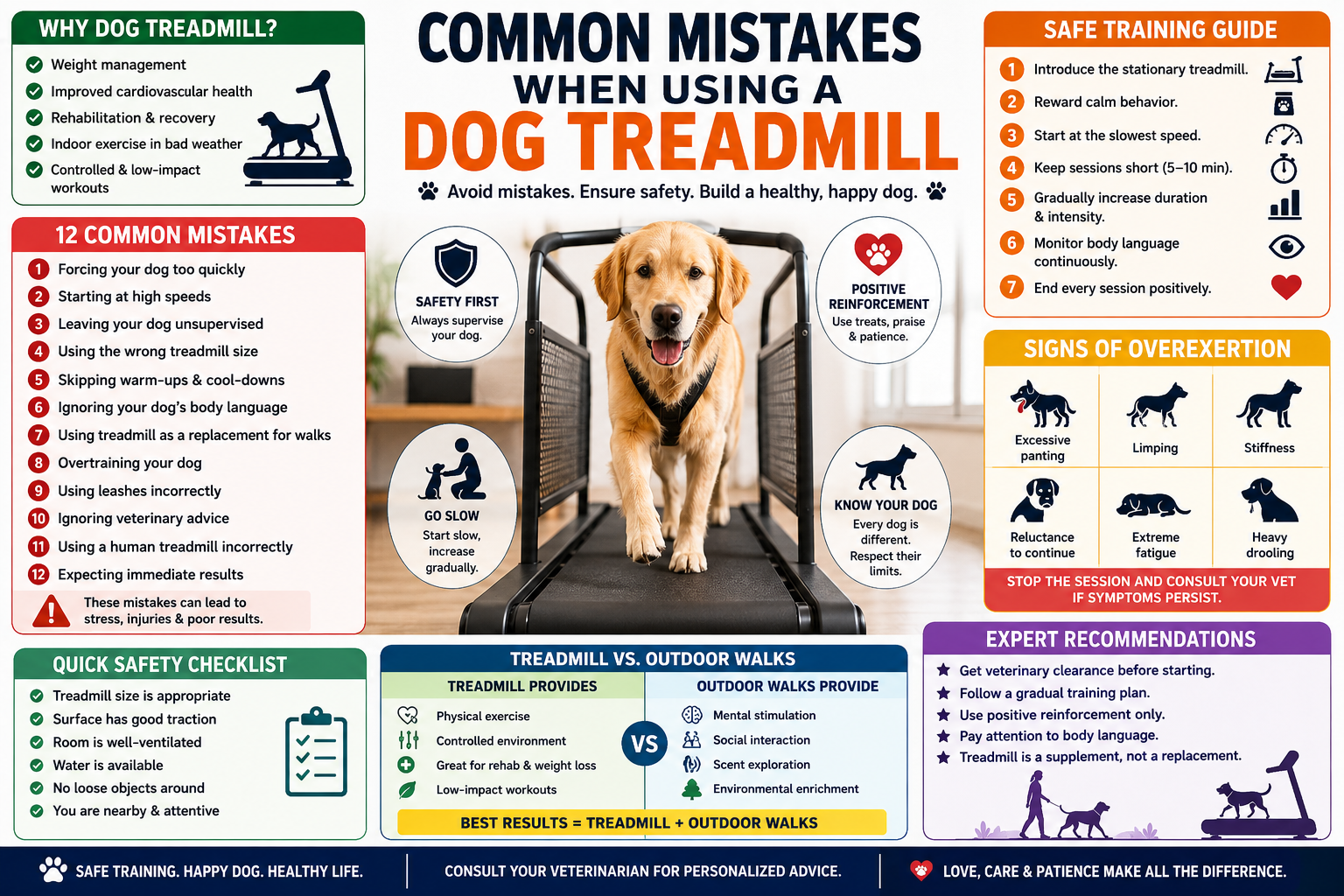
Common Mistakes Dog Owners Make
Avoid:
- Starting too fast
- Exercising puppies excessively
- Leaving dogs unattended
- Using incorrect speed settings
- Skipping warm-ups
- Ignoring signs of fatigue
Are Dog Treadmills Safe?
Yes, when used properly.
Safety best practices include:
- Veterinary approval
- Proper sizing
- Supervision
- Gradual training
- Appropriate exercise duration
Most healthy dogs can use treadmills safely under owner supervision.
Who Benefits Most from a Dog Treadmill?
Overweight Dogs
Helps burn calories consistently.
Senior Dogs
Supports mobility and circulation.
High-Energy Dogs
Provides additional exercise.
Urban Dogs
Ideal where outdoor space is limited.
Rehabilitation Dogs
Supports recovery programs under veterinary guidance.
Conclusion
The benefits of using a dog treadmill make it one of the most effective tools for maintaining canine health and fitness. Whether your goal is weight management, improved cardiovascular health, better mobility, mental stimulation, or convenient daily exercise, a dog treadmill offers a practical and reliable solution.
When used safely and combined with outdoor activities, a dog treadmill can help dogs live healthier, happier, and more active lives.
FAQ Section:
1. Are dog treadmills good for dogs?
Yes. They provide controlled exercise that improves fitness, weight management, and overall health.
2. Can a dog treadmill replace daily walks?
No. It should supplement outdoor walks, not completely replace them.
3. How long should a dog use a treadmill?
Most dogs benefit from 15–30 minutes depending on age, breed, and fitness level.
4. Are dog treadmills safe?
Yes, when used under supervision and with proper training.
5. Do veterinarians recommend dog treadmills?
Many veterinarians recommend them for weight control, rehabilitation, and exercise consistency.
6. Can puppies use dog treadmills?
Only under careful supervision and according to veterinary guidance.
7. Can a treadmill help an overweight dog?
Yes. Combined with proper nutrition, treadmill exercise can support healthy weight loss.
8. Which dogs benefit most from treadmills?
High-energy breeds, overweight dogs, senior dogs, and dogs with limited outdoor access.
9. How fast should a dog treadmill be?
The speed should match your dog’s natural walking or running pace.
10. Can dogs use treadmills every day?
Most healthy dogs can use them regularly with proper exercise planning.
11. Do dog treadmills help with anxiety?
Regular exercise can reduce stress, boredom, and anxiety-related behaviors.
12. What is the biggest benefit of a dog treadmill?
Consistent exercise regardless of weather or owner schedule