Dogs are naturally active animals that need regular movement to stay healthy. Whether you have a playful puppy, an energetic adult dog, or a gentle senior companion, daily exercise is one of the most important parts of responsible pet ownership. Many dog owners believe that feeding their pet high-quality food is enough, but exercise is equally essential for maintaining both physical and mental well-being.
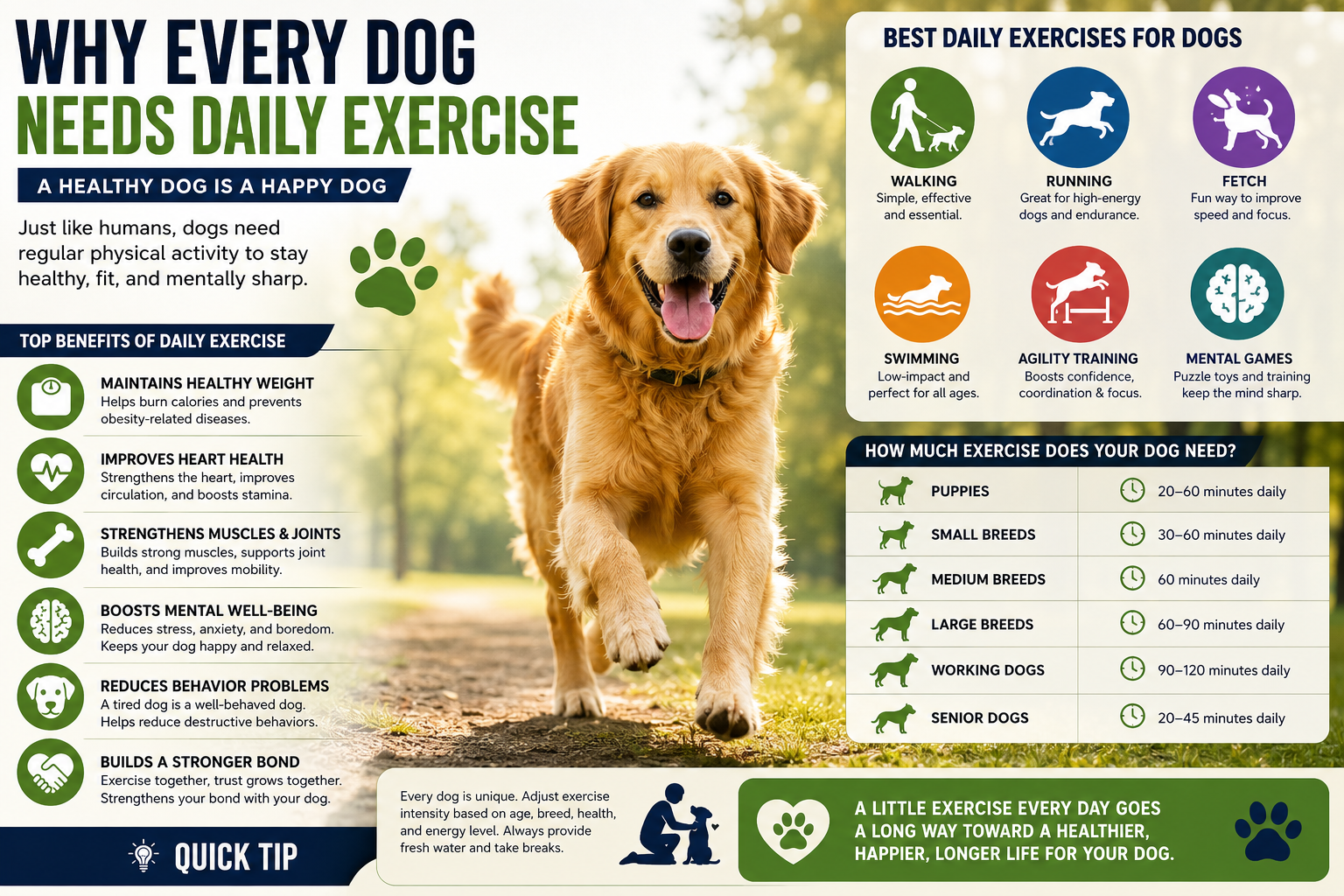
Daily exercise helps dogs maintain a healthy weight, strengthens muscles and joints, improves heart health, reduces anxiety, and prevents destructive behaviors. It also strengthens the bond between dogs and their owners while providing opportunities for socialization and mental stimulation.
\In this guide, you’ll learn why every dog needs daily exercise, how much activity different breeds require, the best exercises for dogs, common mistakes to avoid, and practical tips for creating a healthy daily routine.
What Is Daily Exercise for Dogs?
Daily exercise refers to planned physical activities that keep a dog active, mentally engaged, and physically fit every day. It includes walking, running, playing fetch, agility training, swimming, hiking, and interactive games.
Exercise is much more than burning calories. It helps dogs release excess energy, explore their surroundings, and stay mentally stimulated.
Benefits of Daily Dog Exercise
Daily exercise offers numerous benefits, including:
- Better cardiovascular health
- Stronger muscles and bones
- Healthy body weight
- Improved digestion
- Better sleep
- Reduced stress and anxiety
- Increased lifespan
- Improved obedience and focus
- Stronger relationship with owners
Veterinary professionals consistently recommend regular physical activity as part of a dog’s overall healthcare plan.
Why Every Dog Needs Daily Exercise
Every dog, regardless of breed or size, benefits from regular movement. While exercise requirements vary depending on age, breed, and health condition, no healthy dog should spend the entire day inactive.
Maintains a Healthy Weight
Obesity is becoming increasingly common among household dogs. Extra weight puts pressure on joints and increases the risk of diabetes, arthritis, and heart disease.
Daily walks and active play help burn calories while maintaining a healthy body condition.
Healthy dogs are generally more energetic, confident, and live longer lives.
Improves Heart Health
Like humans, dogs benefit from cardiovascular exercise.
Regular activities help:
- Improve blood circulation
- Strengthen the heart
- Lower the risk of cardiovascular diseases
- Increase endurance
Dogs that exercise consistently often recover more quickly after physical activity.
Supports Joint and Muscle Health
Exercise keeps muscles strong and supports healthy joints.
Benefits include:
- Improved flexibility
- Better mobility
- Increased muscle strength
- Reduced stiffness
- Enhanced coordination
Strong muscles help protect joints from injury and improve overall movement.
Reduces Behavioral Problems
Many destructive behaviors result from boredom rather than disobedience.
Insufficient exercise may lead to:
- Excessive barking
- Digging
- Chewing furniture
- Jumping on guests
- Hyperactivity
- Restlessness
Providing daily exercise gives dogs a healthy outlet for their energy.
Improves Mental Health
Dogs need mental stimulation as much as physical activity.
Exercise helps reduce:
- Separation anxiety
- Stress
- Depression
- Nervous behaviors
Activities that challenge a dog’s mind improve confidence and emotional well-being.
Strengthens the Bond Between Owner and Dog
Walking, hiking, or playing together creates trust and improves communication.
Dogs naturally enjoy spending time with their owners. Daily activities strengthen that relationship while reinforcing positive behavior.
How Much Exercise Does a Dog Need?
Exercise requirements depend on several factors.
| Dog Type | Daily Exercise |
|---|---|
| Puppies | 20–60 minutes |
| Small Breeds | 30–60 minutes |
| Medium Breeds | 60 minutes |
| Large Breeds | 60–90 minutes |
| Working Dogs | 90–120 minutes |
| Senior Dogs | 20–45 minutes |
Always adjust exercise based on your veterinarian’s recommendations.
Best Types of Daily Exercise for Dogs
Walking
Walking remains the simplest and most effective exercise.
Benefits include:
- Weight management
- Socialization
- Mental stimulation
- Exploration
- Improved obedience
Aim for one or two walks every day.
Running
Energetic breeds such as Border Collies, Huskies, and Labrador Retrievers often enjoy running.
Start slowly and gradually increase distance.
Avoid running during extremely hot weather.
Playing Fetch
Fetch provides excellent cardiovascular exercise.
It also improves:
- Speed
- Coordination
- Focus
- Recall training
Use safe balls designed specifically for dogs.
Swimming
Swimming is one of the best low-impact exercises.
It is especially helpful for:
- Senior dogs
- Overweight dogs
- Dogs with arthritis
- Injury rehabilitation
Always supervise dogs around water.
Agility Training
Obstacle courses challenge both body and mind.
Agility improves:
- Confidence
- Coordination
- Balance
- Listening skills
Many owners create simple agility courses in their backyard.
Tug-of-War
When played safely, tug-of-war provides both physical activity and mental stimulation.
Use durable dog toys and teach your dog to release on command.
Interactive Puzzle Games
Mental exercise can be just as tiring as physical exercise.
Puzzle toys encourage problem-solving while rewarding dogs with treats.
Mental Exercise Is Just as Important
Dogs thrive when their brains are challenged.
Examples include:
- Scent games
- Hide-and-seek
- Food puzzles
- Obedience training
- Learning new tricks
Mental stimulation helps prevent boredom and destructive behavior.
Exercise Needs by Life Stage
Puppies
Puppies have growing bones and joints.
Avoid excessive running or jumping.
Focus on:
- Short walks
- Gentle play
- Socialization
- Basic training
Adult Dogs
Adult dogs require consistent daily activity to maintain peak health.
Combine:
- Walking
- Running
- Games
- Training sessions
Senior Dogs
Older dogs still need movement.
Choose low-impact exercises like:
- Slow walks
- Swimming
- Gentle stretching
- Light play
Watch for signs of discomfort.
Common Mistakes Dog Owners Make
Avoid these common errors:
- Exercising only on weekends
- Walking the same route every day
- Ignoring weather conditions
- Skipping warm-up periods
- Exercising immediately after meals
- Overexercising puppies
- Ignoring signs of fatigue
- Using unsafe equipment
Consistency matters more than intensity.
Signs Your Dog Needs More Exercise
Watch for these warning signs:
- Weight gain
- Constant barking
- Chewing household items
- Digging
- Hyperactivity
- Difficulty settling down
- Attention-seeking behavior
- Restlessness
Increasing daily activity often improves these behaviors.
Safety Tips for Exercising Dogs
Keep your dog safe by following these guidelines:
- Carry fresh water.
- Avoid exercising during peak heat.
- Check paws after walks.
- Use reflective gear at night.
- Keep vaccinations up to date.
- Use a secure leash in public.
- Gradually increase activity levels.
- Monitor for signs of overheating.
Creating a Daily Exercise Routine
A consistent routine benefits both dogs and owners.
Example schedule:
Morning
- 30-minute walk
Afternoon
- Puzzle toy or obedience training
Evening
- Fetch or another walk
Adjust the routine based on your dog’s age, breed, and energy level.
Choosing the Right Exercise Equipment
Useful equipment includes:
- Comfortable harness
- Strong leash
- Interactive toys
- Fetch balls
- Frisbees
- Puzzle feeders
- Portable water bottle
- Dog treadmill (for indoor exercise when outdoor walks are limited)
Indoor exercise equipment can be particularly helpful during extreme weather conditions.
Conclusion
Understanding why every dog needs daily exercise is essential for every responsible pet owner. Regular physical activity supports healthy weight, strong muscles, better heart health, improved behavior, and emotional well-being. It also deepens the bond between you and your dog while helping prevent many common health issues.
The best exercise routine is one that fits your dog’s age, breed, and energy level. Whether it’s a daily walk, a game of fetch, swimming, agility training, or interactive indoor activities, consistency is key. By making exercise part of your dog’s everyday routine, you’re investing in a happier, healthier, and longer life for your four-legged companion.
Frequently Asked Questions
Is walking enough exercise for a dog?
For many dogs, regular walks are sufficient when combined with mental stimulation. High-energy breeds often require additional activities like running or fetch.
Can dogs exercise every day?
Yes. Healthy dogs generally benefit from daily exercise, provided the intensity matches their age, breed, and physical condition.
What happens if dogs don’t get enough exercise?
Lack of exercise can contribute to obesity, anxiety, destructive behavior, poor muscle tone, and other health issues.
Is indoor exercise effective?
Yes. Indoor games, obedience training, puzzle toys, and dog treadmills can help dogs stay active when outdoor exercise is limited.
Can older dogs still exercise?
Absolutely. Senior dogs should continue exercising with lower-impact activities such as gentle walks and swimming.