Training your dog at home is one of the best ways to build a strong bond while teaching good behavior. If you’re wondering, how long does it take to train a dog at home?, the answer depends on several factors, including your dog’s age, breed, personality, and the consistency of your training routine. While some dogs can learn basic commands in just a few weeks, complete obedience and reliable behavior usually take three to six months of regular practice.
The key to successful dog training is patience, positive reinforcement, and daily consistency. Whether you’re training a playful puppy or an older rescue dog, understanding realistic timelines will help you stay motivated and achieve lasting results.
How Long Does It Take to Train a Dog at Home?
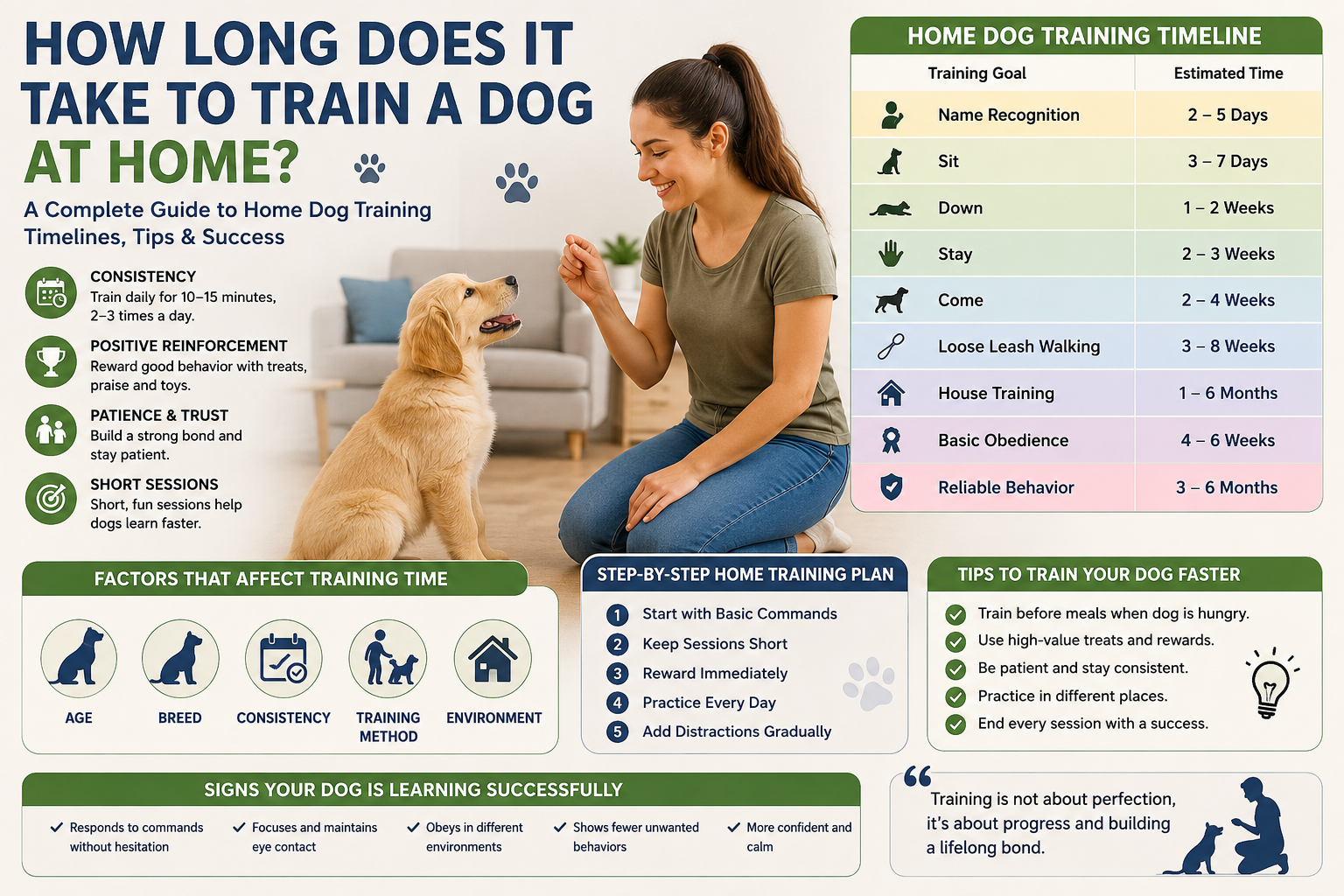
Most dogs can learn basic commands such as sit, stay, come, and down within 4 to 6 weeks if you practice for 10–15 minutes two or three times a day. However, mastering these commands in different environments and around distractions takes additional time.
Here’s a general timeline:
| Training Goal | Estimated Time |
|---|---|
| Name Recognition | 2–5 days |
| Sit | 3–7 days |
| Down | 1–2 weeks |
| Stay | 2–3 weeks |
| Come | 2–4 weeks |
| Loose Leash Walking | 3–8 weeks |
| House Training | 1–6 months |
| Basic Obedience | 4–6 weeks |
| Reliable Behavior | 3–6 months |
Remember that every dog learns differently, so these timelines may vary.
Factors That Affect Dog Training Time
Several factors influence how quickly your dog learns at home.
1. Age
Puppies are quick learners but have shorter attention spans. Adult dogs usually concentrate better during training, while senior dogs may require more patience and shorter sessions.
2. Breed
Some breeds, such as Border Collies, Labrador Retrievers, Golden Retrievers, and German Shepherds, are naturally eager to learn. Independent breeds like Beagles or Shiba Inus may need more repetition and motivation.
3. Consistency
Consistency is one of the biggest factors in successful dog training. Everyone in the household should use the same commands and reward the same behaviors to avoid confusing the dog.
4. Training Method
Positive reinforcement, including treats, praise, and toys, is widely considered the most effective and humane training method. Rewarding good behavior encourages your dog to repeat it.
Step-by-Step Guide to Training Your Dog at Home
Follow these simple steps to make home training more effective.
Step 1: Start with Basic Commands
Teach easy commands first, such as:
- Sit
- Stay
- Come
- Down
- Leave It
Master one command before introducing another.
Step 2: Keep Sessions Short
Dogs learn better with short, focused lessons. Aim for:
- Puppies: 5 minutes
- Young dogs: 5–10 minutes
- Adult dogs: 10–15 minutes
Multiple short sessions each day are more effective than one long session.
Step 3: Reward Immediately
Give a treat or verbal praise within one or two seconds after your dog performs the correct behavior. Immediate rewards help dogs understand exactly what they did right.
Step 4: Practice Every Day
Daily practice builds confidence and reinforces learning. Even 10 minutes of consistent training can make a significant difference over time.
Step 5: Add Distractions Gradually
Once your dog responds well at home, practice in the backyard, neighborhood, or local park. Training in different environments helps your dog obey commands wherever you go.
Common Mistakes That Slow Down Training
Many dog owners unintentionally delay progress by making avoidable mistakes.
Avoid these common errors:
- Using different command words for the same action.
- Expecting instant results.
- Training for too long.
- Punishing mistakes instead of rewarding good behavior.
- Skipping daily practice.
- Ending sessions on a negative note.
Keeping training positive and consistent will produce better long-term results.
Tips to Train Your Dog Faster
If you want faster progress, follow these expert recommendations:
- Train before mealtime when your dog is motivated by treats.
- Use high-value rewards such as cooked chicken or soft training treats.
- End every session with a successful command.
- Be patient and avoid yelling.
- Repeat commands consistently.
- Keep distractions low when teaching new behaviors.
- Make training fun by incorporating games and playtime.
Signs Your Dog Is Learning Successfully
Wondering if your training is working? Look for these positive signs:
- Responds to commands without hesitation.
- Maintains eye contact during training.
- Follows commands in different locations.
- Shows improved focus and confidence.
- Displays fewer unwanted behaviors.
- Responds even with mild distractions.
These signs indicate that your dog is building reliable habits.
Can You Train a Dog at Home Without a Professional Trainer?
Yes. Many dogs can be successfully trained at home using positive reinforcement, consistency, and patience. Professional trainers can be helpful for severe behavioral issues, aggression, or advanced obedience training, but most families can teach basic manners and commands on their own.
The most important factor isn’t expensive equipment—it’s your commitment to practicing every day.
Conclusion
So, how long does it take to train a dog at home? For most dogs, basic obedience takes about 4 to 6 weeks, while dependable everyday behavior develops over 3 to 6 months of consistent practice. Every dog learns at a different pace, but with patience, positive reinforcement, and a structured routine, you can build a well-behaved and confident companion.
Remember that dog training is an ongoing process rather than a one-time event. Continue reinforcing good behavior throughout your dog’s life, and you’ll enjoy a happier relationship built on trust, communication, and mutual respect.
FAQs:
1. How long does it take to train a dog at home?
Most dogs can learn basic commands within 4 to 6 weeks with consistent daily training. Complete obedience and reliable behavior typically take 3 to 6 months, depending on the dog’s age, breed, and training consistency.
2. Can I train my dog at home without a professional trainer?
Yes, you can successfully train your dog at home using positive reinforcement, consistency, and short daily training sessions. Professional trainers are mainly recommended for severe behavioral issues or advanced obedience training.
3. How many minutes a day should I train my dog?
Aim for 10–15 minutes per session, two or three times a day. Puppies benefit from shorter sessions of 3–5 minutes to match their attention span.
4. What is the easiest command to teach a dog first?
The “Sit” command is usually the easiest to teach. Once your dog masters “Sit,” you can move on to commands like Stay, Come, Down, and Leave It.
5. At what age should I start training my puppy?
You can start training your puppy as early as 8 weeks old. Begin with name recognition, potty training, socialization, and simple commands using positive reinforcement.
6. How long does potty training a dog take?
Potty training generally takes 1 to 6 months, depending on your dog’s age, routine, and consistency. Puppies usually require more frequent bathroom breaks than adult dogs.
7. Can older dogs still be trained at home?
Absolutely. Adult and senior dogs can learn new commands and behaviors with patience and consistent practice. While they may take longer to break old habits, they are fully capable of learning.
8. What is the fastest way to train a dog at home?
The fastest way is to use positive reinforcement, keep training sessions short, practice daily, reward good behavior immediately, and use the same commands consistently.
9. Why is my dog not learning commands?
Your dog may struggle due to inconsistent commands, distractions, long training sessions, lack of motivation, or insufficient practice. Try using high-value treats, shorter sessions, and a quiet environment.
10. Which dog breeds are easiest to train?
Breeds such as Border Collies, Labrador Retrievers, Golden Retrievers, German Shepherds, and Poodles are known for being highly trainable because of their intelligence and eagerness to please.
11. Should I use treats every time I train my dog?
Treats are very effective during the early stages of training. As your dog becomes more reliable, gradually replace treats with praise, toys, or affection while occasionally rewarding with treats to reinforce good behavior.
12. How do I know if my dog is making progress?
Signs of progress include responding quickly to commands, maintaining focus during training, following commands in different locations, and showing fewer unwanted behaviors.