Introduction
Keeping your dog at a healthy weight is one of the most important responsibilities of pet ownership. Excess weight can lead to joint problems, heart disease, diabetes, reduced mobility, and a shorter lifespan. While daily walks remain essential, many pet owners are now turning to dog treadmills as a reliable way to provide consistent exercise regardless of weather, schedule, or outdoor limitations.
The best dog treadmill exercises for weight loss combine controlled cardio, interval training, and endurance-building routines that help dogs burn calories safely. When used correctly, a dog treadmill can become a valuable tool for managing your pet’s weight and improving overall fitness.
What You’ll Learn
In this guide, you’ll discover:
- How dog treadmills help with weight loss
- The best treadmill exercises for overweight dogs
- Safe workout routines by fitness level
- Common mistakes to avoid
- Weight-loss tips recommended by veterinarians
- Sample treadmill workout schedules
- FAQs about dog treadmill training
What Is a Dog Treadmill?
A dog treadmill is a specially designed exercise machine that allows dogs to walk, jog, or run indoors at controlled speeds. Unlike human treadmills, dog treadmills are built with wider running surfaces, safety features, and adjustable speeds suitable for canine movement.
Quick Definition
A dog treadmill is exercise equipment designed specifically for dogs to provide controlled indoor walking or running sessions that improve fitness, support weight loss, and maintain physical health.
Why Weight Management Is Important for Dogs
According to veterinary health organizations, obesity affects a significant percentage of pet dogs worldwide. Excess body fat increases the risk of:
- Arthritis
- Hip dysplasia complications
- Diabetes
- Heart disease
- Breathing difficulties
- Reduced life expectancy
Signs Your Dog May Be Overweight
- Difficulty feeling ribs
- Lack of waist definition
- Reduced stamina
- Excessive panting
- Reluctance to exercise
Maintaining a healthy weight can improve your dog’s energy levels, mobility, and quality of life.
How Dog Treadmills Help Dogs Lose Weight
Weight loss occurs when a dog burns more calories than it consumes. Dog treadmills help create this calorie deficit by providing consistent physical activity.
Benefits of Dog Treadmill Workouts
- Controlled exercise environment
- Consistent calorie burning
- Exercise during bad weather
- Reduced distractions
- Adjustable workout intensity
- Supports rehabilitation programs
Why Consistency Matters
Many dogs miss exercise due to:
- Rain
- Extreme temperatures
- Busy owner schedules
- Unsafe outdoor conditions
A treadmill eliminates these obstacles and helps maintain regular activity.
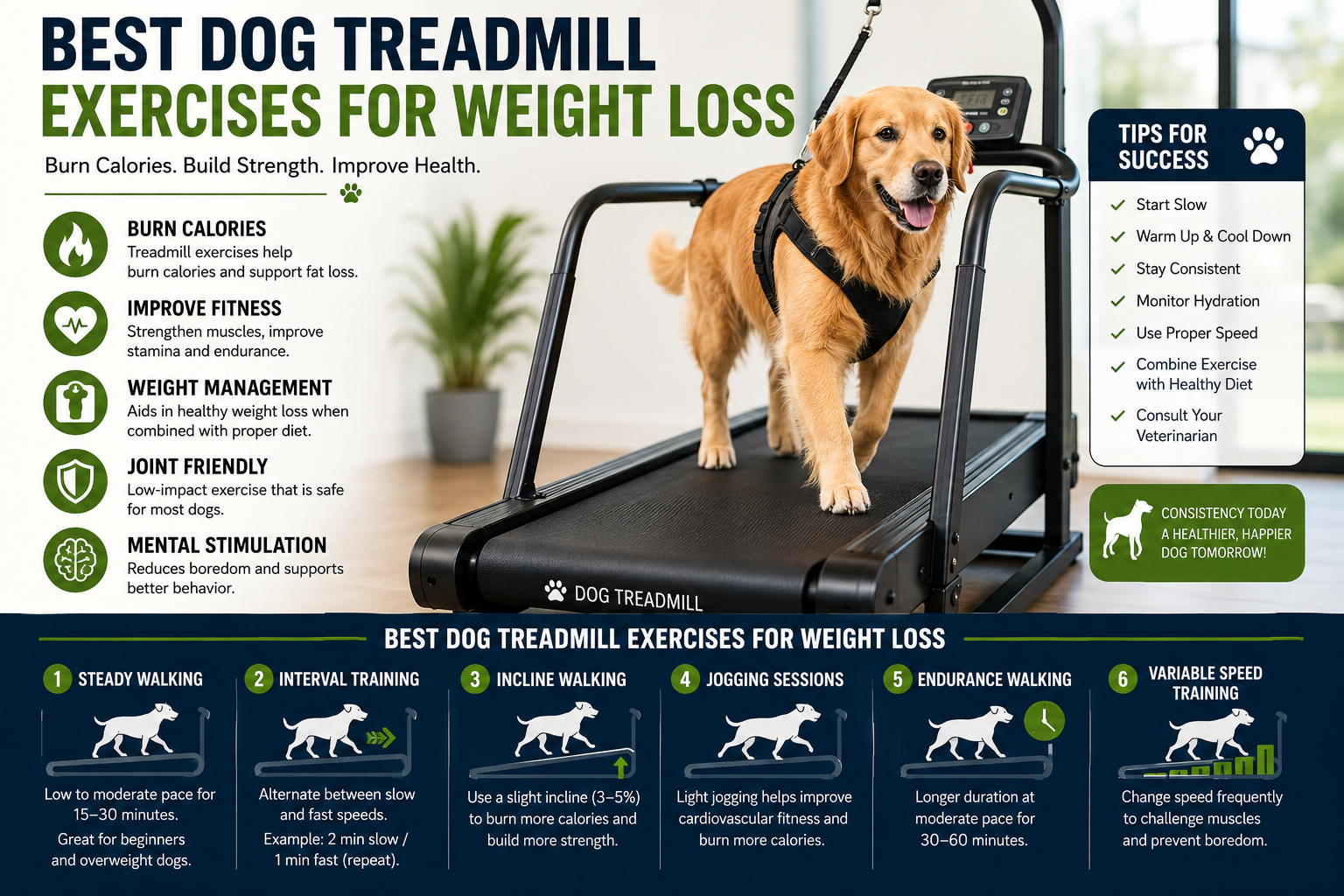
Best Dog Treadmill Exercises for Weight Loss
1. Steady Walking Exercise
This is the safest starting point for overweight dogs.
How It Works
The dog walks at a moderate pace for an extended period, focusing on endurance and fat burning.
Benefits
- Low-impact exercise
- Improves cardiovascular health
- Burns calories steadily
- Builds stamina
Recommended Routine
- Warm up for 5 minutes
- Walk for 15–30 minutes
- Cool down for 5 minutes
Ideal For
- Senior dogs
- Obese dogs
- Beginners
- Dogs recovering from inactivity
2. Interval Training
Interval training alternates between slow and fast speeds.
Example Routine
| Phase | Duration |
|---|---|
| Slow Walk | 2 Minutes |
| Fast Walk | 1 Minute |
| Repeat | 20 Minutes |
Benefits
- Higher calorie burn
- Increased metabolism
- Improved endurance
- Prevents boredom
Expert Tip
Start with short intervals and gradually increase intensity as your dog becomes fitter.
3. Incline Walking Workouts
Some treadmills offer adjustable incline settings.
Why Inclines Work
Walking uphill requires more effort, activating:
- Glute muscles
- Hind legs
- Core muscles
Benefits
- Burns more calories
- Builds strength
- Improves muscle tone
Recommended Incline
Begin with a gentle incline of 3–5%.
4. Jogging Sessions
For healthy dogs with basic fitness levels, jogging increases calorie expenditure.
Routine Example
- 5-minute warm-up walk
- 10-minute light jog
- 5-minute cool-down
Benefits
- Faster fat burning
- Improved cardiovascular health
- Enhanced endurance
Suitable Breeds
- Labrador Retrievers
- Border Collies
- German Shepherds
- Golden Retrievers
Always consult a veterinarian before starting high-intensity exercise.
5. Endurance Walking
Long-duration sessions help increase total calorie burn.
Workout Structure
- Speed: Moderate
- Duration: 30–60 minutes
- Frequency: 4–5 times weekly
Benefits
- Encourages fat utilization
- Builds stamina
- Supports gradual weight loss
6. Variable Speed Training
Changing speeds throughout the session challenges different muscle groups.
Example
- Slow walk – 3 minutes
- Moderate pace – 3 minutes
- Fast pace – 2 minutes
- Repeat cycle
Benefits
- Prevents adaptation
- Improves fitness
- Increases calorie expenditure
Sample Weekly Dog Treadmill Weight Loss Plan
| Day | Workout |
| Monday | 25-Minute Steady Walk |
| Tuesday | Interval Training |
| Wednesday | Recovery Walk |
| Thursday | Incline Walking |
| Friday | Variable Speed Training |
| Saturday | Endurance Walk |
| Sunday | Rest Day |
This schedule provides balanced exercise while allowing recovery.
How Long Should Dogs Use a Treadmill for Weight Loss?
The ideal duration depends on:
- Age
- Breed
- Current weight
- Fitness level
- Veterinary recommendations
General Guidelines
| Dog Fitness Level | Duration |
| Beginner | 10–15 Minutes |
| Intermediate | 20–30 Minutes |
| Advanced | 30–60 Minutes |
Always increase exercise gradually.
Common Dog Treadmill Mistakes to Avoid
Many owners unintentionally slow their dog’s progress.
Avoid These Errors
Starting Too Fast
Dogs need time to adapt.
Skipping Warm-Ups
Warm muscles reduce injury risk.
Exercising Immediately After Meals
Wait at least 1–2 hours after feeding.
Ignoring Hydration
Always provide fresh water before and after workouts.
Using Human Fitness Goals
Every dog has unique exercise requirements.
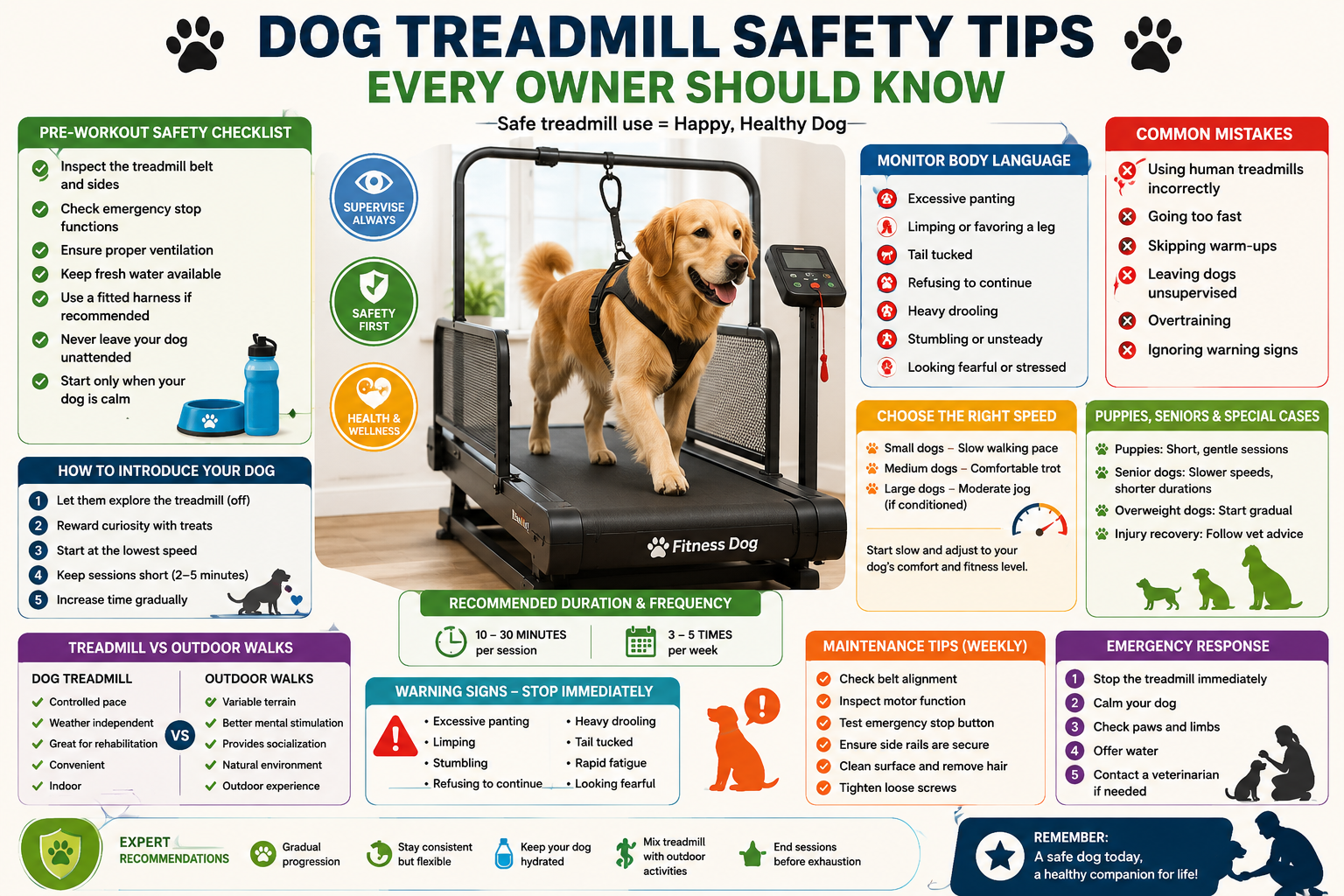
Safety Tips for Dog Treadmill Workouts
Safety should always come first.
Follow These Guidelines
- Supervise every session
- Use a suitable treadmill size
- Keep speeds appropriate
- Monitor breathing
- Watch for signs of fatigue
- Stop if limping occurs
Signs of Overexertion
- Excessive panting
- Drooling
- Slowing down suddenly
- Refusal to continue
- Disorientation
If any symptoms appear, stop immediately and allow recovery.
Combining Diet and Exercise for Faster Weight Loss
Exercise alone rarely solves canine obesity.
Nutrition Strategies
- Measure food portions accurately
- Reduce excess treats
- Choose high-quality dog food
- Increase protein intake when appropriate
- Consult your veterinarian
Best Results Formula
Weight Loss Success =
Balanced Diet + Consistent Exercise + Veterinary Monitoring
Dogs generally lose weight most effectively when both nutrition and exercise are addressed together.
Dog Breeds That Benefit Most From Treadmill Exercise
Many breeds thrive with treadmill training.
High-Energy Breeds
- Labrador Retriever
- Border Collie
- Belgian Malinois
- Australian Shepherd
- German Shepherd
Dogs Needing Controlled Exercise
- Obese dogs
- Senior dogs
- Rehabilitation patients
- Apartment dogs
How to Introduce Your Dog to a Treadmill
Many dogs need time to feel comfortable.
Step-by-Step Guide
Step 1: Let Them Explore
Allow your dog to sniff the treadmill.
Step 2: Reward Positive Behavior
Use treats and praise.
Step 3: Start Slowly
Begin at the lowest speed.
Step 4: Keep Sessions Short
Start with 3–5 minutes.
Step 5: Increase Gradually
Add time and speed over several weeks.
Patience creates confidence.
Measuring Weight Loss Progress
Tracking progress keeps you motivated.
Metrics to Monitor
- Body weight
- Waist measurement
- Energy levels
- Endurance improvements
- Veterinary body condition score
Recommended Schedule
- Weigh weekly
- Take monthly photos
- Review progress with your veterinarian
Healthy weight loss is gradual and sustainable.
Expert Recommendations for Successful Dog Weight Loss
Veterinary professionals generally recommend:
- Consistent exercise routines
- Portion-controlled feeding
- Regular weigh-ins
- Age-appropriate workouts
- Gradual progression
The most successful weight-loss programs focus on long-term habits rather than rapid results.
Conclusion
The best dog treadmill exercises for weight loss include steady walking, interval training, incline walking, jogging, endurance sessions, and variable-speed workouts. These exercises help dogs burn calories, improve cardiovascular fitness, and build healthy habits when performed consistently and safely.
For optimal results, combine treadmill workouts with a balanced diet, proper hydration, and regular veterinary checkups. With patience and consistency, a dog treadmill can become one of the most effective tools for helping your pet achieve and maintain a healthy weight while staying active throughout the year.
FAQ Section:
1. Can dogs use a treadmill every day?
Yes, healthy adult dogs can safely use a treadmill daily when exercise duration and intensity are appropriate.
2. Is a treadmill better than walking a dog?
No. A treadmill complements walks but should not completely replace outdoor activities.
3. How long should a dog stay on a treadmill?
Most dogs benefit from 10–40 minutes depending on age, size, and fitness level.
4. Are dog treadmills safe for puppies?
Generally, young puppies should avoid treadmill training until skeletal development is more complete.
5. Can senior dogs use dog treadmills?
Yes, with slower speeds and shorter sessions.
6. What speed should a dog treadmill be set at?
The speed should match your dog’s natural walking or jogging pace.
7. Do veterinarians recommend dog treadmills?
Many veterinarians recommend them for controlled exercise and weight management.
8. Can a treadmill help an overweight dog?
Yes. Combined with proper nutrition, treadmill exercise can support weight loss.
9. Are dog treadmills worth buying?
They can be valuable for busy owners, bad weather conditions, and high-energy dogs.
10. What are the risks of dog treadmills?
Overtraining, muscle strain, boredom, and injury from improper use.
11. Should I supervise my dog on a treadmill?
Always supervise every treadmill session.
12. Can small dogs use treadmills?
Yes, provided the treadmill is appropriately sized.
13. Can treadmill exercise replace backyard play?
No. Dogs need varied activities for mental enrichment.
14. How can I train my dog to use a treadmill?
Introduce the treadmill gradually using rewards and positive reinforcement.
15. How do I know if my dog is overexercised?
Watch for limping, excessive panting, fatigue, or reluctance to continue.