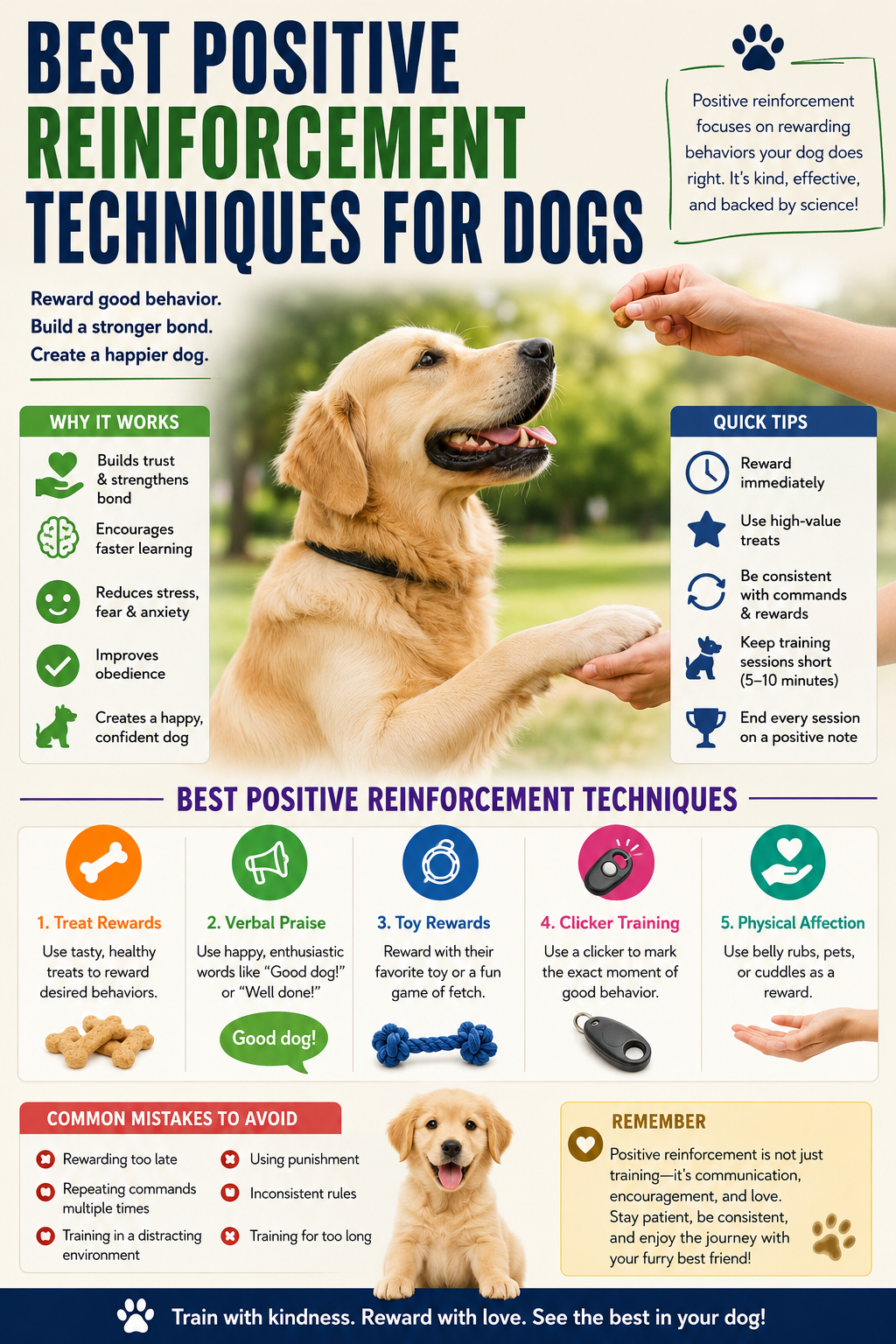
Dogs learn best when training is rewarding, enjoyable, and consistent. Best Positive Reinforcement Techniques for Dogs focus on encouraging good behavior by rewarding your dog instead of punishing unwanted actions. This science-backed training method strengthens the bond between you and your pet while making learning easier and more enjoyable.
Whether you’re training a new puppy or helping an older dog learn better manners, positive reinforcement is one of the most effective approaches recommended by professional trainers and veterinarians.
What Is Positive Reinforcement Dog Training?
Positive reinforcement is a training method that rewards your dog immediately after they perform the desired behavior. Rewards can include treats, praise, toys, or playtime. By associating good behavior with something enjoyable, your dog becomes more likely to repeat that behavior.
Unlike punishment-based methods, positive reinforcement builds trust and confidence while reducing fear and anxiety.
Common Rewards Include:
- Healthy dog treats
- Verbal praise like “Good job!”
- Favorite toys
- Belly rubs or petting
- Play sessions
- Walks or outdoor activities
Why Positive Reinforcement Works
Dogs naturally repeat behaviors that lead to positive outcomes. Scientific research has shown that reward-based training improves learning, strengthens the human-animal bond, and reduces behavioral problems.
Benefits of Positive Reinforcement
- Builds trust between owner and dog
- Encourages faster learning
- Reduces stress and fear
- Improves obedience
- Strengthens long-term behavior
- Creates a happier, more confident dog
This method is suitable for puppies, adult dogs, rescue dogs, and senior dogs alike.
Best Positive Reinforcement Techniques for Dogs
1. Reward Good Behavior Immediately
Timing is everything. Give your dog a reward within one or two seconds after they perform the correct behavior. Immediate rewards help them understand exactly what they did right.
Example:
When your dog sits on command, reward them instantly with a treat and praise.
2. Use High-Value Treats
Popular training treats include:
- Cooked chicken pieces
- Cheese cubes
- Freeze-dried liver
- Commercial soft training treats
Reserve these treats only for training to keep them exciting.
3. Clicker Training
Clicker training uses a small device that makes a clicking sound to mark the exact moment your dog performs the correct behavior.
The click tells your dog they did something right, followed immediately by a reward.
Benefits include:
- Precise communication
- Faster learning
- Improved consistency
- Easy shaping of complex behaviors
4. Verbal Praise
Some dogs respond strongly to enthusiastic praise.
Simple phrases include:
- Good dog!
- Yes!
- Well done!
- Excellent!
Combine praise with treats for even better results.
5. Toy Rewards
Many energetic dogs love toys more than food.
Reward behaviors using:
- Tennis balls
- Tug toys
- Frisbees
- Rope toys
This works especially well for active breeds like Border Collies, Labradors, and German Shepherds.
6. Train in Short Sessions
Dogs learn better in short, focused sessions.
Aim for:
- 5–10 minutes per session
- 2–4 sessions daily
- End training on a positive note
Keeping sessions fun prevents boredom and frustration.
7. Be Consistent
Every family member should use the same commands and reward system.
Instead of saying:
- Sit
- Sit down
- Please sit
Choose one command:
“Sit.”
Consistency prevents confusion.
Common Mistakes to Avoid
Even with positive reinforcement, mistakes can slow progress.
Avoid these common errors:
- Rewarding too late
- Repeating commands multiple times
- Training when your dog is distracted
- Using punishment after mistakes
- Inconsistent rules
- Long training sessions
Patience is key. Every dog learns at their own pace.
Positive Reinforcement vs. Punishment
| Positive Reinforcement | Punishment |
|---|---|
| Rewards good behavior | Focuses on mistakes |
| Builds trust | Can create fear |
| Encourages learning | May increase anxiety |
| Strengthens relationships | Can damage confidence |
| Long-term results | Often temporary results |
Most professional dog trainers recommend positive reinforcement because it creates lasting behavioral improvements.
Training Tips for Puppies
Puppies learn quickly during their early months.
Focus on:
- House training
- Sit
- Stay
- Come
- Leave it
- Crate training
- Walking politely on a leash
Reward every success to build good habits from the beginning.
Can Older Dogs Learn Using Positive Reinforcement?
Absolutely.
The saying “You can’t teach an old dog new tricks” is a myth.
Training can improve:
- Recall
- Loose leash walking
- Social behavior
- Confidence
- Mental stimulation
How Often Should You Train Your Dog?
Consistency matters more than length.
A simple weekly routine could look like:
| Day | Focus |
|---|---|
| Monday | Sit and Stay |
| Tuesday | Recall |
| Wednesday | Loose Leash Walking |
| Thursday | Leave It |
| Friday | Review Commands |
| Saturday | Fun Tricks |
| Sunday | Socialization Practice |
Regular practice helps reinforce good habits.
Expert Tips for Better Results
- Always end training with success.
- Keep rewards exciting.
- Gradually reduce treats while continuing praise.
- Practice in different environments.
- Stay patient and calm.
- Celebrate small improvements.
- Make training part of your daily routine.
Remember, every positive interaction strengthens your dog’s confidence and willingness to learn.
Conclusion
The Best Positive Reinforcement Techniques for Dogs provide a safe, effective, and enjoyable way to teach your pet good behavior while building a stronger relationship. By rewarding desired actions with treats, praise, toys, or play, you encourage your dog to repeat positive behaviors naturally. Whether you’re raising a playful puppy or training an older rescue dog, consistency, patience, and positive reinforcement are the keys to long-term success. Start with simple commands, keep sessions short, and celebrate every achievement to help your dog become a confident, well-behaved companion.
FAQs:
What is the best positive reinforcement for dogs?
High-value treats, praise, toys, and playtime are among the most effective rewards. The best reward depends on what motivates your dog.
Does positive reinforcement really work?
Yes. Research and professional trainers consistently show that positive reinforcement improves learning, reduces stress, and creates lasting behavioral changes.
How long does dog training take?
Basic commands can often be learned within a few weeks, but consistent practice is essential for long-term success.
Can positive reinforcement stop bad behavior?
Yes. By rewarding desired behaviors and redirecting unwanted ones, many behavioral issues can be reduced over time.
Is positive reinforcement suitable for all dog breeds?
Yes. This training method works effectively for puppies, adult dogs, senior dogs, and nearly every breed.