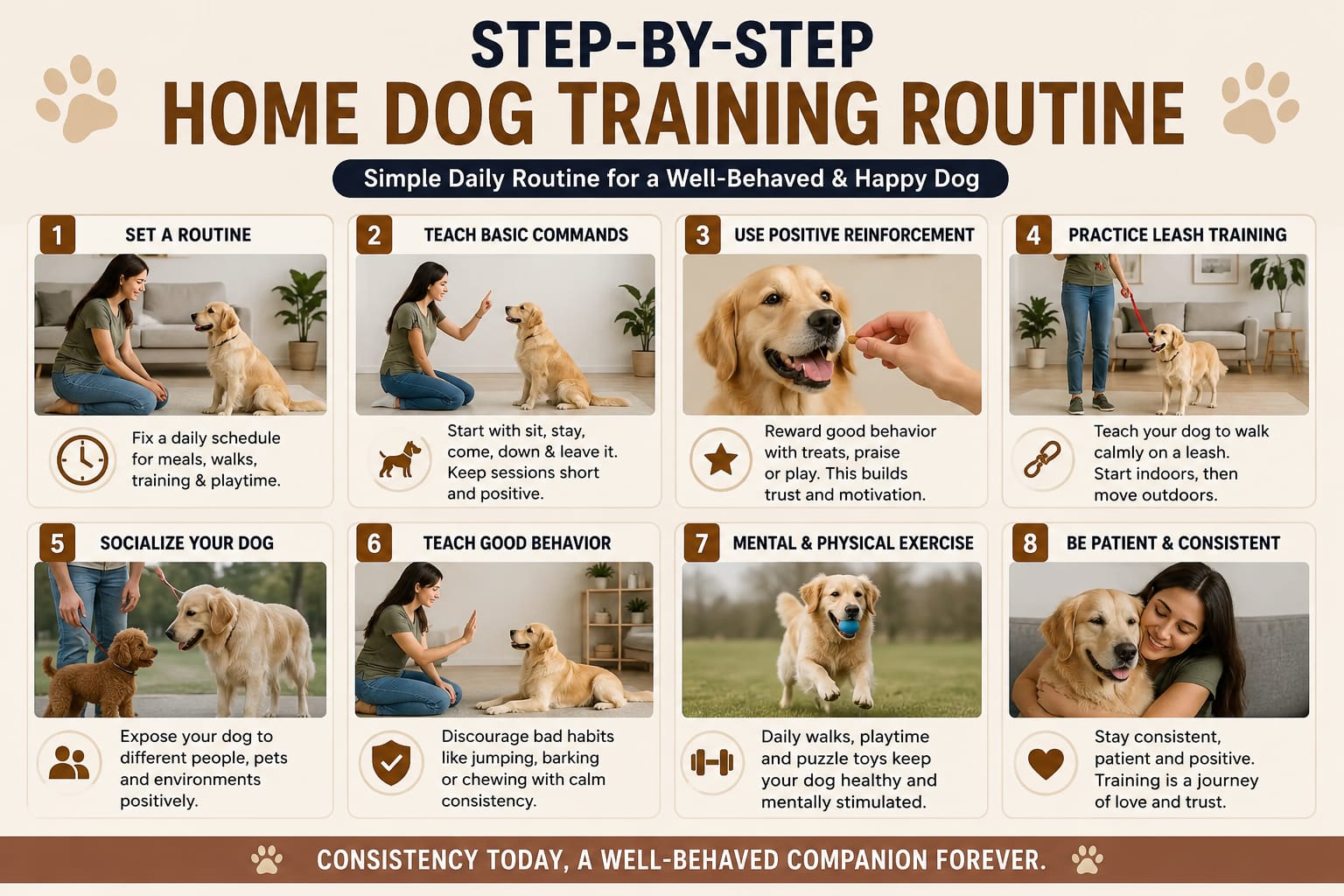
Training your dog at home is one of the best ways to build trust, improve behavior, and strengthen your bond. Whether you have a playful puppy or an adult dog, following a step-by-step home dog training routine helps your pet learn commands, good manners, and healthy habits in a stress-free environment.
Professional dog training isn’t always necessary. With patience, consistency, and positive reinforcement, you can teach your dog essential skills from the comfort of your home. This guide will walk you through a practical daily routine that works for beginners and experienced dog owners alike.
Why a Home Dog Training Routine Matters
Dogs thrive on routine. A structured training schedule helps them understand expectations and creates consistency in their daily lives. According to the American Kennel Club (AKC), dogs learn faster when training sessions are short, positive, and repeated regularly.
Benefits of home dog training include:
- Builds trust between you and your dog.
- Reduces unwanted behaviors.
- Improves communication.
- Provides mental stimulation.
- Strengthens obedience.
- Saves money on professional training.
Even spending 15 to 20 minutes each day can lead to noticeable improvements within a few weeks.
Step 1: Create a Distraction-Free Training Space
Before starting, choose a quiet area where your dog can focus. Turn off the TV, keep toys away, and minimize distractions.
You’ll need:
- Healthy training treats
- A leash
- A clicker (optional)
- Favorite toy
- Water bowl
A calm environment allows your dog to pay attention and learn commands more effectively.
Step 2: Start with Basic Commands
Teaching basic obedience commands creates a strong foundation for advanced training.
Focus on these commands first:
Sit
Hold a treat above your dog’s nose and slowly move it backward. As your dog sits naturally, say “Sit” and reward immediately.
Stay
Ask your dog to sit, raise your hand, and say “Stay.” Take one step back. Reward your dog if they remain in position.
Come
Call your dog’s name followed by “Come.” Reward generously when they reach you.
Down
Move a treat toward the floor until your dog lies down naturally. Reward immediately.
Practice each command for 5–10 repetitions during every session.
Step 3: Use Positive Reinforcement
Positive reinforcement is one of the most effective dog training methods. Instead of punishing mistakes, reward good behavior immediately.
Rewards may include:
- Small treats
- Praise
- Petting
- Favorite toys
- Playtime
Dogs repeat behaviors that lead to rewards. Avoid yelling or physical punishment, as it can create fear and slow learning.
Step 4: Follow a Daily Dog Training Schedule
Consistency is the secret to success.
| Time | Activity |
|---|---|
| Morning | Potty break and 10-minute obedience training |
| Afternoon | Walk with leash training |
| Evening | Trick training and socialization |
| Night | Calm behavior and relaxation practice |
Short sessions are more effective than one long session. Keep training fun and end on a positive note.
Step 5: Teach Good Household Manners
Training isn’t only about commands. Your dog should also learn proper behavior inside the home.
Work on:
- Waiting before eating
- Not jumping on guests
- Walking politely indoors
- Staying off furniture if desired
- Quiet behavior during meals
- Calm greetings
Reward your dog whenever they display the desired behavior.
Step 6: Practice Leash Training
Leash training helps make daily walks enjoyable.
If your dog pulls:
- Stop walking.
- Wait until the leash becomes loose.
- Continue walking and reward calm behavior.
With daily practice, leash pulling gradually decreases.
Step 7: Socialize Your Dog
Socialization teaches your dog how to behave around people, pets, and new environments.
Introduce your dog to:
- Friendly people
- Children
- Other vaccinated dogs
- Different sounds
- New locations
- Car rides
Positive experiences build confidence and reduce fear-based behaviors later in life.
Common Training Mistakes to Avoid
Many owners unintentionally slow their dog’s progress.
Avoid these mistakes:
- Long training sessions
- Inconsistent commands
- Delayed rewards
- Punishing mistakes
- Skipping daily practice
- Expecting instant results
Remember that every dog learns at a different pace.
How Long Does Dog Training Take?
The timeline depends on your dog’s age, breed, personality, and consistency.
General expectations include:
- Basic commands: 2–4 weeks
- Reliable obedience: 2–3 months
- Advanced training: 4–6 months
Daily practice delivers the best results.
Tips for Faster Dog Training Success
Use these expert strategies to improve learning:
- Train at the same time every day.
- Keep sessions between 10 and 15 minutes.
- Reward immediately after good behavior.
- Use simple, consistent commands.
- Stay patient and positive.
- Gradually increase distractions.
- End every session with success.
Consistency is far more important than long training sessions.
Frequently Asked Questions
What is the best age to start dog training?
Puppies can begin basic training at around 8 weeks of age. However, adult dogs can also learn new behaviors with patience and consistent practice.
How many times should I train my dog each day?
Two or three short sessions lasting 10–15 minutes each day are ideal for most dogs.
Can I train my dog without a professional trainer?
Yes. Most dogs can learn basic obedience at home using positive reinforcement, consistency, and daily practice.
What treats work best for training?
Choose small, soft, high-value treats that your dog enjoys. Keep them bite-sized to avoid overfeeding.
How do I stop my dog from barking excessively?
Identify the cause of barking, reward quiet behavior, provide enough exercise, and avoid reinforcing unwanted barking.
Conclusion
A step-by-step home dog training routine is the key to raising a happy, confident, and well-behaved dog. By practicing basic commands, using positive reinforcement, maintaining a consistent schedule, and providing daily mental stimulation, you’ll create lasting habits that benefit both you and your pet.
Remember that successful dog training doesn’t happen overnight. Patience, consistency, and encouragement make all the difference. Start with small daily sessions, celebrate progress, and enjoy the rewarding journey of building a lifelong bond with your furry companion.