Building a strong relationship with your dog goes beyond teaching basic commands. It is about creating trust, understanding, and mutual respect. How to build a strong bond through dog training is a question many dog owners ask because training is one of the most effective ways to improve communication and strengthen your connection.
A well-trained dog is happier, more confident, and easier to manage in everyday situations. At the same time, owners gain confidence in handling their pets, making daily life more enjoyable for both. Whether you have a playful puppy or an older rescue dog, the right training methods can help you develop a lifelong bond.
Why Dog Training Strengthens Your Bond
Dog training is more than teaching commands like “sit” or “stay.” It creates meaningful interactions where your dog learns to trust your guidance.
Some key benefits include:
- Improves communication between you and your dog.
- Builds trust through consistent behavior.
- Reduces unwanted behaviors.
- Increases your dog’s confidence.
- Makes walks, playtime, and daily routines more enjoyable.
Research published by veterinary behavior experts shows that dogs trained using positive reinforcement are generally more relaxed, responsive, and eager to learn than those trained with punishment-based methods.
Start with Positive Reinforcement
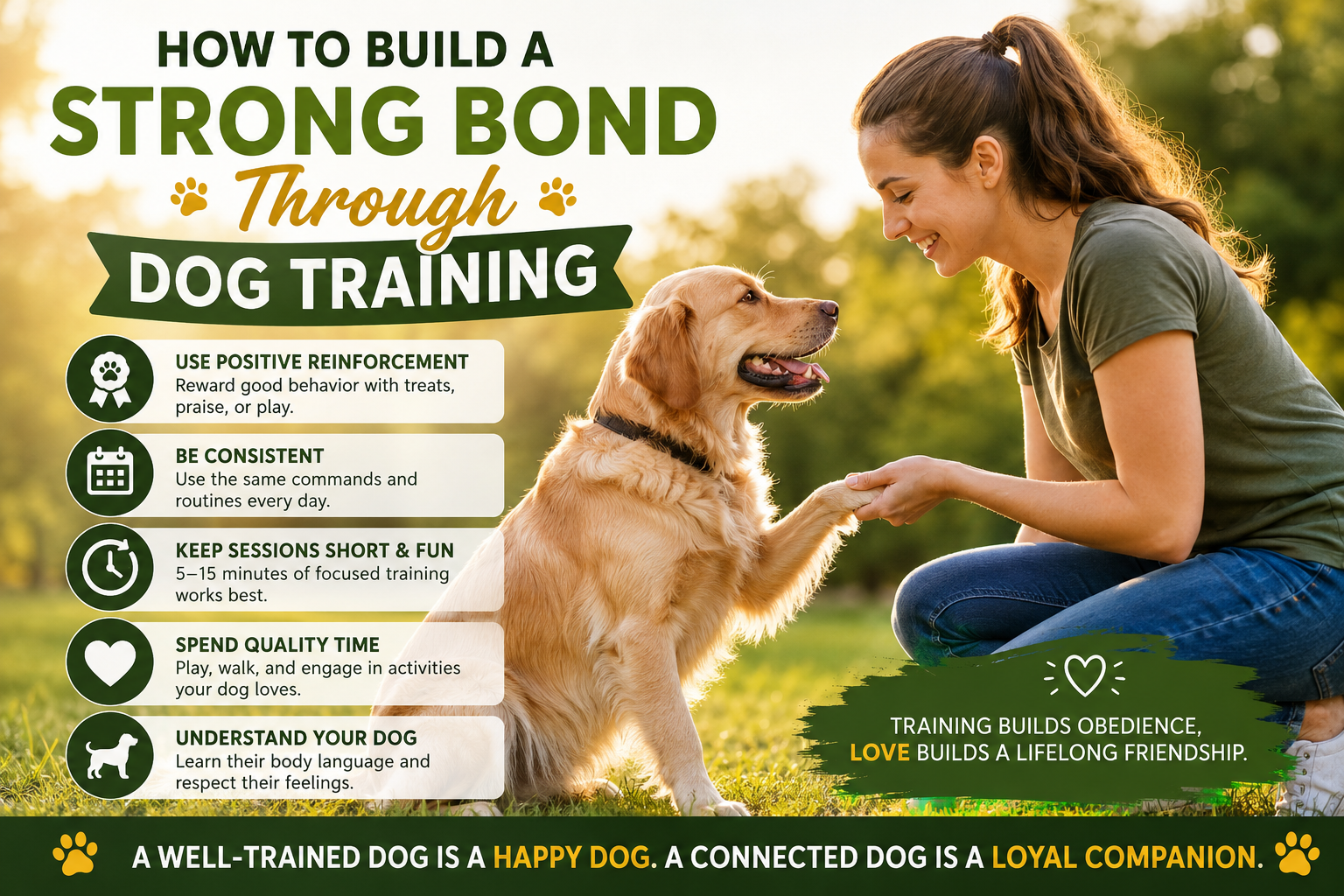
Positive reinforcement is one of the most effective dog training techniques. It rewards good behavior instead of punishing mistakes.
Rewards can include:
- Healthy treats
- Praise
- Toys
- Belly rubs
- Play sessions
For example, if your dog sits when asked, immediately reward them with a treat and praise. This helps your dog associate the behavior with positive outcomes, encouraging them to repeat it.
Avoid yelling or physical punishment, as these methods can damage trust and create fear.
Be Consistent with Commands
Consistency is essential when training your dog. Everyone in your household should use the same words and signals for commands.
For example:
| Command | Correct Cue |
|---|---|
| Sit | “Sit” |
| Stay | “Stay” |
| Come | “Come” |
| Down | “Down” |
| Leave It | “Leave it” |
Using different words like “Come here” one day and “Over here” the next may confuse your dog and slow progress.
Keep Training Sessions Short and Fun
Dogs learn best in short training sessions.
Aim for:
- 5–10 minutes for puppies
- 10–15 minutes for adult dogs
- Two or three sessions daily
End each session on a positive note with praise or playtime. This keeps your dog excited for the next lesson.
Spend Quality Time Together
Training should not be the only time you interact with your dog.
Strengthen your relationship through activities like:
- Daily walks
- Fetch
- Tug games
- Hiking
- Puzzle toys
- Nose work games
- Swimming (if your dog enjoys water)
These shared experiences build trust while providing mental and physical exercise.
Learn Your Dog’s Body Language
Understanding your dog’s emotions helps improve communication.
Signs your dog is happy include:
- Relaxed body
- Wagging tail
- Soft eyes
- Play bow
Signs of stress include:
- Yawning repeatedly
- Lip licking
- Tucked tail
- Avoiding eye contact
- Trembling
Recognizing these signals allows you to adjust training before your dog becomes overwhelmed.
Build Trust Through Daily Routine
Dogs thrive on routine because it helps them feel secure.
Maintain regular schedules for:
- Feeding
- Walks
- Potty breaks
- Playtime
- Training
- Bedtime
Predictable routines reduce anxiety and help your dog trust you as a reliable leader.
Socialize Your Dog Properly
Socialization introduces your dog to new people, animals, sounds, and environments.
Proper socialization helps prevent fear-based behaviors and builds confidence.
Introduce your dog gradually to:
- Friendly dogs
- Children
- Visitors
- Parks
- Busy streets
- Car rides
- Different surfaces
Always make these experiences positive with treats and praise.
Avoid Common Dog Training Mistakes
Many owners unintentionally slow their dog’s progress.
Common mistakes include:
- Being inconsistent
- Expecting results too quickly
- Punishing mistakes
- Skipping daily practice
- Training for too long
- Ignoring good behavior
- Giving commands repeatedly
Patience and consistency are far more effective than harsh corrections.
Strengthen the Bond with Advanced Training
Once your dog has mastered basic obedience, try advanced activities to deepen your connection.
Popular options include:
- Agility training
- Trick training
- Rally obedience
- Scent detection games
- Off-leash recall practice
- Interactive puzzle challenges
These activities stimulate your dog’s mind while reinforcing teamwork.
Signs Your Bond Is Growing Stronger
You’ll know your relationship is improving when your dog:
- Looks at you for guidance.
- Comes when called.
- Enjoys training sessions.
- Stays close during walks.
- Appears relaxed around you.
- Learns new commands quickly.
- Shows excitement when you return home.
These behaviors reflect trust, confidence, and a healthy emotional connection.
Expert Tips for Better Dog Training
Professional trainers recommend:
- Reward good behavior immediately.
- Keep sessions short and enjoyable.
- Train every day.
- Stay calm and patient.
- End every session positively.
- Use high-value treats for difficult tasks.
- Celebrate small improvements.
Consistency over time produces lasting results.
Conclusion
Learning how to build a strong bond through dog training is one of the greatest investments you can make in your relationship with your pet. Training is not just about obedience—it is about trust, communication, and teamwork. By using positive reinforcement, maintaining a consistent routine, understanding your dog’s body language, and spending quality time together, you can create a lifelong connection built on love and respect.
Every training session is an opportunity to strengthen your relationship. Stay patient, celebrate progress, and enjoy the journey. Your dog will reward your efforts with loyalty, confidence, and unconditional companionship.
FAQs:
1. What is the best way to build trust with my dog?
Use positive reinforcement, stay consistent, and spend quality time together every day.
2. How long should dog training sessions be?
Keep sessions between 5–15 minutes, depending on your dog’s age and attention span.
3. Does positive reinforcement really work?
Yes. It encourages desired behaviors while strengthening trust and reducing fear.
4. Can older dogs still learn new behaviors?
Absolutely. Adult and senior dogs can learn new commands with patience and regular practice.
5. How often should I train my dog?
Aim for two or three short sessions each day for the best results.