Dog training is one of the most important responsibilities of every pet owner. A well-trained dog is happier, safer, and easier to live with. However, many owners struggle to decide between dog training at home and professional dog training. Both methods have advantages and challenges, and the right choice depends on your dog’s personality, behavior, and your experience as an owner.
In this guide, we’ll compare dog training vs professional dog training: which is better? We’ll discuss the pros and cons of each approach, costs, effectiveness, and help you decide which option is best for your furry friend.
What Is Dog Training?
Dog training is the process of teaching your dog commands, good manners, and appropriate behavior. It helps your dog understand what you expect while strengthening the bond between you and your pet.
Basic dog training usually includes:
- Sit
- Stay
- Come
- Down
- Leave it
- Loose-leash walking
- Potty training
- Socialization
Training also prevents unwanted behaviors such as excessive barking, jumping, chewing, and aggression.
What Is Professional Dog Training?
Professional dog training involves working with a certified dog trainer or behavior specialist. These experts use proven training methods based on positive reinforcement and canine behavior science.
Professional trainers offer different services, including:
- Private one-on-one sessions
- Group obedience classes
- Puppy training
- Board-and-train programs
- Behavior modification
- Advanced obedience
- Service or therapy dog training
They create customized training plans based on your dog’s needs and temperament.
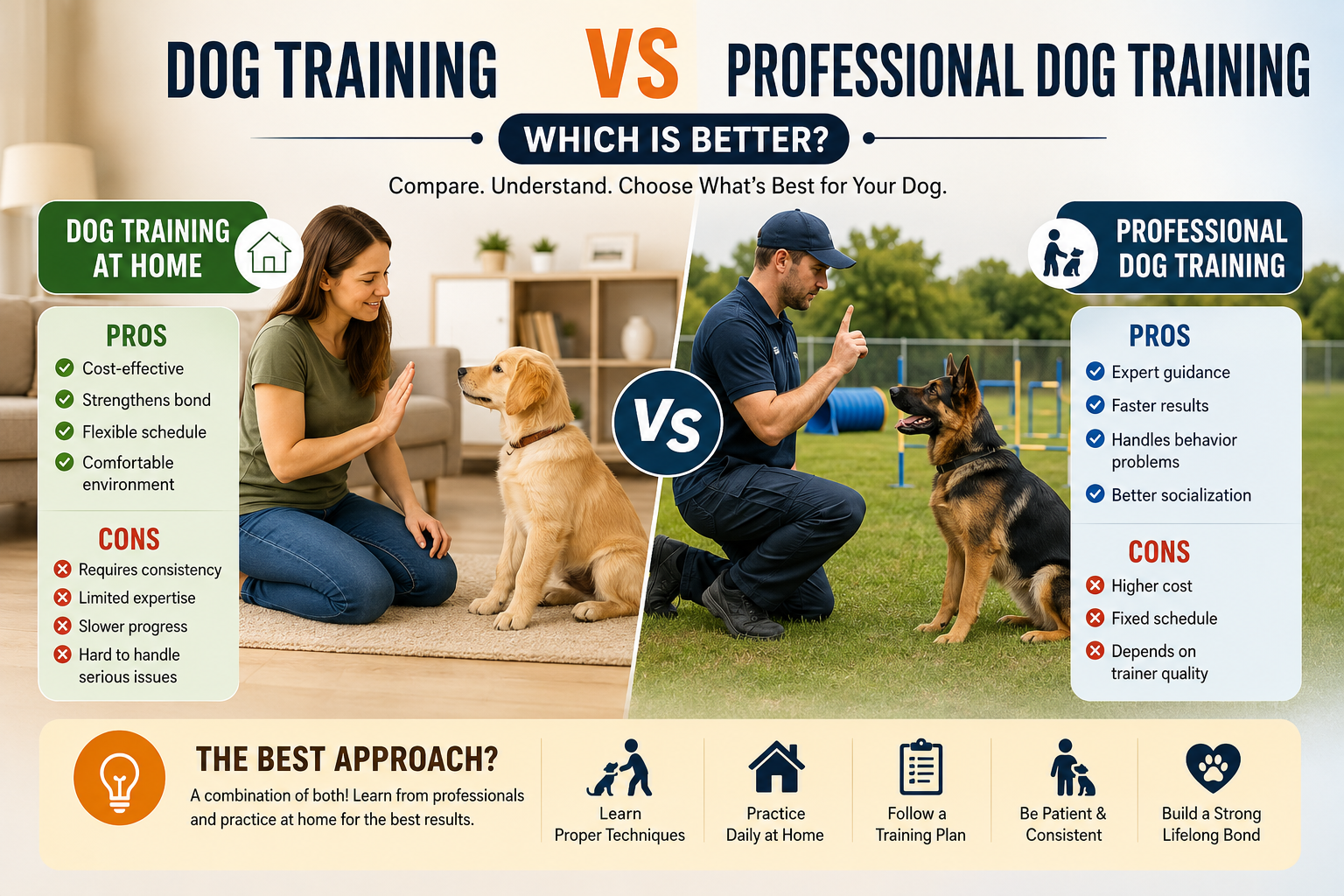
Dog Training at Home: Pros and Cons
Advantages
1. Saves Money
Home training is much more affordable. You can learn techniques from books, online courses, or training videos without paying for professional classes.
2. Strengthens Your Bond
Training together builds trust and communication between you and your dog. Daily practice helps create a stronger relationship.
3. Flexible Schedule
You can train whenever it fits your routine. Short sessions of 10–15 minutes are often enough for effective learning.
4. Comfortable Environment
Dogs usually learn better in familiar surroundings with fewer distractions, especially puppies.
Disadvantages
- Requires patience and consistency.
- Beginners may accidentally reinforce bad habits.
- Difficult behavioral problems can be hard to solve without expert guidance.
- Progress may take longer.
Professional Dog Training: Pros and Cons
Advantages
1. Expert Knowledge
Professional trainers understand dog psychology and body language. They know how to correct unwanted behaviors safely and effectively.
2. Faster Results
Experienced trainers can identify problems quickly and create customized training plans, helping dogs learn more efficiently.
3. Handles Serious Behavior Issues
Professional training is especially useful for dogs with:
- Aggression
- Fearfulness
- Anxiety
- Resource guarding
- Excessive barking
- Reactivity
4. Proper Socialization
Group classes expose dogs to new people and other dogs in a controlled environment.
Disadvantages
- Higher cost.
- Quality varies between trainers.
- Owners still need to continue training at home.
- Some programs require travel or boarding.
Dog Training vs Professional Dog Training: Comparison Table
| Feature | Home Dog Training | Professional Dog Training |
|---|---|---|
| Cost | Low | Moderate to High |
| Flexibility | High | Fixed Schedule |
| Expertise | Beginner | Professional |
| Serious Behavior Issues | Limited | Excellent |
| Bond Building | Excellent | Good |
| Socialization | Limited | Excellent |
| Training Speed | Moderate | Faster |
| Best For | Basic obedience | Complex behavior problems |
Which Option Is More Effective?
Neither option is universally better. The best choice depends on your situation.
Home training works well if:
- Your dog is a puppy.
- You only need basic obedience.
- You have time to train consistently.
- Your dog has no major behavior problems.
Professional training is better if:
- Your dog shows aggression.
- Training isn’t progressing.
- Your dog has anxiety or fear.
- You want advanced obedience.
- You’re a first-time dog owner who needs guidance.
Can You Combine Both Methods?
Yes—and this is often the best approach.
Many dog owners start with professional lessons to learn the correct techniques, then continue practicing at home every day. This combination provides expert guidance while strengthening the relationship between you and your dog.
A balanced training plan might include:
- Attend a professional evaluation.
- Learn proper training techniques.
- Practice daily at home.
- Schedule follow-up sessions if needed.
- Continue reinforcing good behavior throughout your dog’s life.
Common Mistakes to Avoid
Whether you train at home or hire a professional, avoid these mistakes:
- Using punishment instead of positive reinforcement.
- Being inconsistent with commands.
- Training for too long without breaks.
- Expecting instant results.
- Ignoring socialization.
- Rewarding unwanted behavior accidentally.
- Skipping daily practice.
Consistency is the key to successful dog training.
Tips for Successful Dog Training
To achieve the best results:
- Use positive reinforcement with treats and praise.
- Keep training sessions short and fun.
- Practice every day.
- Be patient and calm.
- Use the same commands consistently.
- Reward good behavior immediately.
- Increase distractions gradually as your dog improves.
Dogs learn best when training is enjoyable and rewarding.
Conclusion
So, dog training vs professional dog training: which is better? The answer depends on your dog’s needs and your experience. Home training is an excellent choice for teaching basic commands, building trust, and saving money. Professional dog training is ideal for addressing behavioral issues, accelerating progress, and receiving expert guidance.
For many owners, the most effective solution is to combine both methods—learn from a qualified trainer and reinforce those lessons through daily practice at home. With patience, consistency, and positive reinforcement, your dog can become a confident, well-behaved companion regardless of which training path you choose.
FAQs:
Is professional dog training worth the money?
Yes. If your dog has behavioral issues or you need expert guidance, professional training can save time and prevent long-term problems.
Can I train my dog without a professional?
Absolutely. Many dogs successfully learn basic obedience through consistent home training and positive reinforcement.
What age should a dog start training?
Puppies can begin basic training and socialization as early as 8 weeks old.
How long does dog training take?
Basic obedience usually takes several weeks with daily practice, while behavior modification for more complex issues may take several months.
Do professional trainers guarantee results?
No trainer can guarantee results because success depends on the dog’s temperament and the owner’s consistency in practicing the training.