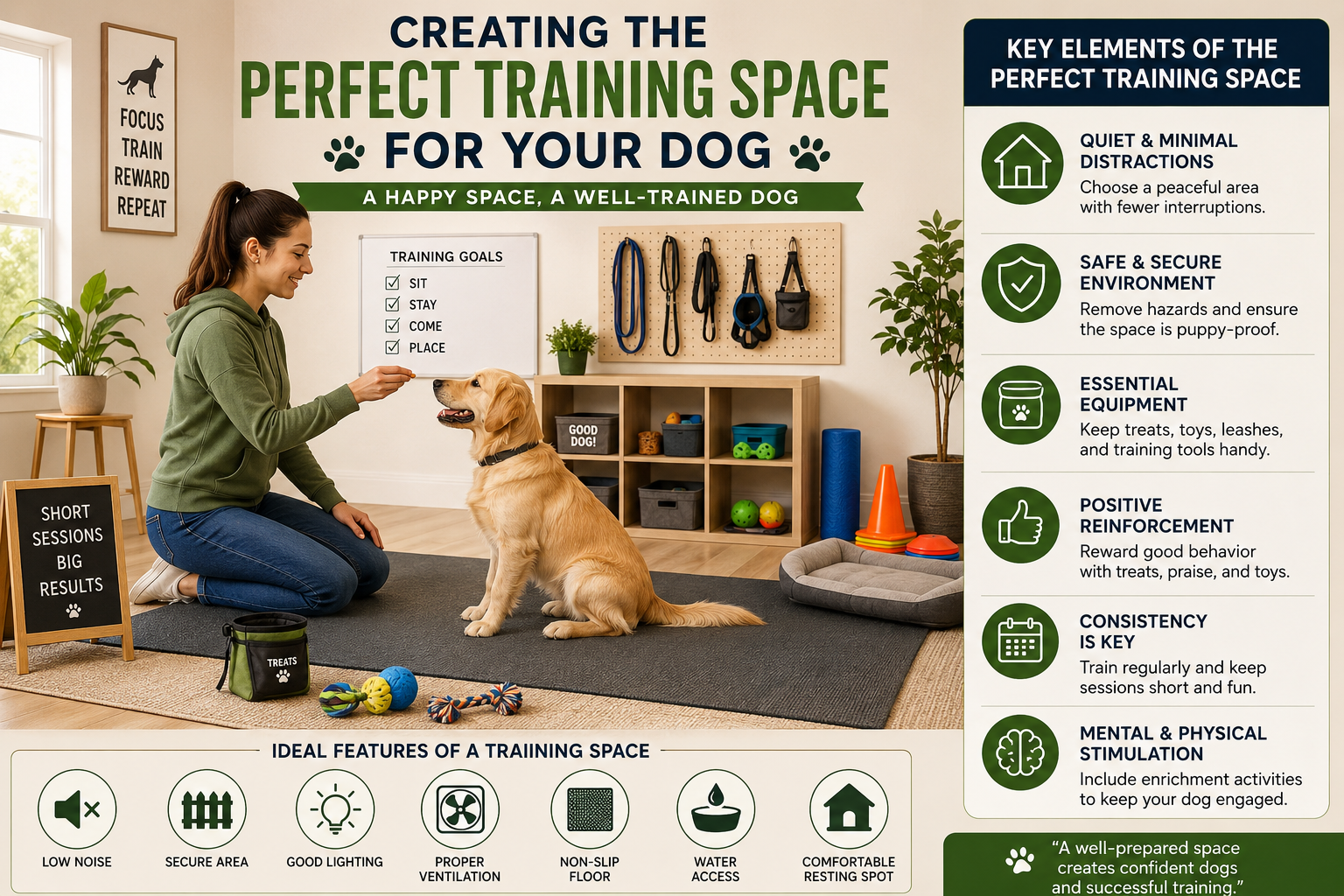
Creating the perfect training space for your dog is one of the most important steps toward successful and enjoyable training sessions. Whether you have a playful puppy or an older dog learning new commands, the right environment helps improve focus, reduces distractions, and encourages faster learning. A well-designed training area also strengthens the bond between you and your dog by creating positive experiences.
In this guide, you’ll learn how to choose the best location, organize essential training equipment, maintain safety, and create an environment that motivates your dog to learn.
Why a Dedicated Dog Training Space Matters
Dogs learn best in an environment where they feel safe, comfortable, and free from unnecessary distractions. A dedicated training space helps your dog associate that area with learning and positive reinforcement.
Benefits include:
- Better concentration during training sessions
- Faster learning of commands
- Reduced anxiety and stress
- Consistent training routine
- Stronger communication between owner and dog
Studies in animal behavior suggest that dogs respond better when training takes place in a familiar, low-stress environment with consistent routines.
Choose the Right Location
The first step in creating the perfect training space for your dog is selecting the ideal location.
Indoor Training Space
Indoor areas work well for puppies, rainy days, and beginner training.
Good locations include:
- Living room
- Spare bedroom
- Basement
- Garage with enough ventilation
Avoid busy areas where family members constantly walk through.
Outdoor Training Space
Outdoor training is ideal for practicing recall, leash walking, and agility.
Choose a space with:
- Secure fencing
- Flat ground
- Minimal traffic
- Few distractions
- Shade during warm weather
A fenced backyard is one of the safest outdoor training environments.
Keep the Area Free from Distractions
Dogs can easily lose focus if there are loud noises, toys, or other pets nearby.
Reduce distractions by:
- Turning off the television
- Keeping other pets away
- Removing unnecessary toys
- Limiting visitor interruptions
- Choosing quieter times of the day
As your dog’s skills improve, gradually introduce mild distractions to build reliability.
Gather Essential Dog Training Equipment
Having the right tools makes training more effective.
Essential equipment includes:
| Training Item | Purpose |
|---|---|
| Dog treats | Positive reinforcement |
| Clicker | Marker training |
| Treat pouch | Easy reward access |
| Flat collar | Basic obedience |
| Training leash | Controlled movement |
| Water bowl | Hydration |
| Comfortable mat | Place training |
| Toys | Motivation and rewards |
Choose high-value treats that your dog loves but receives only during training sessions.
Make Safety a Priority
A safe training space prevents accidents and keeps your dog comfortable.
Safety checklist:
- Remove electrical cords.
- Keep toxic plants away.
- Store cleaning products securely.
- Eliminate sharp objects.
- Cover slippery floors with rugs.
- Ensure proper ventilation.
- Check fencing for gaps.
Always supervise your dog during training.
Use Positive Reinforcement
Reward your dog immediately after they perform the desired behavior.
Rewards may include:
- Small treats
- Praise
- Toys
- Playtime
- Gentle petting
Avoid punishment-based methods, as they can increase fear and reduce trust.
Organize Your Training Sessions
Dogs learn better through short, consistent sessions rather than long lessons.
A simple training schedule:
- Warm-up (2 minutes)
- Practice familiar commands (5 minutes)
- Teach one new skill (5 minutes)
- End with play and praise (3 minutes)
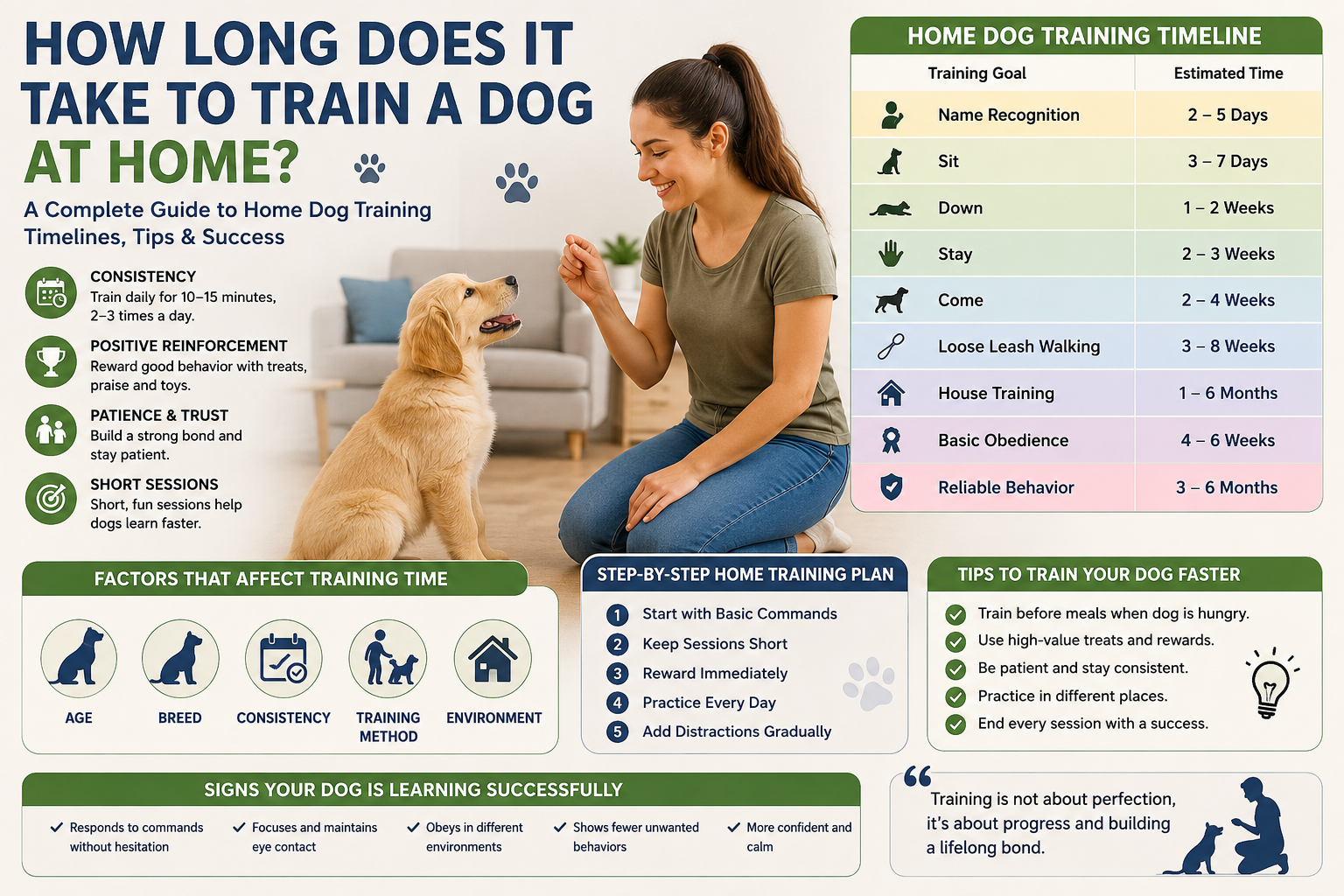
Most dogs benefit from 10–15 minute sessions repeated two or three times daily.
Add Mental Enrichment
Training is not only about obedience. Mental stimulation helps prevent boredom and destructive behavior.
Great enrichment activities include:
- Puzzle feeders
- Snuffle mats
- Scent games
- Hide-and-seek
- Interactive toys
Mental exercise can be just as tiring as physical exercise.
Keep the Space Comfortable
Your dog should enjoy spending time in the training area.
Consider adding:
- Soft flooring
- Good lighting
- Fresh air
- Comfortable temperature
- Water station
- Resting mat
Avoid training when the space is too hot or too cold.
Gradually Increase Difficulty
Once your dog masters commands in a quiet environment, slowly make training more challenging.
Progress by:
- Adding background noise
- Training in different rooms
- Practicing outdoors
- Introducing other people
- Working around mild distractions
This helps your dog obey commands in real-life situations.
Common Mistakes to Avoid
Many owners unintentionally slow their dog’s progress.
Avoid these common mistakes:
- Training for too long
- Giving inconsistent commands
- Repeating commands multiple times
- Using punishment
- Skipping rewards
- Training when your dog is overly tired
- Expecting instant results
Patience and consistency are the keys to long-term success.
Expert Tips for Better Dog Training
Professional trainers recommend:
- Train at the same time each day.
- Keep commands short and clear.
- End every session on a positive note.
- Celebrate small improvements.
- Be consistent with family members.
- Use rewards your dog truly enjoys.
- Practice regularly instead of occasionally.
Remember that every dog learns at its own pace.
Conclusion
Creating the perfect training space for your dog doesn’t require expensive equipment or a large backyard. What matters most is providing a safe, quiet, and organized environment where your dog can focus and enjoy learning. By choosing the right location, minimizing distractions, using positive reinforcement, and maintaining a consistent routine, you’ll set your dog up for long-term success. Whether you’re teaching basic obedience or advanced tricks, a well-planned training space builds confidence, strengthens your bond, and makes every training session more rewarding for both you and your furry companion.
FAQs:
How big should a dog training space be?
The space should be large enough for your dog to move comfortably without feeling restricted. Small obedience exercises need only a few square meters, while agility training requires much more room.
Can I train my dog in a small apartment?
Yes. Many obedience commands such as sit, stay, down, and place can be taught successfully in apartments with minimal space.
What flooring is best for dog training?
Non-slip surfaces like rubber mats, carpets, or foam flooring help prevent injuries and provide better grip.
How long should each training session last?
Most professional trainers recommend sessions lasting 10 to 15 minutes, especially for puppies and beginner dogs.
Should I train indoors or outdoors?
Start indoors with fewer distractions. Once your dog understands the commands, gradually transition to outdoor environments.