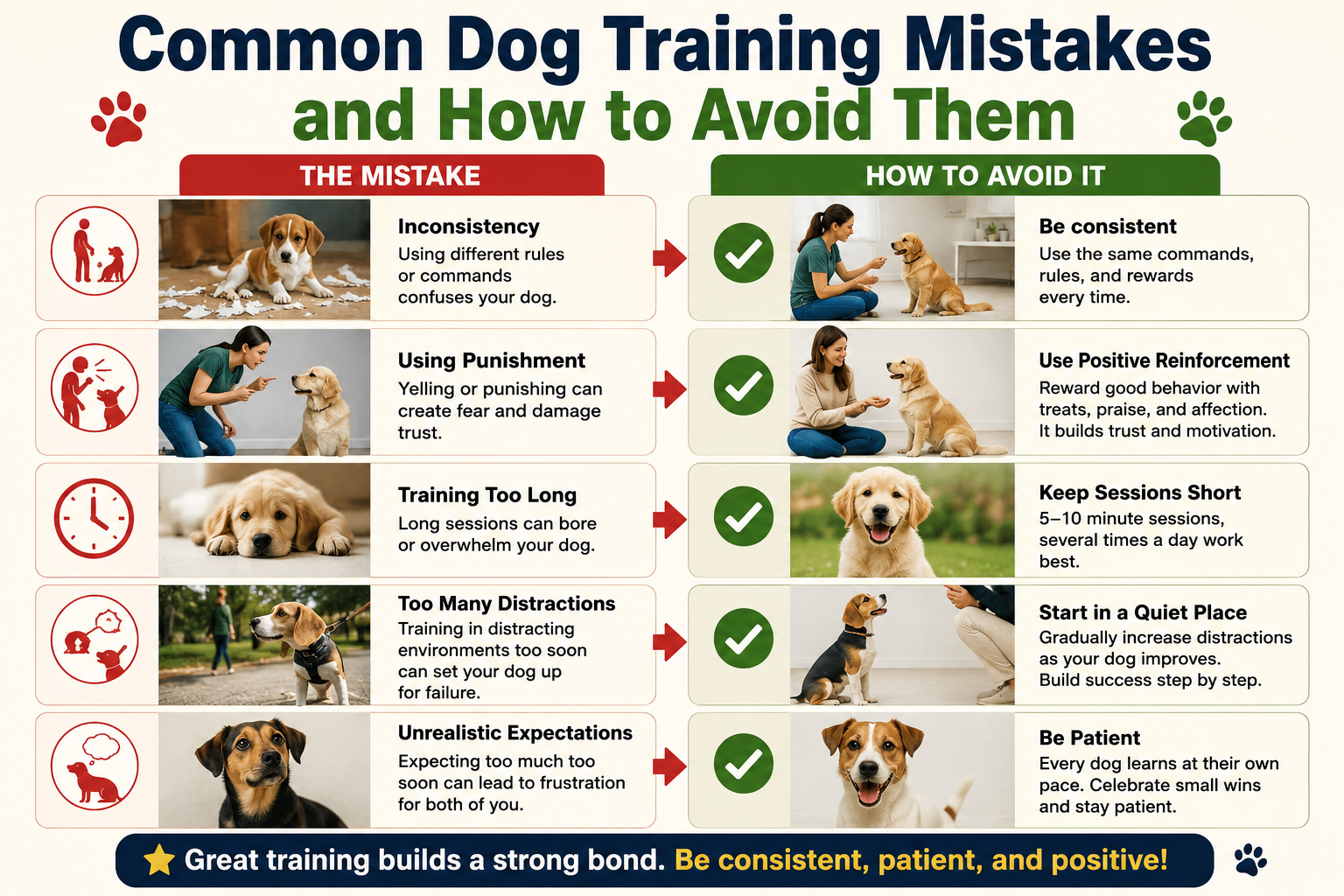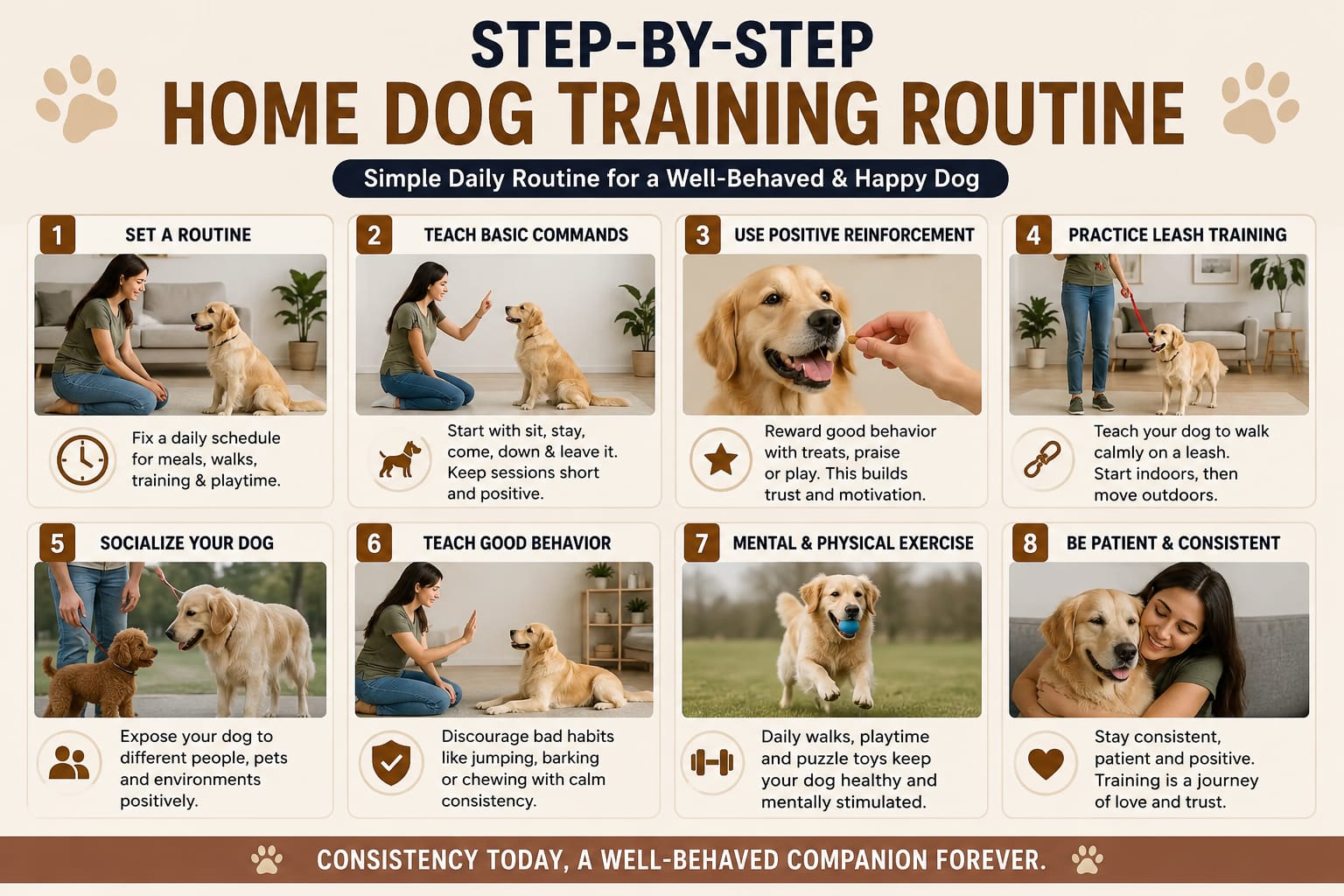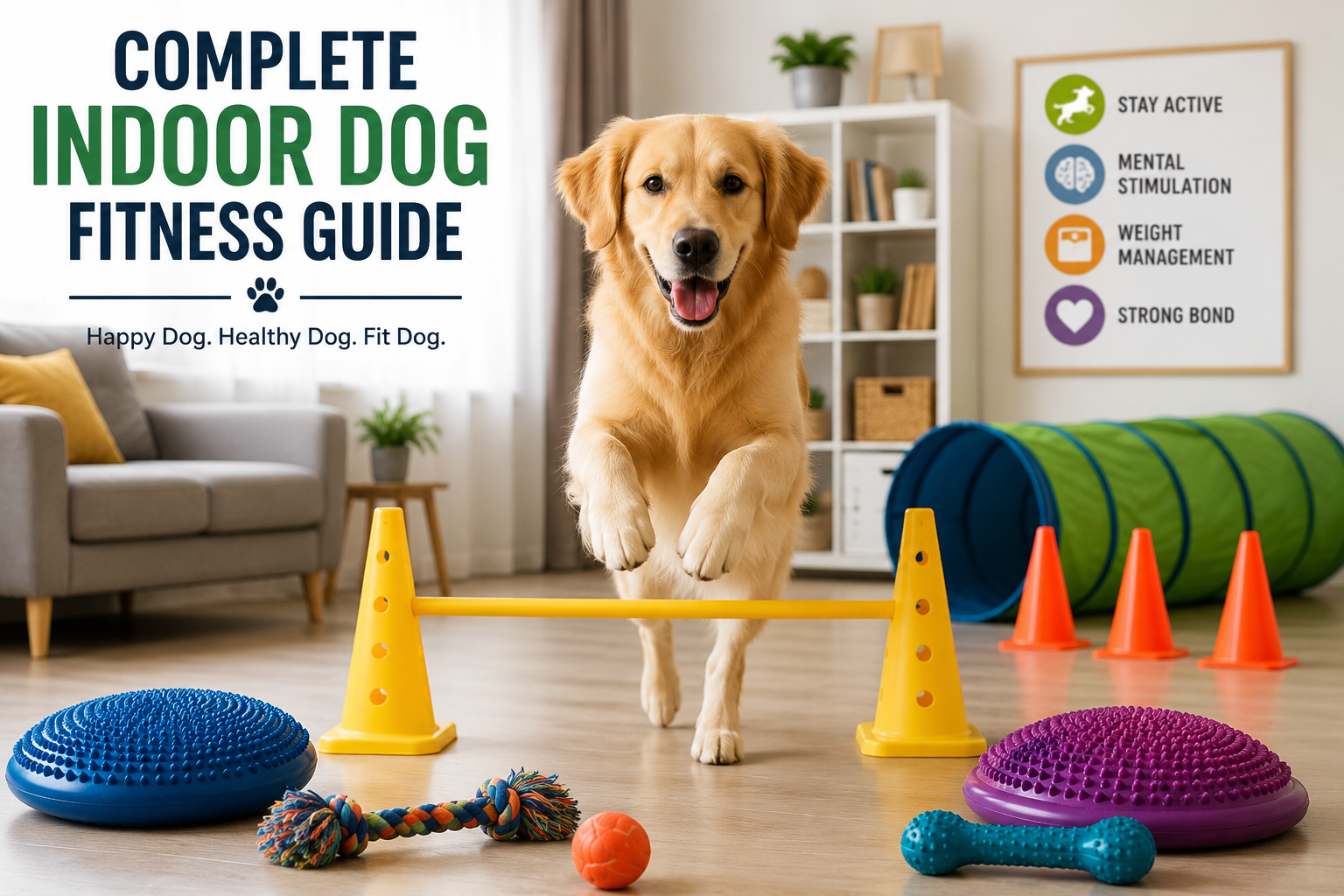
Indoor exercise is just as important as outdoor walks, especially when bad weather, busy schedules, or limited outdoor space make regular walks difficult. A well-planned fitness routine helps your dog stay physically fit, mentally stimulated, and emotionally happy. This Complete Indoor Dog Fitness Guide will show you practical ways to keep your furry friend active without leaving your home.
Why Indoor Dog Fitness Matters
Dogs need daily exercise to maintain a healthy body and mind. Lack of physical activity can lead to obesity, destructive behavior, anxiety, and joint problems. Indoor workouts provide a safe alternative when outdoor exercise isn’t possible.
Benefits of indoor dog fitness include:
- Maintains a healthy weight
- Improves cardiovascular health
- Builds stronger muscles
- Reduces boredom and anxiety
- Prevents destructive chewing and digging
- Enhances mental stimulation
- Strengthens the bond between you and your dog
According to veterinary experts, most adult dogs require 30–120 minutes of daily exercise, depending on their breed, age, and health.
Best Indoor Exercises for Dogs
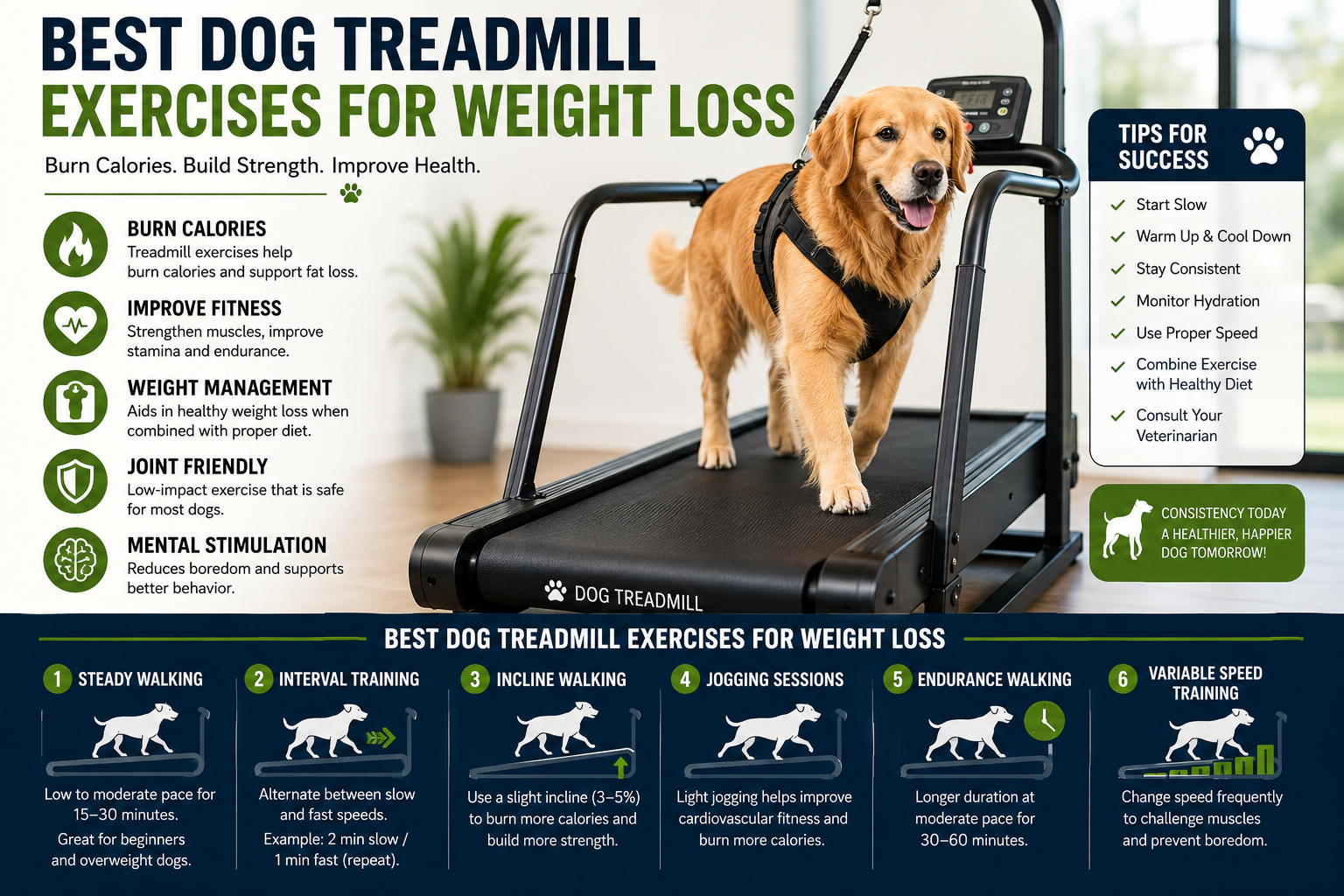
1. Dog Treadmill Training
Benefits include:
- Controlled speed
- Safe indoor workouts
- Ideal for rainy or hot days
- Excellent for weight management
- Suitable for rehabilitation under veterinary guidance
Always introduce your dog gradually and reward them with treats and praise.
2. Indoor Fetch
Fetch isn’t limited to the backyard.
Choose:
- Soft tennis balls
- Plush toys
- Foam balls
Use a hallway or spacious room to safely play fetch while avoiding fragile furniture.
3. Tug of War
Tug games provide both physical exercise and mental engagement.
Remember:
- Use a durable rope toy.
- Allow your dog to win occasionally.
- Stop immediately if they become overly excited.
4. Hide and Seek
Hide behind furniture or another room and call your dog’s name.
This activity improves:
- Recall skills
- Problem-solving
- Mental stimulation
- Bonding
5. Stair Climbing
If your home has stairs, they can become an excellent cardio workout.
Keep sessions short and avoid stair exercises for:
- Puppies
- Senior dogs
- Dogs with arthritis
Mental Fitness Is Physical Fitness
Mental exercise burns energy too.
Try:
- Puzzle feeders
- Snuffle mats
- Treat-dispensing toys
- Interactive games
- Basic obedience training
Mental stimulation can tire a dog almost as much as physical activity.
Indoor Agility Course
Create an obstacle course using household items.
Examples include:
| Household Item | Exercise |
|---|---|
| Chairs | Weaving |
| Blankets | Tunnel |
| Broomstick | Low Jump |
| Cushions | Balance Exercise |
| Boxes | Step-Up Platform |
Agility training develops:
- Confidence
- Coordination
- Balance
- Focus
Dog Treadmill vs Outdoor Walks
| Feature | Dog Treadmill | Outdoor Walk |
|---|---|---|
| Weather Independent | Yes | No |
| Controlled Speed | Yes | No |
| Social Interaction | Limited | High |
| Mental Stimulation | Moderate | High |
| Safety | Excellent | Depends on Area |
The best fitness routine often combines both indoor and outdoor activities.
Create a Weekly Indoor Fitness Routine
Monday
20-minute treadmill session
Tuesday
Indoor fetch and obedience training
Wednesday
Puzzle games and sniffing activities
Thursday
Obstacle course
Friday
Tug-of-war and trick training
Saturday
Treadmill plus hide-and-seek
Sunday
Light stretching and recovery games
Consistency is more important than intensity.
Nutrition Supports Indoor Fitness
Exercise works best alongside a balanced diet.
Choose foods that provide:
- High-quality protein
- Healthy fats
- Vitamins
- Minerals
- Fresh water
Avoid excessive treats that can offset calorie-burning workouts.
Safety Tips for Indoor Dog Exercise
Always prioritize your dog’s safety.
- Warm up before intense activity.
- Keep floors dry to prevent slipping.
- Remove sharp objects.
- Provide fresh water.
- Watch for signs of fatigue.
- Never force your dog to exercise.
- Adjust workouts based on age and health.
Consult your veterinarian before starting a new fitness program, especially if your dog has medical conditions.
Common Indoor Exercise Mistakes
Many owners unknowingly make these mistakes:
- Exercising immediately after meals
- Skipping warm-ups
- Overusing the treadmill
- Ignoring mental stimulation
- Choosing activities unsuitable for the dog’s breed
- Exercising on slippery floors
- Overtraining puppies
Balanced exercise is always better than excessive exercise.
How Much Exercise Does Your Dog Need?
Exercise requirements vary by breed.
| Dog Type | Daily Exercise |
|---|---|
| Small Breeds | 30–45 minutes |
| Medium Breeds | 45–60 minutes |
| Large Breeds | 60–90 minutes |
| Working Breeds | 90–120 minutes |
Individual needs may vary depending on age, health, and energy level.
Signs Your Dog Needs More Exercise
Watch for these signs:
- Excessive barking
- Chewing furniture
- Restlessness
- Weight gain
- Hyperactivity
- Digging indoors
- Difficulty settling down
Increasing daily activity often improves these behaviors.
Essential Indoor Fitness Equipment
Useful tools include:
- Dog treadmill
- Interactive puzzle toys
- Snuffle mat
- Tug rope
- Soft fetch balls
- Agility cones
- Training treats
- Clicker
These items make indoor workouts more engaging and effective.
Conclusion
This Complete Indoor Dog Fitness Guide demonstrates that keeping your dog active doesn’t require a large yard or perfect weather. By combining treadmill workouts, indoor games, mental enrichment, agility exercises, and proper nutrition, you can support your dog’s overall health and happiness year-round. Whether you have a playful puppy, an energetic adult, or a senior companion, creating a consistent indoor fitness routine helps maintain a healthy weight, reduces boredom, and strengthens your bond. Start with simple activities, stay consistent, and adjust exercises to your dog’s individual needs for the best results.
Frequently Asked Questions
1. Can dogs get enough exercise indoors?
Yes. A combination of treadmill sessions, interactive games, obedience training, and mental stimulation can meet many dogs’ daily exercise needs.
2. Is a dog treadmill safe?
Yes, when introduced gradually and used under supervision with appropriate speed settings.
3. How long should indoor exercise sessions be?
Most sessions should last 15–30 minutes, depending on your dog’s age, breed, and fitness level.
4. What is the best indoor exercise for energetic dogs?
Dog treadmill workouts, agility training, fetch, and puzzle games are excellent options.
5. Can puppies use a dog treadmill?
Puppies should only use a treadmill with veterinary guidance and at low speeds appropriate for their age and development.