Training your dog at home is one of the best ways to build trust, improve behavior, and strengthen your bond. Whether you have a playful puppy or an older rescue dog, home training can help your pet learn good manners in a familiar environment. With consistency, patience, and positive reinforcement, you can teach essential commands without hiring a professional trainer.
In this beginner’s guide, you’ll learn how to train your dog at home, the basic commands every dog should know, common mistakes to avoid, and practical tips to make training enjoyable for both you and your furry friend.
Why Home Dog Training Is Important
Training is more than teaching tricks—it helps your dog become a well-behaved and confident companion. Dogs that receive regular training are less likely to develop unwanted behaviors such as excessive barking, jumping on guests, or chewing furniture.
Benefits of home dog training include:
- Strengthens the bond between you and your dog.
- Encourages good behavior and obedience.
- Improves your dog’s confidence and social skills.
- Makes daily routines easier and safer.
- Reduces stress and anxiety for both pet and owner.
Even 10–15 minutes of training each day can produce noticeable improvements over time.
Prepare Before You Start Training
Before beginning, create a calm environment where your dog can focus without distractions. Choose a quiet room or fenced backyard for training sessions.
You’ll need:
- Healthy training treats
- A comfortable leash and collar
- Favorite toys for rewards
- A clicker (optional)
- Plenty of patience and consistency
Keep sessions short—about 10 to 15 minutes—to maintain your dog’s attention.
Use Positive Reinforcement
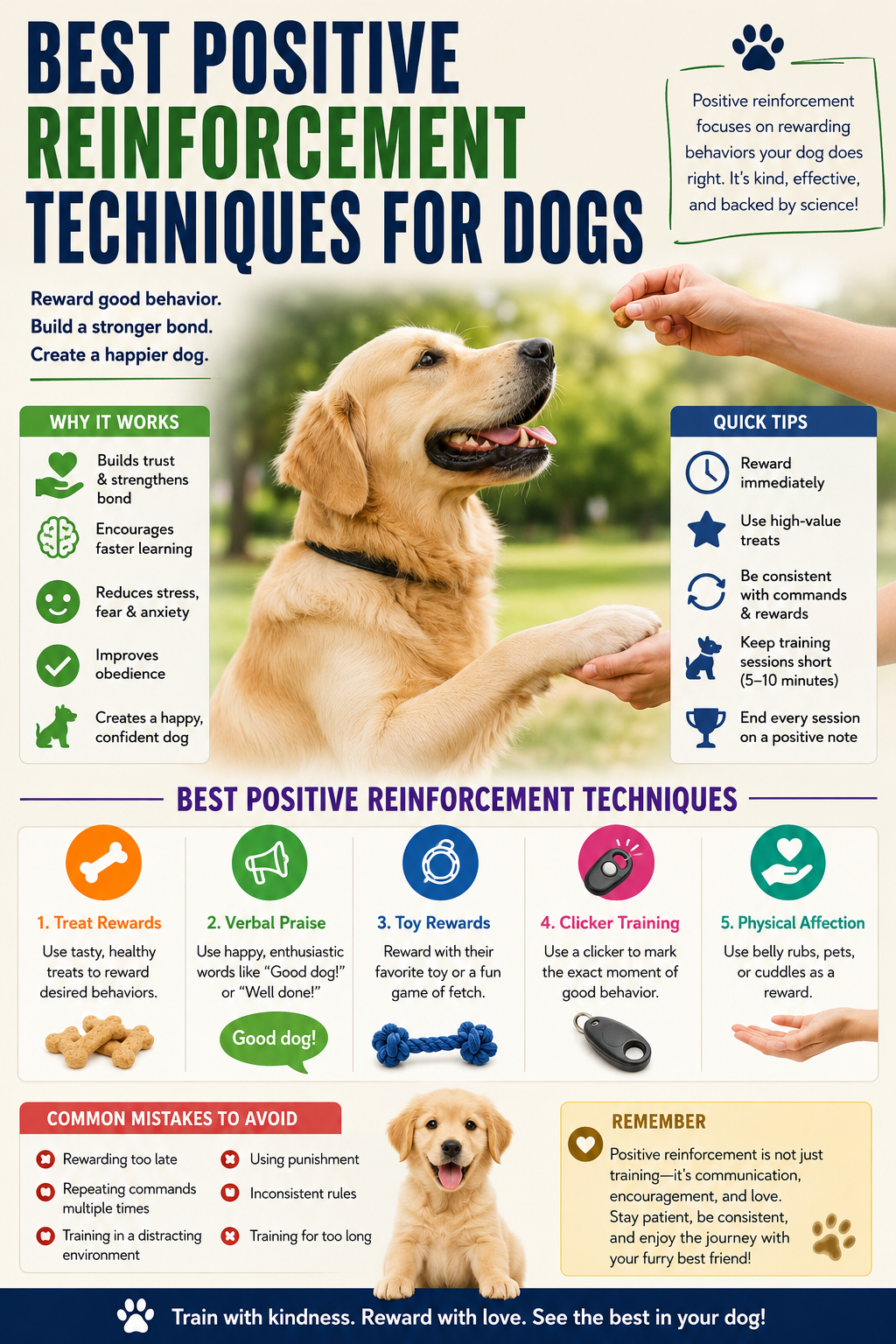
Positive reinforcement is one of the most effective dog training methods. Instead of punishing unwanted behavior, reward your dog immediately when it performs the desired action.
Effective rewards include:
- Small treats
- Verbal praise like “Good Dog!”
- Petting and affection
- Playtime with a favorite toy
Rewarding good behavior encourages your dog to repeat it and creates a positive learning experience.
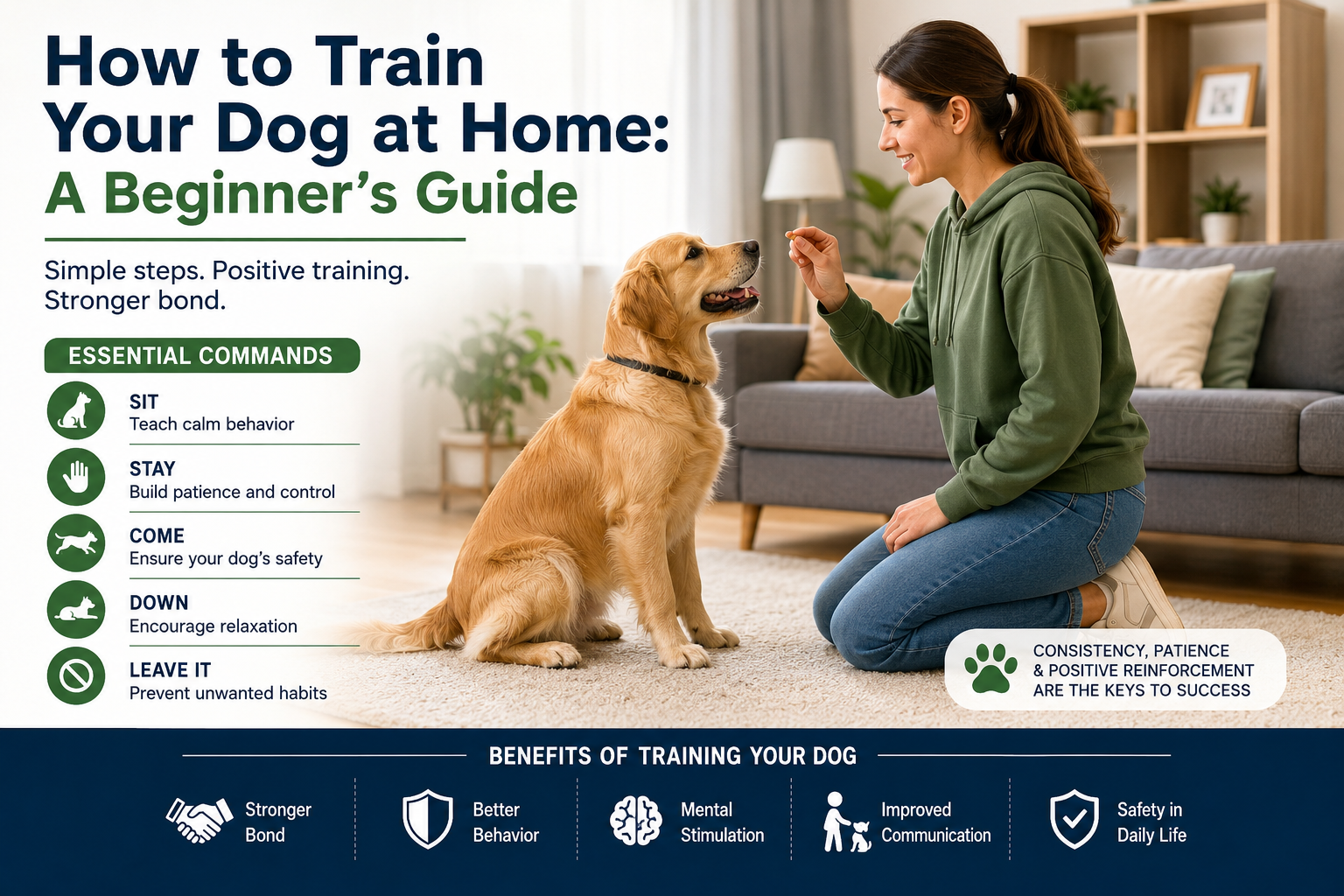
Essential Commands Every Beginner Should Teach
1. Sit
Hold a treat close to your dog’s nose and slowly move it upward. As your dog’s head follows the treat, its bottom will naturally lower to the floor. Say “Sit,” reward immediately, and repeat several times.
2. Stay
Ask your dog to sit. Hold your hand up and say “Stay.” Take one step back. If your dog remains still, reward and praise it. Gradually increase the distance and duration.
3. Come
Use a cheerful voice while saying “Come.” Reward your dog as soon as it reaches you. This command is important for your dog’s safety.
4. Down
Guide your dog from a sitting position toward the floor using a treat. Once it lies down, say “Down” and reward immediately.
5. Leave It
Place a treat on the floor and cover it with your hand. When your dog stops trying to reach it, reward with a different treat. This command helps prevent your dog from picking up unsafe objects.
Create a Daily Training Routine
Consistency is the key to successful dog training. Practice commands every day using a simple schedule.
| Time | Activity |
|---|---|
| Morning | Sit, Stay, Come (10 minutes) |
| Afternoon | Leash walking and socialization |
| Evening | Review commands and play session |
Repeating commands in different situations helps your dog understand them better.
Common Training Mistakes to Avoid
Many beginners unintentionally slow their dog’s progress by making avoidable mistakes.
Avoid these common errors:
- Using punishment instead of rewards.
- Training for too long.
- Giving inconsistent commands.
- Expecting immediate results.
- Forgetting to reward good behavior.
- Skipping daily practice.
Remember that every dog learns at its own pace. Stay patient and celebrate small improvements.
Tips for Faster Dog Training Success
Follow these expert tips to make training easier:
- Keep commands short and clear.
- Reward immediately after good behavior.
- End every session on a positive note.
- Practice in different locations.
- Gradually reduce treats while continuing verbal praise.
- Make training fun with games and toys.
Dogs respond best when training feels like play rather than work.
Puppy vs. Adult Dog Training
| Puppy | Adult Dog |
|---|---|
| Learns quickly | May need extra patience |
| Easier to build habits | May need to replace old habits |
| Short attention span | Better focus during sessions |
| Needs socialization | Benefits from routine and consistency |
Regardless of age, all dogs can learn with positive reinforcement and regular practice.
Signs Your Dog Is Learning
Your training is working if your dog:
- Responds quickly to commands.
- Pays attention during sessions.
- Makes eye contact.
- Waits calmly for rewards.
- Shows excitement when training begins.
These behaviors indicate that your dog understands what you are teaching and enjoys the learning process.
Conclusion
Learning how to train your dog at home: a beginner’s guide is the first step toward raising a happy, confident, and well-behaved companion. Home training doesn’t require expensive equipment or professional experience—it requires consistency, patience, and positive reinforcement. Start with basic commands like Sit, Stay, Come, Down, and Leave It, keep sessions short, and reward every success. Over time, your dog will develop good habits that last a lifetime, making everyday life safer, easier, and more enjoyable for both of you.
Frequently Asked Questions
How long should I train my dog each day?
Most dogs benefit from 10–15 minute sessions, two or three times daily.
What is the best age to start dog training?
Puppies can begin basic training at around 8 weeks old, but adult dogs can also learn successfully.
Should I punish my dog for bad behavior?
No. Positive reinforcement is more effective and helps build trust.
How long does it take to train a dog?
Basic obedience usually takes several weeks with consistent daily practice, though every dog learns at its own pace.
Can I train my dog without a professional trainer?
Yes. Most basic obedience skills can be taught at home using patience, consistency, and reward-based methods.