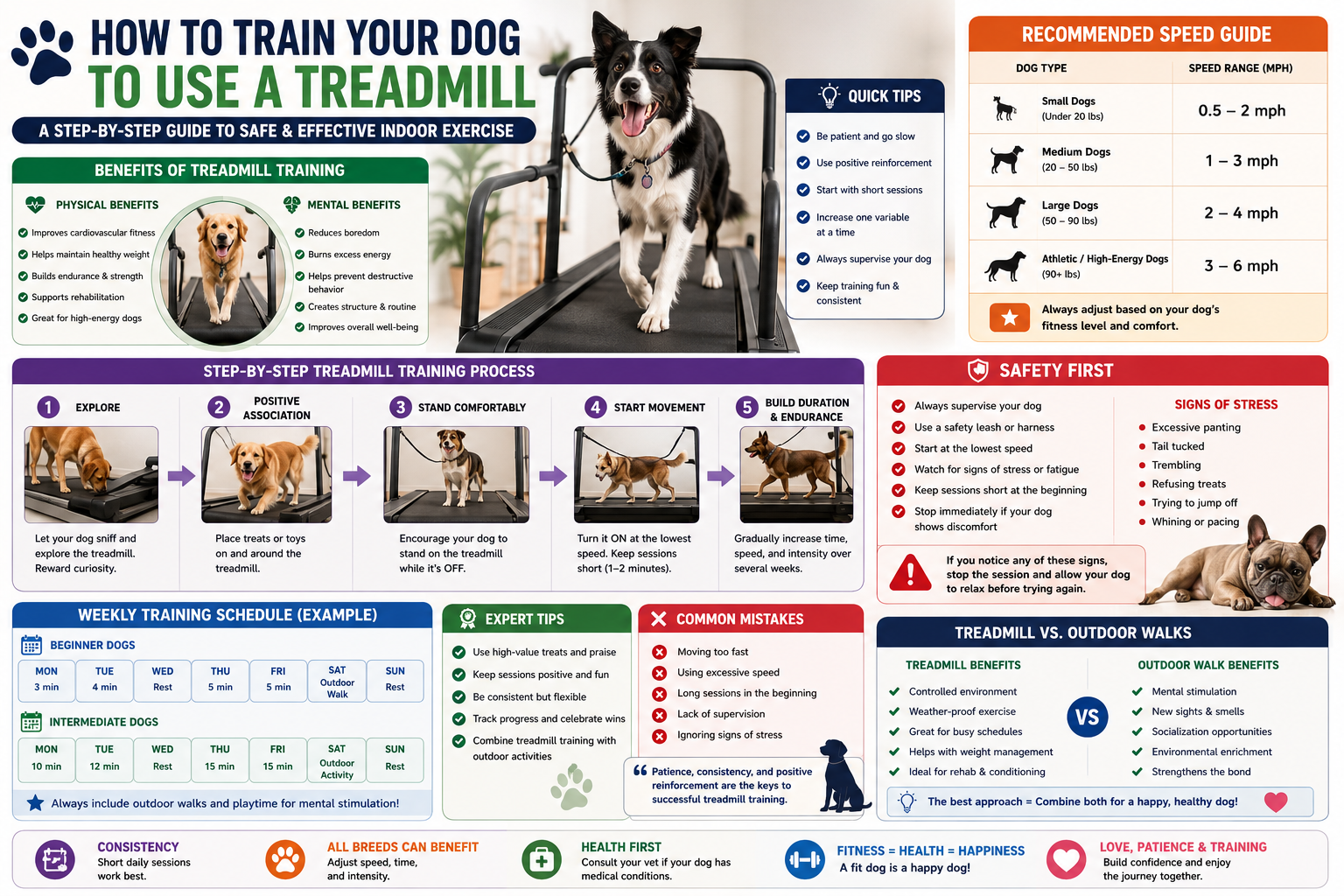
Keeping your dog active is essential for physical health, mental stimulation, and overall happiness. However, bad weather, busy schedules, and limited outdoor space can make daily exercise challenging. That’s where treadmill training can help.
Learning how to train your dog to use a treadmill safely allows your pet to stay active year-round while maintaining a healthy weight and energy level.
What You’ll Learn
In this guide, you’ll discover:
- Benefits of treadmill training
- How to introduce your dog to a treadmill
- Step-by-step training methods
- Safety precautions
- Common mistakes to avoid
- Training schedules
- Expert tips for long-term success
What Is Dog Treadmill Training?
Dog treadmill training is the process of teaching a dog to walk or run comfortably on a treadmill through gradual exposure and positive reinforcement.
Unlike forcing a dog onto moving equipment, successful training focuses on building confidence and creating positive experiences.
Quick Definition
Dog treadmill training is a structured method that helps dogs safely exercise on a treadmill using rewards, gradual speed increases, and proper supervision.
Benefits of Treadmill Training for Dogs
A treadmill should never completely replace outdoor adventures, but it offers several advantages.
Physical Benefits
- Improves cardiovascular fitness
- Helps maintain healthy weight
- Builds endurance
- Strengthens muscles
- Supports rehabilitation programs
Mental Benefits
- Reduces boredom
- Burns excess energy
- Helps prevent destructive behavior
- Creates structured routines
Convenience Benefits
- Exercise during bad weather
- Ideal for apartment living
- Useful for busy pet owners
- Consistent daily activity
Research from veterinary fitness professionals consistently shows that regular exercise contributes significantly to canine weight management and overall health.
Is It Safe for Dogs to Use a Treadmill?
Yes, treadmill training is generally safe when performed correctly.
However, safety depends on:
- Proper supervision
- Appropriate speed settings
- Gradual training progression
- Correct equipment size
- Veterinary approval when needed
Dogs That May Need Veterinary Clearance
- Senior dogs
- Overweight dogs
- Dogs with arthritis
- Dogs recovering from injury
- Dogs with heart conditions
Always consult a veterinarian before starting a new fitness program.
How to Introduce Your Dog to a Treadmill
The biggest mistake owners make is turning on the treadmill too soon.
Step 1: Let Your Dog Explore
Allow your dog to:
- Sniff the treadmill
- Walk around it
- Investigate freely
Reward curiosity with treats and praise.
Step 2: Create Positive Associations
Place:
- Treats
- Toys
- Favorite rewards
Around and on the treadmill.
The goal is simple:
“Treadmill = Good Things.”
Step 3: Practice Standing
Encourage your dog to stand on the treadmill while it remains off.
Reward calm behavior.
Repeat for several sessions.
Step-by-Step Dog Treadmill Training Guide
Step 1: Start With the Treadmill Turned Off
Have your dog stand comfortably.
Reward:
- Calm posture
- Eye contact
- Confidence
Continue until your dog appears relaxed.
Step 2: Introduce Movement Slowly
Turn the treadmill on at its lowest speed.
Most dogs initially feel uncertain.
Keep sessions under 2 minutes.
Step 3: Walk Beside Your Dog
Stay next to your dog.
Provide:
- Verbal encouragement
- Gentle guidance
- Positive reinforcement
Never leave your dog unattended.
Step 4: Increase Duration Gradually
Progress slowly:
Week 1:
- 1–3 minutes
Week 2:
- 5–8 minutes
Week 3:
- 10–15 minutes
Week 4:
- 15–20 minutes
Step 5: Build Endurance
Once comfortable, increase:
- Duration
- Speed
- Intensity
One variable at a time.
Best Treadmill Speeds for Different Dogs
| Dog Type | Recommended Speed |
|---|---|
| Small Dogs | 0.5–2 mph |
| Medium Dogs | 1–3 mph |
| Large Dogs | 2–4 mph |
| Athletic Dogs | 3–6 mph |
Always adjust based on your dog’s fitness level.
Common Mistakes to Avoid
Moving Too Fast
Many owners rush the process.
Result:
- Fear
- Anxiety
- Resistance
Using Excessive Speed
Fast speeds increase injury risk.
Lack of Supervision
Never leave your dog alone on a treadmill.
Long Initial Sessions
Short sessions build confidence.
Long sessions can create negative associations.
Signs Your Dog Is Stressed
Watch for:
- Excessive panting
- Tail tucked
- Trembling
- Refusing treats
- Attempting to jump off
- Whining
If any signs appear:
Stop training immediately.
Allow recovery before trying again.
Sample Weekly Dog Treadmill Training Schedule
Beginner Dogs
Monday: 3 minutes
Tuesday: 4 minutes
Wednesday: Rest
Thursday: 5 minutes
Friday: 5 minutes
Saturday: Outdoor walk
Sunday: Rest
Intermediate Dogs
Monday: 10 minutes
Tuesday: 12 minutes
Wednesday: Rest
Thursday: 15 minutes
Friday: 15 minutes
Saturday: Outdoor activity
Sunday: Rest
Can a Treadmill Replace Daily Walks?
No.
Treadmills provide excellent physical exercise but cannot fully replace outdoor walks.
Outdoor activities provide:
- Socialization
- New scents
- Mental stimulation
- Environmental enrichment
The best approach combines both.
Expert Tips for Success
Use Positive Reinforcement
Reward desired behaviors immediately.
Keep Sessions Fun
Use:
- Praise
- Treats
- Toys
Stay Consistent
Short daily sessions outperform occasional long workouts.
Track Progress
Record:
- Duration
- Speed
- Comfort level
This helps identify improvements.
Conclusion
Learning how to train your dog to use a treadmill can provide a safe and effective way to maintain your pet’s fitness throughout the year. By introducing the treadmill gradually, using positive reinforcement, and following proper safety guidelines, most dogs can learn to enjoy treadmill exercise. Remember that treadmill training works best as part of a balanced exercise program that includes outdoor walks, playtime, and mental stimulation.
FAQ Section:
1. How long should a dog use a treadmill?
Most dogs benefit from 10–30 minute sessions depending on age, breed, and fitness level.
2. Is treadmill training safe for dogs?
Yes, when supervised properly and introduced gradually.
3. Can puppies use a treadmill?
Puppies should only use treadmills with veterinary approval because their joints are still developing.
4. What speed should I use for my dog?
Start at the lowest speed and adjust based on your dog’s comfort level.
5. Can a treadmill replace walks?
No. Outdoor walks provide important mental stimulation and socialization.
6. Why is my dog scared of the treadmill?
Dogs may fear unfamiliar sounds and movement. Gradual exposure usually helps.
7. How often should my dog use a treadmill?
Most healthy dogs can use a treadmill 3–5 times per week.
8. Are dog treadmills worth it?
They can be valuable for busy owners, apartment dwellers, and high-energy dogs.
9. Should I use treats during training?
Yes. Positive reinforcement speeds learning.
10. Can senior dogs use treadmills?
Many can, but veterinary approval is recommended.
11. What is the best age to start treadmill training?
Generally after skeletal development is sufficiently advanced, based on veterinary guidance.
12. Can overweight dogs use treadmills?
Yes, treadmill exercise can support weight loss when combined with proper nutrition.
13. How do I know if my dog is tired?
Watch for excessive panting, slowing down, or reluctance to continue.
14. Should I leash my dog on a treadmill?
Many trainers recommend a loose leash during early training.
15. What type of treadmill is best?
Dog-specific treadmills are typically safer and better suited to canine movement.