Introduction
A dog treadmill can be an excellent tool for keeping your pet active, maintaining a healthy weight, and providing exercise when outdoor walks are limited. However, many dog owners unknowingly make mistakes that can lead to stress, poor training results, or even injuries.
Veterinary experts recommend introducing treadmill exercise gradually and monitoring your dog’s comfort level throughout every session. A treadmill should enhance your dog’s fitness routine—not create new health problems.
What You’ll Learn
In this guide, you’ll discover:
- The most common dog treadmill mistakes
- How to safely introduce your dog to a treadmill
- Proper speed and duration guidelines
- Signs of overexertion
- Safety precautions every owner should follow
- Expert recommendations for long-term success
What Is a Dog Treadmill?
A dog treadmill is a specially designed exercise machine that allows dogs to walk or run indoors in a controlled environment.
Unlike standard human treadmills, dog treadmills often include:
- Longer running surfaces
- Lower speed settings
- Side rails for safety
- Quieter motors
- Better traction for paws
Why Dog Treadmill Safety Matters
According to veterinary sports medicine specialists, treadmill exercise changes the way dogs move because the belt moves beneath them rather than the dog propelling itself entirely across the ground. This makes proper training and supervision essential.
Benefits include:
- Weight management
- Improved cardiovascular health
- Controlled rehabilitation
- Indoor exercise during bad weather
But these benefits only occur when used correctly.
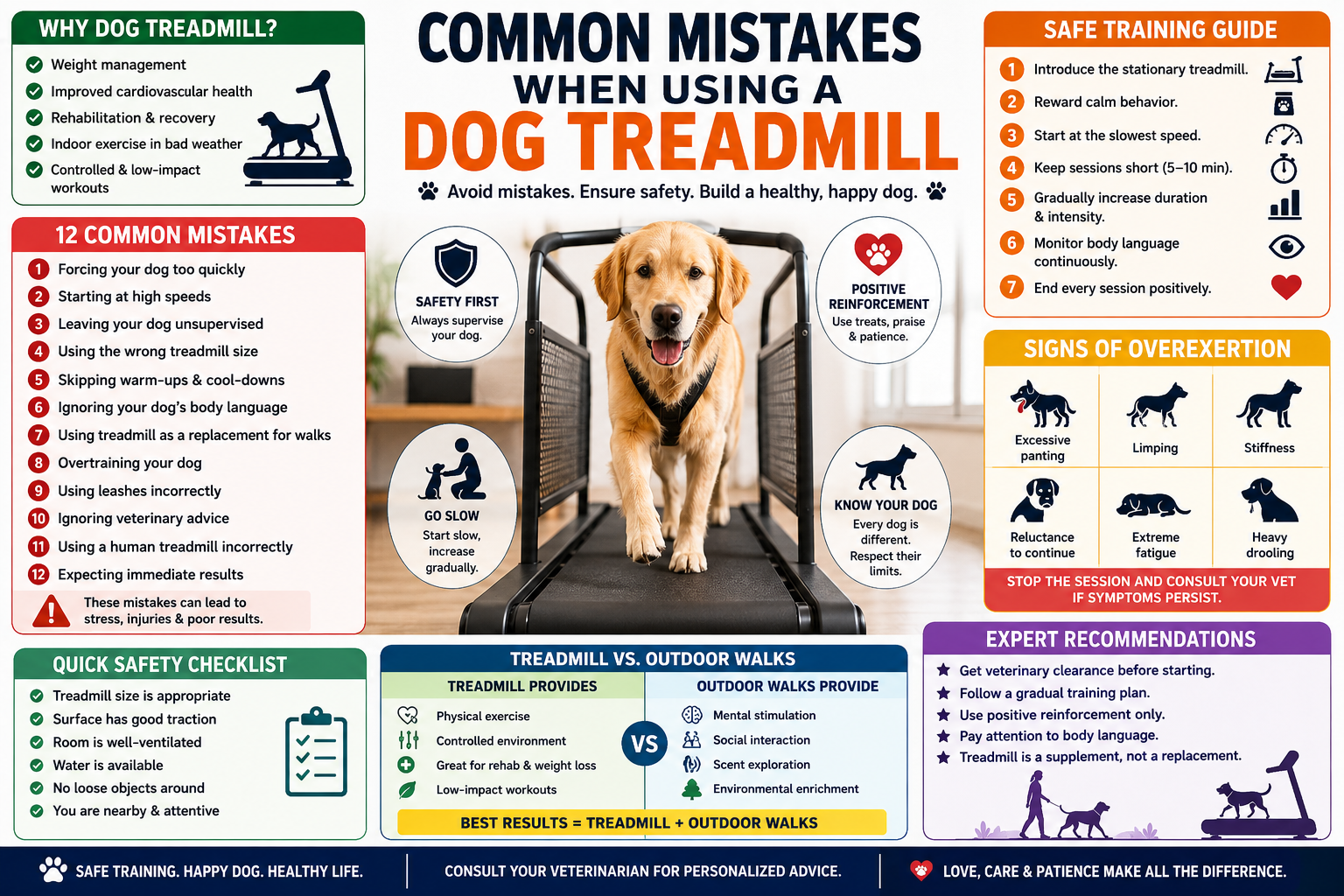
12 Common Mistakes When Using a Dog Treadmill
1. Forcing Your Dog Onto the Treadmill Too Quickly
One of the biggest mistakes owners make is rushing the introduction process.
Why It’s Dangerous
A frightened dog may:
- Panic
- Jump off
- Develop treadmill anxiety
- Refuse future sessions
Better Approach
- Let your dog inspect the treadmill while it’s off.
- Reward calm behavior.
- Allow short standing sessions.
- Introduce movement gradually.
Experts recommend several days of acclimation before beginning actual workouts.
2. Starting at High Speeds
Many owners assume dogs naturally know how to run on treadmills.
This is incorrect.
Common Problems
- Loss of balance
- Joint strain
- Fear reactions
- Muscle fatigue
Expert Recommendation
Always start at the slowest setting and gradually increase speed as your dog becomes comfortable.
3. Leaving Your Dog Unsupervised
Quick Answer
Never leave a dog alone on a moving treadmill.
Veterinary professionals consistently warn that every treadmill session should be supervised from start to finish.
Risks
- Falls
- Entanglement
- Overheating
- Panic responses
Stay within arm’s reach during every workout.
4. Using the Wrong Treadmill Size
Many owners focus on price rather than size.
Why Size Matters
Dogs need enough room to maintain their natural gait.
An undersized treadmill may:
- Restrict movement
- Alter posture
- Increase injury risk
Veterinary guidance suggests a treadmill length approximately 1.5–2 times the dog’s body length, depending on stride requirements.
5. Skipping Warm-Ups and Cool-Downs
Just like humans, dogs need gradual transitions.
Warm-Up Benefits
- Increases blood flow
- Prepares muscles
- Reduces injury risk
Cool-Down Benefits
- Normalizes heart rate
- Prevents stiffness
- Supports recovery
Spend 2–5 minutes at a slow pace before and after workouts.
6. Ignoring Body Language
Your dog constantly communicates through behavior.
Warning Signs
- Flattened ears
- Excessive panting
- Tail tucked
- Lagging behind
- Attempting to jump off
These signals indicate discomfort or fatigue and should never be ignored.
7. Using the Treadmill as a Replacement for Walks
This mistake is extremely common.
Why Outdoor Walks Still Matter
Outdoor walks provide:
- Mental stimulation
- Social interaction
- Environmental enrichment
- Scent exploration
A treadmill can exercise the body, but it cannot replace the mental benefits of outdoor experiences.
8. Overtraining Your Dog
More exercise isn’t always better.
Signs of Overtraining
| Symptom | What It Means |
|---|---|
| Excessive fatigue | Workout too intense |
| Stiffness | Poor recovery |
| Limping | Possible injury |
| Reluctance to exercise | Physical discomfort |
| Heavy panting | Overexertion |
9. Using Leashes Incorrectly
Never attach a leash directly to a moving treadmill.
Potential Risks
- Choking
- Neck injuries
- Dragging accidents
Instead:
- Stay beside your dog
- Use positive reinforcement
- Use properly fitted harnesses if recommended
10. Ignoring Veterinary Advice
Not every dog is a good treadmill candidate.
Dogs Requiring Veterinary Clearance
- Senior dogs
- Puppies
- Dogs recovering from surgery
- Dogs with heart conditions
- Dogs with arthritis
Veterinary consultation should always come before beginning a structured treadmill program.
11. Using a Human Treadmill Incorrectly
Human treadmills can sometimes be used, but they present challenges.
Common Issues
- Shorter running surfaces
- Higher speeds
- Poor side protection
- Increased noise
Dog-specific treadmills generally offer safer design features.
12. Expecting Immediate Results
Fitness improvements take time.
Realistic Timeline
Week 1–2:
- Familiarization
Week 3–4:
- Increased confidence
Month 2–3:
- Improved endurance
Month 3+:
- Better fitness and weight management
Patience produces the best long-term results.
Step-by-Step Guide: Safe Dog Treadmill Training
Step 1
Introduce the stationary treadmill.
Step 2
Use treats and praise.
Step 3
Start at the slowest speed.
Step 4
Keep sessions under 5–10 minutes initially.
Step 5
Gradually increase duration.
Step 6
Monitor body language continuously.
Step 7
End every session positively.
Expert Recommendations
Professional canine fitness specialists recommend:
- Positive reinforcement only
- Consistent supervision
- Proper treadmill sizing
- Veterinary consultation
- Gradual progression
Dogs that enjoy treadmill exercise often develop better conditioning while maintaining confidence and enthusiasm.
Conclusion
Understanding the common mistakes when using a dog treadmill can dramatically improve your dog’s safety, confidence, and overall fitness. By avoiding rushed training, excessive speeds, improper equipment, and unsupervised sessions, you can create a positive exercise experience that supports long-term health.
Remember that a dog treadmill should complement—not replace—outdoor walks, playtime, and mental enrichment. When used correctly, it becomes a valuable tool for canine fitness and wellbeing.
FAQ Section
Are dog treadmills safe?
Yes, when introduced gradually and used under supervision.
Can a dog use a treadmill every day?
Most healthy dogs can, but duration and intensity should be adjusted based on age and fitness level.
How long should a dog stay on a treadmill?
Beginners should start with 5–10 minutes and gradually increase.
Can puppies use dog treadmills?
Only under veterinary guidance due to developing joints.
Can senior dogs use treadmills?
Yes, if approved by a veterinarian.
What speed should I use?
Start at the slowest comfortable walking pace.
Can a treadmill replace dog walks?
No. Outdoor walks provide mental enrichment and socialization.
Why is my dog afraid of the treadmill?
Fear often results from rushing the introduction process.
Should I use treats during training?
Yes. Positive reinforcement improves learning and confidence.
Can overweight dogs use treadmills?
Yes, under veterinary supervision and with gradual progression.
What are signs of overexertion?
Heavy panting, limping, fatigue, stiffness, and reluctance to continue.
Is a dog treadmill better than a human treadmill?
Dog treadmills generally offer safer features and better sizing.