Introduction
Keeping a large dog active isn’t always easy. Rain, extreme temperatures, busy workdays, or apartment living can make outdoor exercise difficult. Fortunately, there are plenty of Indoor Fitness Activities for Large Dogs that provide both physical exercise and mental stimulation.
Regular indoor workouts help prevent obesity, reduce anxiety, improve joint health, and strengthen the bond between you and your dog. Whether you own a Labrador Retriever, German Shepherd, Golden Retriever, Rottweiler, or Great Dane, the right activities can keep your companion healthy year-round.
What You’ll Learn
- Why indoor exercise matters
- Daily exercise requirements
- Best indoor fitness activities
- Mental enrichment games
- DIY obstacle courses
- Strength and balance exercises
- Weekly workout schedule
- Safety precautions
- Common mistakes to avoid
Why Indoor Fitness Is Important for Large Dogs
Large breeds require consistent activity to maintain healthy muscles, joints, and cardiovascular fitness.
Without adequate exercise, dogs may develop:
- Obesity
- Anxiety
- Excessive barking
- Furniture destruction
- Digging behavior
- Joint stiffness
- Depression
- Hyperactivity
Benefits of Indoor Exercise
- Burns excess calories
- Improves heart health
- Strengthens muscles
- Supports healthy joints
- Reduces boredom
- Enhances obedience
- Builds confidence
- Increases mental stimulation
How Much Exercise Do Large Dogs Need?
| Dog Type | Recommended Exercise |
|---|---|
| Adult Large Breed | 60–120 minutes/day |
| Working Breed | 90–150 minutes/day |
| Senior Dog | 30–60 minutes/day |
| Puppy | Multiple short sessions |
The exact amount depends on age, breed, and health condition.
Best Indoor Fitness Activities for Large Dogs
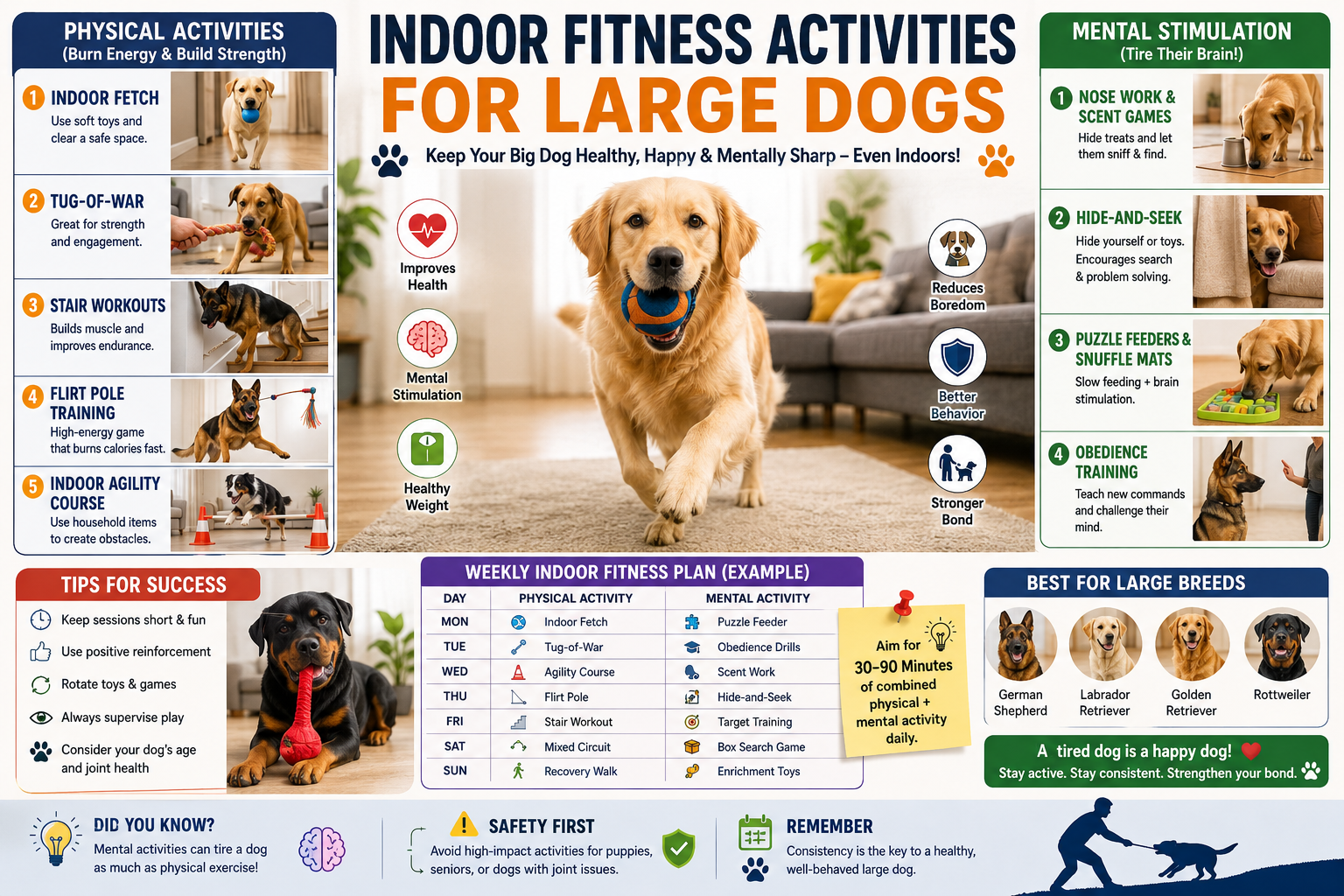
1. Indoor Fetch
Choose a hallway or spacious room.
Use:
- Soft balls
- Plush toys
- Foam fetch toys
Benefits:
- Burns calories
- Improves recall
- Builds speed
- Strengthens muscles
2. Tug of War
A controlled game of tug provides excellent resistance training.
Rules:
- Teach “drop it.”
- Stop if teeth contact skin.
- Use designated tug toys.
Benefits:
- Core strength
- Neck muscles
- Shoulder stability
- Obedience reinforcement
3. Stair Climbing
For healthy adult dogs:
- Walk slowly
- Supervise closely
- Avoid slippery stairs
Not recommended for:
- Puppies
- Senior dogs
- Dogs with hip dysplasia
4. DIY Obstacle Course
Create stations using:
- Chairs
- Pillows
- Boxes
- Cones
- Blankets
Exercises include:
- Crawling
- Jumping
- Weaving
- Balancing
This combines cardio with mental stimulation.
5. Hide and Seek
Hide treats or favorite toys around the house.
This develops:
- Scent tracking
- Problem-solving
- Focus
- Confidence
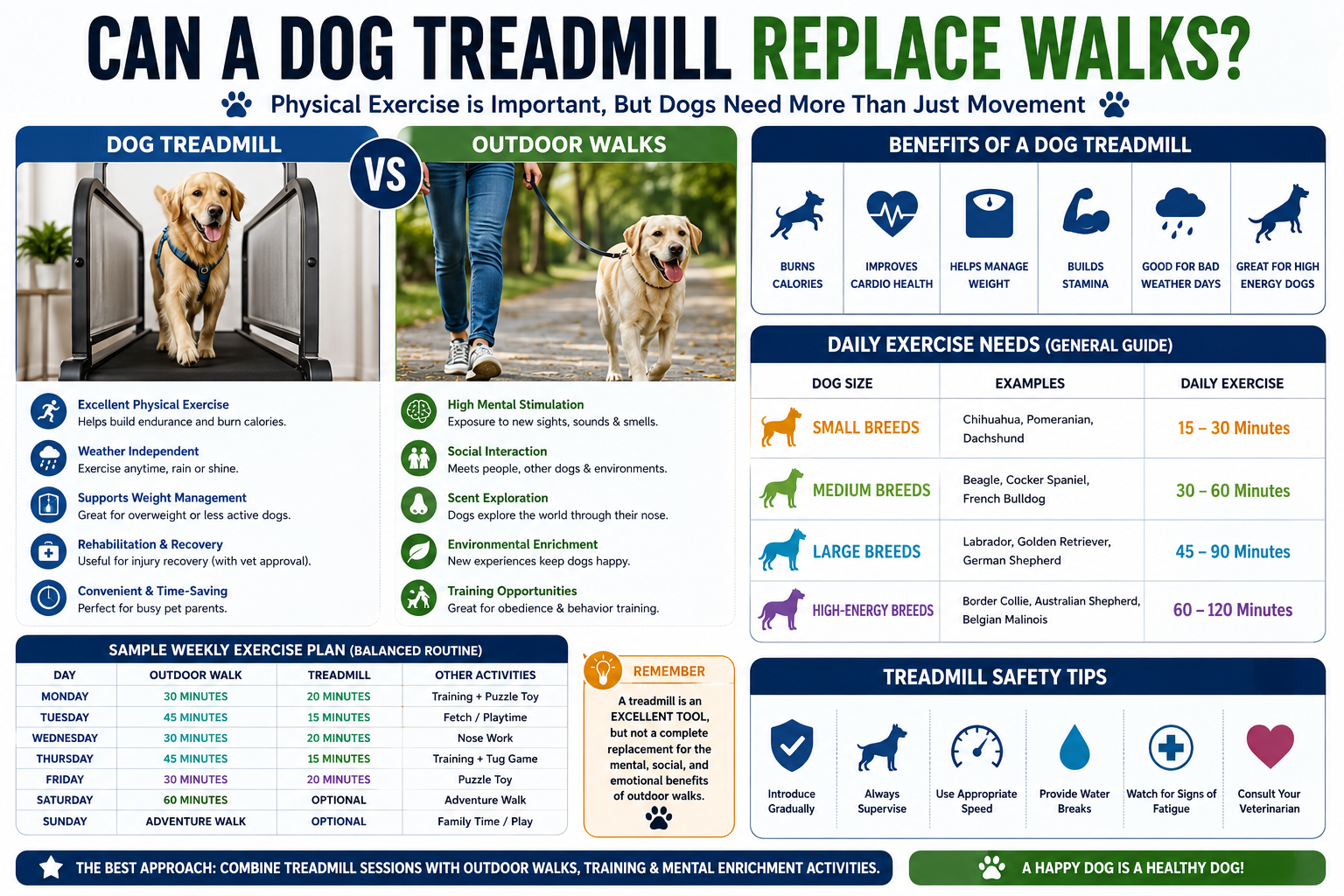
6. Dog Treadmill Training
A properly introduced dog treadmill provides consistent exercise during poor weather.
Always:
- Start slowly
- Supervise sessions
- Use positive reinforcement
- Increase duration gradually
7. Balance Disc Exercises
Balance equipment strengthens stabilizer muscles.
Examples:
- Front paws only
- Four-paw stand
- Slow weight shifting
Excellent for rehabilitation and injury prevention.
8. Indoor Agility Training
Teach:
- Weaving through cones
- Jumping low bars
- Tunnel crawling
- Platform targeting
Agility develops coordination and confidence.
9. Nose Work Games
Hide treats inside:
- Towels
- Boxes
- Puzzle feeders
- Cups
Mental work tires dogs almost as effectively as physical exercise.
10. Interactive Puzzle Toys
Food puzzles encourage:
- Problem solving
- Patience
- Slow eating
- Independent play
Ideal for rainy afternoons.
Mental Fitness Matters Too
Physical exercise alone isn’t enough.
Mental enrichment helps reduce:
- Separation anxiety
- Barking
- Chewing
- Hyperactivity
Good activities include:
- Puzzle feeders
- Trick training
- Scent games
- Obedience drills
- Shape recognition
- Toy identification
Weekly Indoor Fitness Schedule
| Day | Activity |
| Monday | Fetch + Puzzle Toy |
| Tuesday | Tug + Nose Work |
| Wednesday | Obstacle Course |
| Thursday | Stair Workout |
| Friday | Agility Practice |
| Saturday | Treadmill + Tricks |
| Sunday | Hide & Seek + Stretching |
Common Mistakes to Avoid
Overexercising puppies
Exercising on slippery floors
Ignoring warm-ups
Using unsafe toys
Skipping hydration
Overfeeding after exercise
Exercising injured dogs without veterinary approval
Safety Tips
Before starting:
- Clear obstacles
- Provide water
- Warm up gradually
- Monitor breathing
- Stop if limping occurs
Signs to stop immediately:
- Heavy panting
- Collapse
- Vomiting
- Limping
- Confusion
Expert Recommendations
Veterinary professionals generally recommend combining physical activity with mental stimulation for optimal canine health.
Aim for:
- Daily movement
- Weekly variety
- Positive reinforcement
- Consistency
- Age-appropriate intensity
Conclusion
Indoor Fitness Activities for Large Dogs can keep your pet healthy, mentally engaged, and physically fit regardless of weather or living conditions. By combining games, structured workouts, enrichment exercises, and proper safety measures, owners can provide a complete fitness routine that supports long-term wellbeing and prevents boredom-related behavior problems.
FAQs:
1. How can I exercise my large dog indoors?
Try indoor fetch, tug-of-war, obstacle courses, and puzzle games to keep your dog active.
2. Can indoor activities replace daily walks?
Indoor activities help, but outdoor walks provide extra mental stimulation and socialization.
3. What are the best indoor games for large dogs?
Fetch, hide-and-seek, nose work, tug-of-war, and agility exercises are excellent choices.
4. How much indoor exercise does a large dog need?
Most large dogs need 60–120 minutes of daily physical and mental activity.
5. Are dog treadmills safe for large breeds?
Yes, when used correctly under supervision and with gradual training.
6. Can large dogs stay healthy in apartments?
Yes. Regular indoor workouts and enrichment activities can keep them fit and happy.
7. What toys help keep large dogs active indoors?
Puzzle feeders, treat-dispensing toys, tug ropes, and interactive balls work well.
8. How do I tire out a high-energy dog at home?
Combine physical exercise with scent games, obedience training, and puzzle toys.
9. Is stair climbing safe for large dogs?
It is safe for healthy adult dogs but should be avoided for puppies and dogs with joint issues.
10. What should I avoid during indoor workouts?
Avoid slippery floors, overexercising, and using unsafe or damaged toys.